
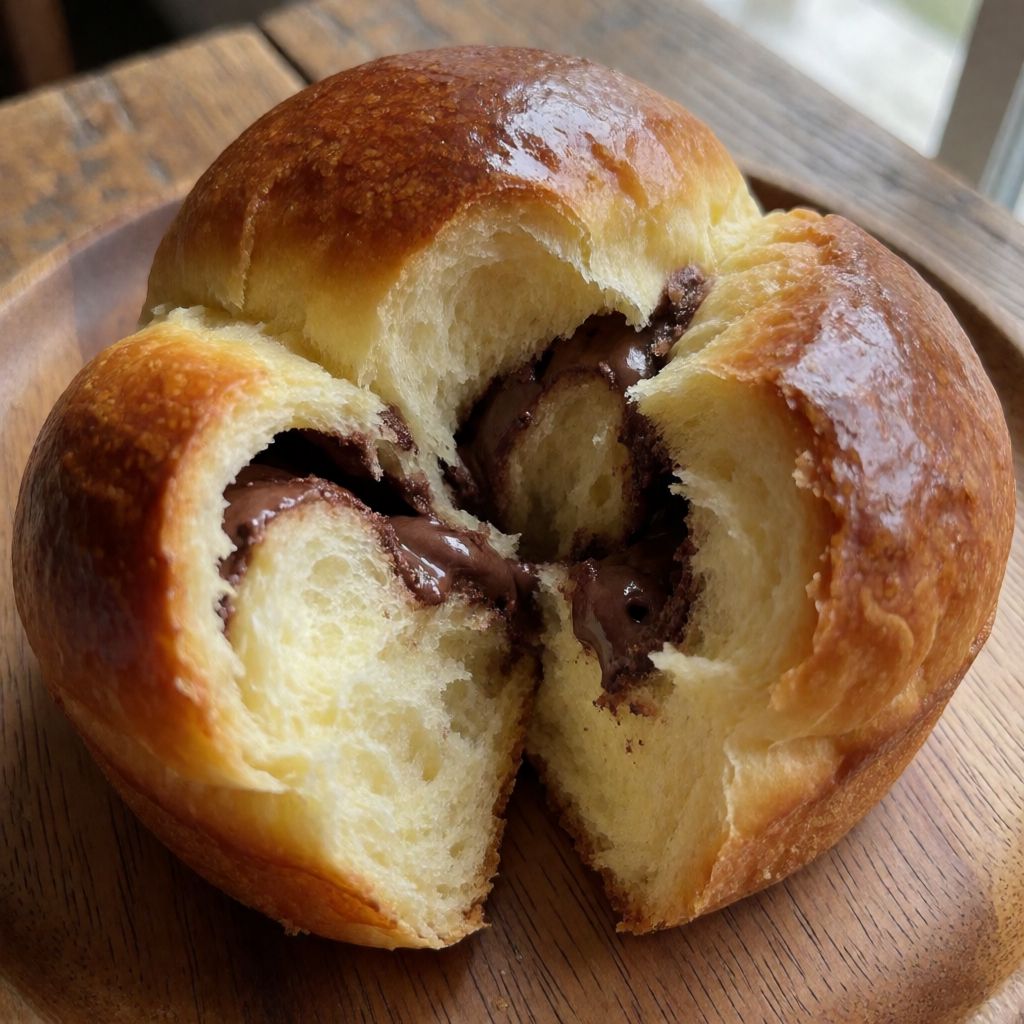
 AI photo
Nutella Brioche
A soft, sweet brioche rolled up with Nutella, shaped into a swirl loaf and baked until golden.
Labels are worked out automatically from the ingredients and can be wrong. Check the packaging if it matters to you.
Ingredients
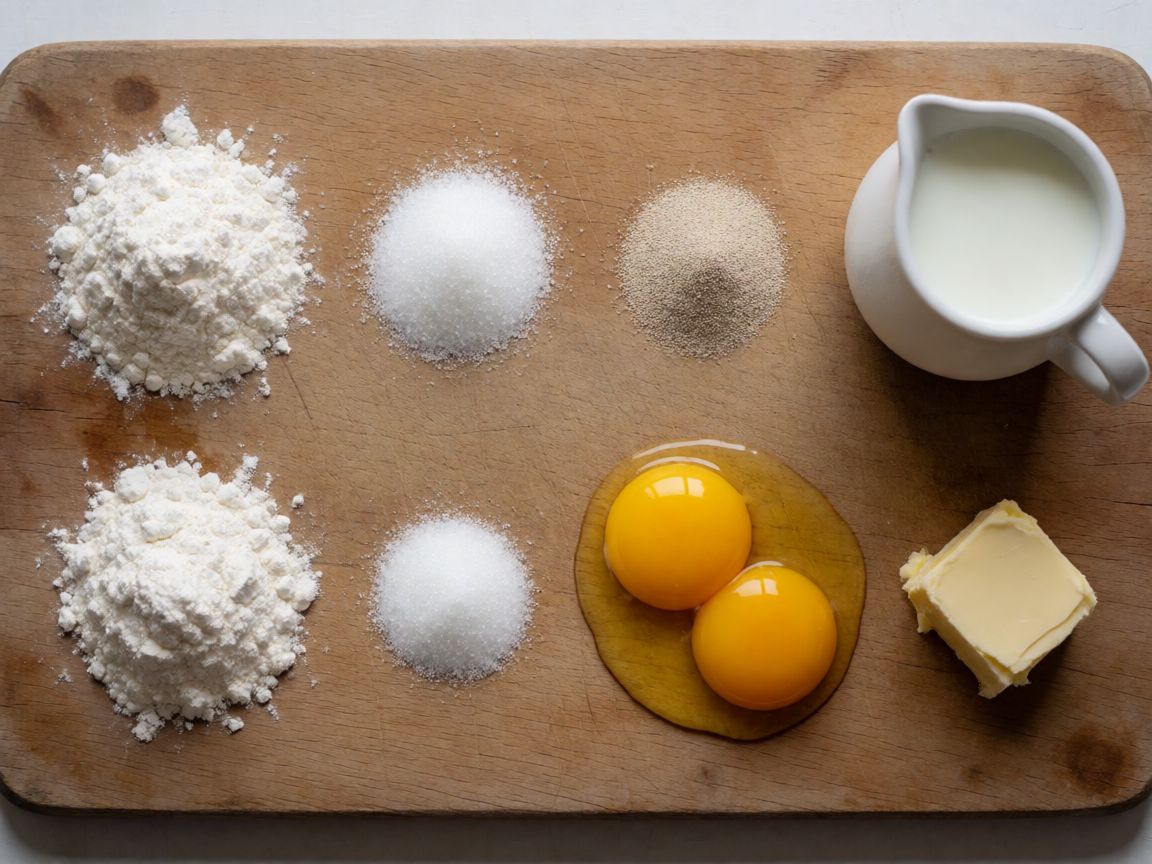
- 50 g Plain flour
- 1 tsp Caster sugar
- 20 g Yeast or 7 g dried yeast
- 15 ml Milk about 1 tablespoon
- 270 g Plain flour
- 100 g Caster sugar
- 2 pcs Egg yolk
- 20 g Butter
- 150 g Milk
- Nutella to taste
- 1 pcs Egg








Steps
Make the starter: combine 50 g flour with the crumbled yeast and sugar, pour in the milk and mix until it forms a ball.
Cover with cling film and leave to rise at room temperature away from draughts.
20 minOn a work surface, pour out the flour and sugar, and in the centre add the softened butter, egg yolks and the starter.
Gradually pour in the milk and start working the ingredients together with your fingers.
Gradually add more flour and knead until a soft, smooth dough forms.
Transfer the dough to a bowl, cover with cling film and leave to rise at room temperature for about 20 minutes.
20 minRoll out the dough with a rolling pin to a thickness of about 4-5 mm, shaping it into an even rectangle.
Spread the Nutella evenly over the whole surface.
Carefully fold the dough in half and roll over it again with the rolling pin to flatten it well.
Make cuts at intervals of 2-3 cm, without cutting all the way through - stop at about half the height of the dough.
Roll the dough up into a log, then twist it round on itself once more.
Transfer to a tin greased with butter and dusted with flour, cover with cling film and leave to rise for a further 40 minutes.
40 minBrush with beaten egg and bake in a preheated oven at 170°C fan, or 180°C conventional, for 20-25 minutes.
25 minOnce the brioche is baked and nicely golden, let it cool slightly before serving.
What was changed
The oven setting is given as 170°C fan , since most ovens in the UK are fan-assisted.
This is Italian-style brioche con Nutella built the proper way — not bread with chocolate smeared on afterwards, but a two-stage yeasted dough that's rich enough to carry the hazelnut spread without turning gummy, then cut and twisted so every slice shows a spiral instead of one gloopy seam.
What decides whether it works is the starter. That little 50g ball of flour, yeast and sugar sitting on your worktop for 20 minutes isn't decoration — it's giving the yeast a head start in a low-sugar, low-fat environment before you ask it to work in a dough loaded with butter, egg yolk and sugar, all of which slow fermentation down. Skip the starter and bolt everything together at once, and you'll get a sluggish rise and a denser crumb. The yeast needs a warm-up lap before the race.
The second thing is the cutting and twisting. Some say you can just roll the Nutella-filled dough into a plain log and bake it — no, because that seals the filling into one continuous channel, which blisters, leaks, and leaves you with a hollow tunnel of melted Nutella and a dry collapsed top. The half-cuts along the roll open it up so the spread redistributes and bakes into the crumb in thin ribbons instead of one lava pocket, and the extra twist at the end locks that open structure in place before it can relax back into a sausage shape.
Flour does two different jobs here, which is why it's split. The 50g in the starter is just food and scaffolding for the yeast — nothing fancy needed, any plain flour does it. The 270g in the main dough needs to build enough gluten to hold a wet, buttery, egg-rich mix together without turning tough; plain flour works because this isn't meant to be chewy bread, it's meant to be soft and a little cakey. Strong bread flour here would fight you — more structure than this dough wants, closer to a bagel than a brioche.
Yeast, fresh or dried, is doing the one job that patience can't replace: it eats sugar and produces the gas that makes "rise at room temperature" mean something. If you only have dried, 7g for 20g fresh is the swap, and it goes into the starter exactly the same way — crumbled in, not proofed separately in warm water first, because the starter itself is the proofing stage.
The egg yolks and butter are what make this brioche and not a sweet bread roll — fat coats the gluten strands and keeps them from linking up too tightly, which is why the crumb stays soft and short rather than stringy. Butter must be properly softened, not melted: melted butter runs off instead of blending into the dough, and cold butter won't incorporate at all, leaving streaks that bake into dense patches. If you're out of butter, a neutral oil with no smell of its own will enrich the dough but won't give you the same short crumb — butter's water content and the way it solidifies again is part of the texture here, not just the fat.
Milk, split between the starter and the dough, is your liquid and a little food for the yeast via its natural sugars — any milk works, dairy or plant, as long as it's not so thin it can't bring the dough together.
Nutella is the one ingredient with no real substitute if you want this exact result — it's not just chocolate, it's chocolate plus hazelnut paste plus enough sugar and fat to stay spreadable and not seize when it hits oven heat. A dark chocolate ganache would behave completely differently in the oven — thinner, more likely to bleed through the cuts rather than sit as ribbons.
The beaten egg brushed on before baking is purely cosmetic chemistry — protein browning faster than the dough underneath, giving you that gloss and deep gold. Skip it and the loaf will still bake, just paler and duller, which matters more than people think: colour is your only honest doneness cue here, since a kitchen oven's actual temperature can drift 10-15 degrees from the dial without you knowing, 170°C fan is a starting instruction, not a guarantee.
On rise times: three separate rests — 20, 20, 40 minutes — aren't padding, they're three different structural jobs. The first wakes the yeast, the second relaxes the gluten you've just built by kneading so the dough rolls out without springing back, the third is the real proof, where the shaped, twisted loaf actually gains volume before the oven sets it. Rush any of them in a warm British kitchen in winter and the dough simply hasn't had time to do its chemistry — a draughty flat with the heating on and off is actually a worse environment than a cold larder, because temperature swings confuse the yeast more than a steady cool spot does.