
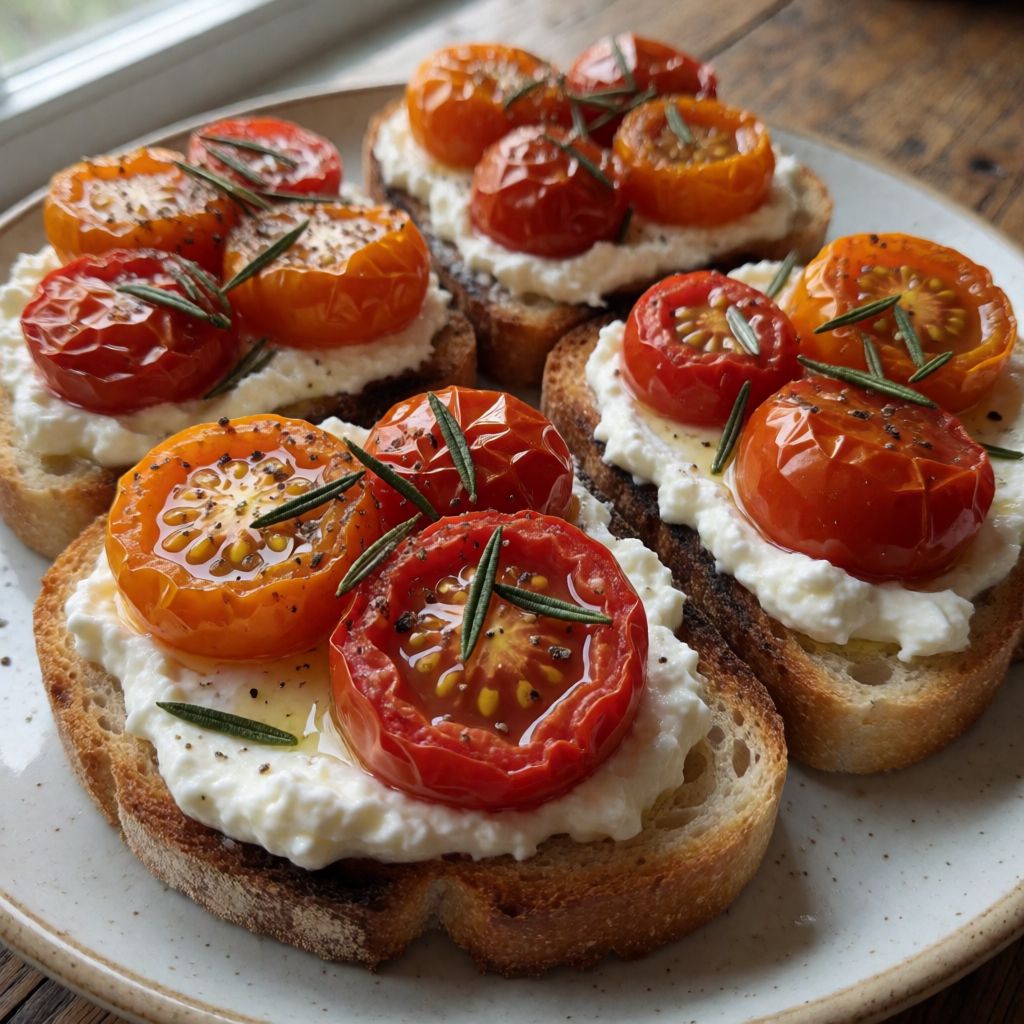
 AI photo
Roasted Tomato Bruschetta with Whipped Feta
A simple antipasto of roasted tomatoes on garlicky toasted bread with a creamy whipped feta spread.
Labels are worked out automatically from the ingredients and can be wrong. Check the packaging if it matters to you.
Ingredients
- 350 g Vine tomatoes
- 1 pcs Rosemary fresh sprig
- 1 tbsp Olive oil
- Salt
- Black pepper freshly ground
- 250 g Feta
- 200 ml Greek yogurt
- 1 clove Garlic crushed
- ½ pcs Lemon finely grated zest
- 1 bunch Basil finely chopped, fresh
- 12 pcs Baguette sliced
- 1 tsp Olive oil
- 1 clove Garlic
- 1 bunch Basil fresh











Steps
Roasted tomatoes: place the vine tomatoes in a small heatproof dish lined with parchment paper.
Scatter the whole herb sprigs, oil, salt and pepper over the top and roast in an oven preheated to 150°C for about 45 minutes.
45 minWhipped feta: put the feta in a small food processor with a few tablespoons of the yogurt and blend to a creamy consistency.
Add the remaining yogurt, lemon juice, lemon zest, basil, garlic and freshly ground pepper, then blend again.
Season with salt.
To serve: toast the bread slices and rub them with garlic.
Spread the bread slices with the whipped feta, top with the warm roasted vine tomatoes, drizzle with a little oil and sprinkle with basil leaves.
This is two cold mechanisms and one slow one, assembled at the last minute. The tomatoes are not grilled — they're slow-roasted at a temperature that lets sugar concentrate rather than char, which is the whole point. The feta isn't just "mixed with yogurt" — it's whipped, which means air and fat are forced to hold hands, turning a crumbly cheese into something you can spread without tearing bread.
What decides whether this works is restraint at 150°C. That's barely above "warm the plates" heat — not a temperature for colour, but for water to leave slowly while sugar stays put. Push it to 200°C because "roasting should be hot" and you get tomatoes that collapse into juice and blister before they've had time to concentrate anything. Some say you can't call it roasting below 180°C — you can; roasting just means dry heat, not a fast one. Here slow is the method, not a compromise.
Doneness on the tomatoes is not the clock, it's the skin: it should look slightly wrinkled and loosened, like it's thinking about peeling itself off, and the tomato should give gently when pressed rather than burst. 45 minutes is your starting point, not your finish line — vine tomatoes vary in water content, and a watery one needs longer to get there.
Vine tomatoes specifically, not loose ones, because they ripen on the plant with the sugar still arriving through the stem — that's the whole economic reason supermarkets charge more for them attached to a truss. Any firm, ripe tomato will roast fine; what you're chasing is one that isn't already soft, because a soft tomato just turns to sauce in the oven and you lose the bite you want on the bread.
The rosemary sprig goes in whole, not chopped, because whole sprigs release oil slowly as they heat, perfuming the tomatoes without leaving sharp woody bits in your mouth. Chop it and you get pine-needle texture; leave it whole and you get the scent without the problem. Thyme does the same job if that's what's in the fridge — anything resinous and not sweet.
Feta is the one ingredient here with no real substitute, because its whole character is salt and crumble — that's a brined sheep's-and-goat's-milk cheese, and the brine is doing real preservative work, which is why it keeps so long and why it tastes so assertively salty before you've added anything. If you must swap it, a firm, salty ricotta salata gets closer than cream cheese ever will, but you'll need to adjust salt down, because feta brings its own.
Greek yogurt needs to be the thick, strained kind — the strained kind matters because the water that's already been removed is water you don't want fighting the cheese for texture later. Natural yogurt that hasn't been strained will make the whip wetter and looser; if that's all you have, tip it into a sieve lined with a napkin or paper towel for twenty minutes first and let the whey drip off — this is the same logic as making your own labneh, just in a hurry.
Garlic appears twice doing two different jobs: crushed into the feta it dissolves and flavours quietly through the whole mix; rubbed raw onto toasted bread it does something sharper — the rough, just-toasted surface of the bread acts like sandpaper, grating a little garlic oil onto every bite without the lump of actual garlic. Don't skip the toasting before rubbing — raw bread doesn't grate, it just slides.
Lemon zest, not juice as the main actor, because zest carries the oil-soluble perfume of the lemon without the acid that would thin out or curdle the yogurt mixture; a little juice is fine for brightness, but zest is doing the real work of lifting the richness of feta and yogurt together.
Basil wants to go on at the very end, raw, torn or whole — basil's flavour lives in oils that cook off and turn bitter the moment real heat touches them, which is why it's folded into the cold feta mix and scattered on top rather than roasted with the tomatoes.
As for timing in a Sunday-roast kitchen: the oven's already busy, so 150°C is gentle enough to share a shelf below a roast running hotter, provided you keep an eye on the tomatoes rather than trusting the dial on two different ovens doing two different jobs at once. This is food for standing around the kitchen with, not for timing to the minute — patience here is the actual ingredient, not a virtue you're being asked to perform.