
 AI photo
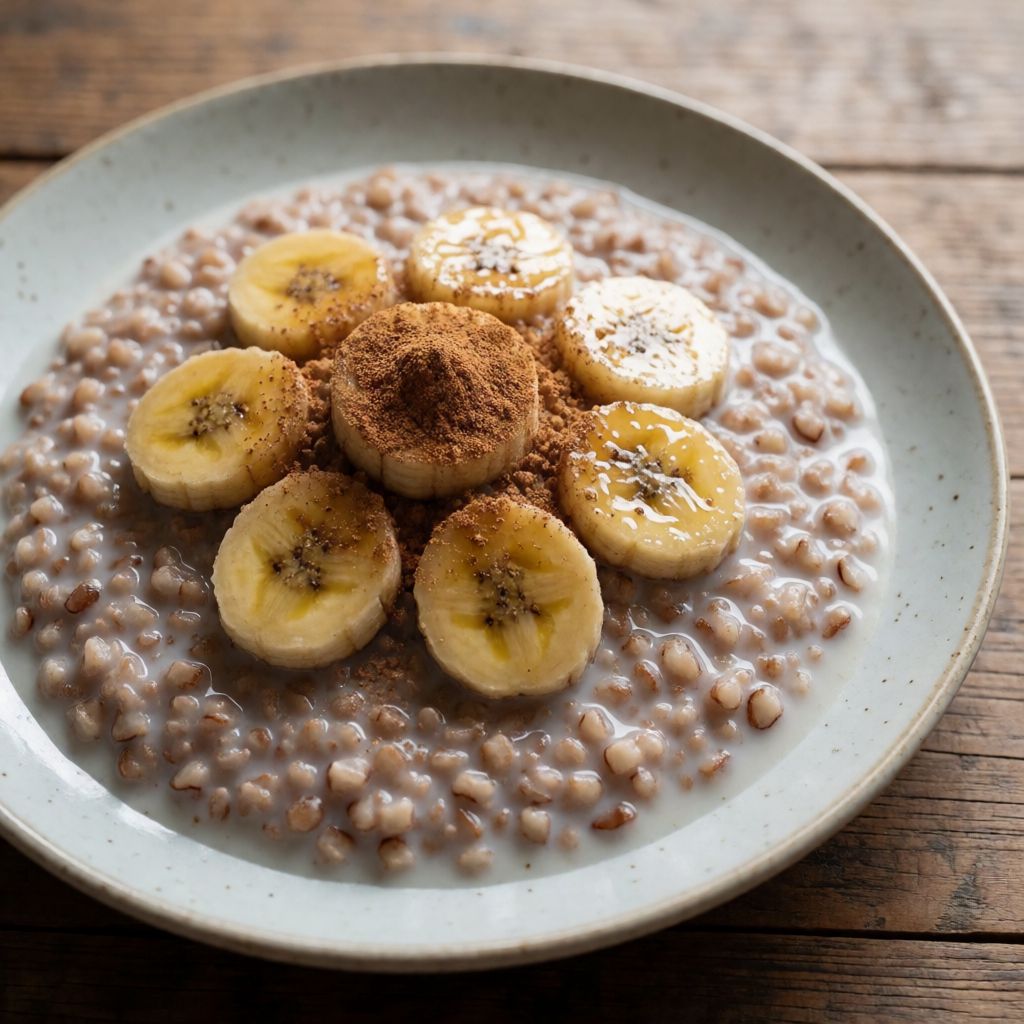
Buckwheat Porridge with Caramelised Banana
A warming buckwheat porridge topped with caramelised banana, nuts and spices.
Labels are worked out automatically from the ingredients and can be wrong. Check the packaging if it matters to you.
Ingredients
- 300 ml Buckwheat groats
- 500 ml Water
- 100 ml Milk
- 1 tsp Cinnamon ground
- 1 pinch Vanilla powder
- 1 tsp Cardamom ground
- 0.5 tsp Ginger ground
- 1 pinch Salt
- 1 pcs Banana
- 1 tbsp Maple syrup
- 1 tsp Coconut oil
- to taste Pecans to taste
- to taste Cashews to taste
- to taste Almonds to taste
- to taste Buckwheat groats to taste, for extra crunch
- 1 pinch Hemp seeds
- 1 tsp Almond butter to taste
















Steps
Rinse the buckwheat groats under running water, cover with 400 ml water and leave overnight. If you don't have time to soak, cook the groats straight away (adding about 15 extra minutes to the cooking time).
15 minIn the morning, bring the porridge to the boil with 100 ml water, the milk, salt and spices.
Meanwhile, melt the coconut oil with the maple syrup in a frying pan and let it caramelise slightly. Slice the banana lengthways and fry it in the pan. If you like, quickly toast the nuts in the pan after removing the bananas.
Serve the porridge with the caramelised banana, nuts, hemp seeds and, if you like, almond butter.
What was changed
Switched Almond butter to match the almond butter that the recipe actually calls for.
This is a bowl of soaked groats warmed through with spiced milk, and the real work of the dish happens not in the pot but in the frying pan, where sugar and fat meet heat long enough to turn into something darker and better than themselves. Nothing here is complicated. But two small decisions decide whether you get breakfast or regret: how far you let the banana go, and whether the buckwheat stays as separate grains or collapses into paste.
Soaking the groats overnight isn't a ritual, it's a shortcut. Buckwheat is sold already roasted — that's the brown colour — and roasted starch takes water slowly, at its own pace, without needing heat to force it in. Give it eight hours in cold water and it drinks what it needs; the next morning it only needs to be warmed through and finished, not fully cooked from dry. Some say you must soak it or the grain won't cook properly — no, that's not true, it just takes longer and you add fifteen minutes. Soaking buys you time in the morning, nothing more, nothing mystical.
Buckwheat groats themselves need no justification or substitute hunting — they're the one thing in this bowl that is what it is. If you only have the green, unroasted kind, soaking matters even more, since it hasn't been pre-toasted and takes longer to soften; expect the cook to run a bit past the usual mark, and judge it by bite, not by the pan's steam.
The milk's only job is to carry the spices and soften the finished texture — it isn't there to cook the grain, since the water's already done that overnight. Any milk that doesn't split under gentle heat will do: dairy, oat, almond, whatever sits in your fridge. Cinnamon, cardamom and ginger are added while the porridge is still coming up to a simmer, not sprinkled over the bowl at the end, because their aromatic oils need a little warmth and fat to let go into the liquid — scatter them on cold porridge and you taste powder, not spice.
Coconut oil in the frying pan is chosen for its own sweetness, which sits comfortably next to maple and banana rather than fighting them. The actual rule for a substitute is simpler than the ingredient list suggests: use any solid fat with a flavour you're happy to taste, since this isn't a neutral-oil job — butter or ghee work exactly as well, and each will shift the final taste slightly toward itself.
Nuts — pecan, cashew, almond, whichever you have open in the cupboard — go into the same pan after the banana comes out, not a fresh one. That's not laziness, it's economy: the pan is already coated in caramelised syrup, and tossing the nuts through it for a minute lets them pick up that residue instead of you wasting it down the sink. Watch them, not the clock — they go from pale to freckled brown fast, and burnt nuts taste only of bitterness, nothing redeemable.
The extra spoonful of raw buckwheat, dry-toasted separately until it smells nutty and turns a shade darker, is there purely for contrast — a hard crunch against the soft cooked grain underneath. It isn't part of the porridge proper; think of it as the one deliberately uncooked thing in a bowl of otherwise soft food. Hemp seeds and almond butter at the end are for protein and a final smear of fat-richness — leave them off and the dish still works, they're not structural.
On a domestic hob, the main thing working against you is uneven heat under a thin pan — one spot gets hot enough to scorch sugar while the rest lags behind. Use the heaviest frying pan you own for the caramelising step and keep the banana moving rather than leaving it to sit; it's a small patience, but it's the difference between amber and ash. Two people, one pan, ten minutes of actual attention — that's the whole bargain here.