
 AI photo
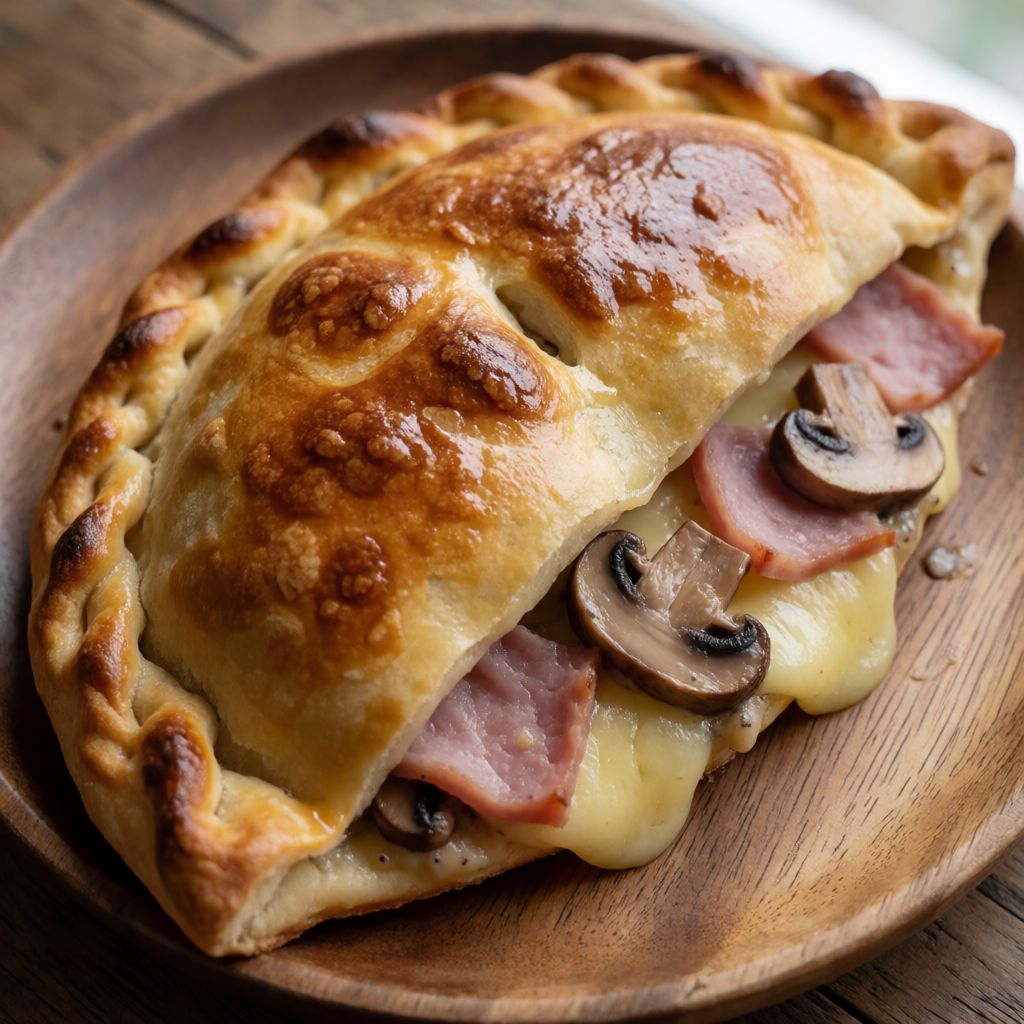
Calzone with Ham and Mushrooms
A homemade calzone filled with ham, mushrooms, tomato sauce and mozzarella, folded like a half-moon pizza.
Labels are worked out automatically from the ingredients and can be wrong. Check the packaging if it matters to you.
Ingredients











Steps
Dissolve the yeast in the water, then mix in the flour, olive oil and salt.
Knead the dough in a mixer on medium speed for 10 minutes, until it is elastic, smooth and soft.
10 minTransfer the dough to a bowl greased with olive oil and turn it so it is coated in oil.
Cover the dough and let it rise on the counter for 30 minutes, then refrigerate for 10–24 hours.
When ready to assemble the calzones, 1 hour before baking preheat the oven with a baking stone to its maximum temperature.
60 minFry the mushrooms in a hot pan with a little oil until golden.
Dust the worktop with flour.
Divide the dough into portions, one per person, and shape each piece into a circle.
Place on a sheet of baking paper and spread with tomato passata and garlic.
Scatter the ham, mushrooms, mozzarella and basil over half of the dough.
Cover with the other half of the dough and pinch the edge all the way round so the calzone is well sealed.
Two calzones fit on each sheet of baking paper (one per baking tray).
Transfer the baking paper with the calzones onto the hot oven surface and bake for about 8–10 minutes, or until crisp and golden.
9 min
A calzone is just a pizza that got folded over and sealed shut, and that one decision changes everything about how you have to treat it. Because the filling is locked in a dough pocket, it steams as much as it bakes — so what goes inside has to survive wet heat without turning the whole thing to soup. That is the real reason the mushrooms get fried first and the ham stays as it is: you are managing moisture before the oven even sees the thing, not just "cooking the toppings."
What decides whether it works is the seal and the heat. A weak seal lets steam escape, the pocket collapses, and you get a flat leaking parcel instead of a puffed one. A cool oven gives the dough time to dry out and go leathery before the crust sets — so this is the one dough recipe where you genuinely want your oven screaming hot, not the gentle "180°C for 20 minutes" most home bakes ask for. On a normal UK fan oven, that means its actual maximum, door shut, stone or tray already hot inside it, not just the oven switched on.
Some say a calzone needs a pizza oven to work. No — it needs a hot, dense surface and a short, violent blast of heat, and a baking stone (or, failing that, a heavy upturned baking tray left in the oven to heat through) gives you that on a domestic hob's terms. What a stone genuinely can't do for you is add more heat than your oven has — if your maximum is 220–240°C rather than a pizzeria's 400°C+, respect that honestly: the crust will take nearer the top of the 8–10 minute range, and you're watching for deep gold with dark spots, not a timer.
Yeast and water first, dough second — the order matters because yeast dissolved straight into room-temperature water wakes up evenly; thrown in dry on top of flour it clumps and you get patches of dough that never rise properly. Ten minutes of mixer kneading is doing a job your hands can do too, just slower: it's building gluten strands long enough to trap gas and, later, to stretch thin without tearing when you fold the calzone shut. Test it by sense, not stopwatch — the dough should pull back when you stretch it and feel slightly tacky, not sticky to the hand.
The oil in the dough and the oil coating the rising bowl are two different jobs wearing the same coat. The oil in the mix tenderises the crumb a little and helps the dough handle the heat without drying out. The oil on the bowl stops a skin forming on the surface as it proves — a skin that would tear and let gas escape unevenly, giving you a lopsided dough ball. Any neutral olive oil does both; you don't need anything grand here, this isn't a dish where the oil's own flavour is the point.
Flour: plain flour with the gluten this dough already has from strong flours isn't essential, but if you want the chew that holds a sealed, steamed pocket together without going gummy, a bread flour (strong white) will reward you more than a soft cake flour ever would. Plain works because most UK plain flour sits in the middle anyway — just don't reach for self-raising, the baking powder in it fights the yeast and gives you a confused, uneven rise.
Mushrooms get fried hard and fast before they ever meet the dough, and this is the step that prevents the calzone turning soggy from the inside. Raw sliced mushrooms are mostly water; sealed into a dough pocket and baked, that water has nowhere to go but into the crust. Frying them first drives that water off as steam in the pan, where it's harmless, so what goes into the calzone is flavour, not liquid. Ham, by contrast, is already cured and dense — it won't leak the same way, which is why it goes in as it comes.
Tomato passata and garlic are your sauce layer, and the garlic is crushed rather than sliced because crushing releases its oils into the passata quickly, with no raw bite left in a cold spot that missed the heat. Mozzarella should be fresh, in water, not the dry block sold for grating — fresh mozzarella has enough of its own moisture to melt into the filling rather than just going rubbery, and that moisture is accounted for because the mushrooms are already dry and the oven is hot enough to deal with it fast. Basil goes in at assembly, not in the pan, because its flavour is aromatic oils that cook off the moment they meet real heat for more than a few seconds — you want it perfuming the inside, not burnt to bitterness.
Sealing the edge properly — pinching, not just pressing — is the one place patience genuinely is an ingredient. Rush it and steam finds the thin spot during baking and blows it open; a well-pinched seam holds the whole thing shut like a Cornish pasty crimp, and it's worth treating it with the same care. And the 10–24 hour fridge rest before any of this: that's not tradition for tradition's sake, it's simply slow fermentation doing flavour's work for you overnight, which is exactly the kind of recipe that suits a household where the dough can sit in the fridge through a work day and you shape and bake it after, not before.