
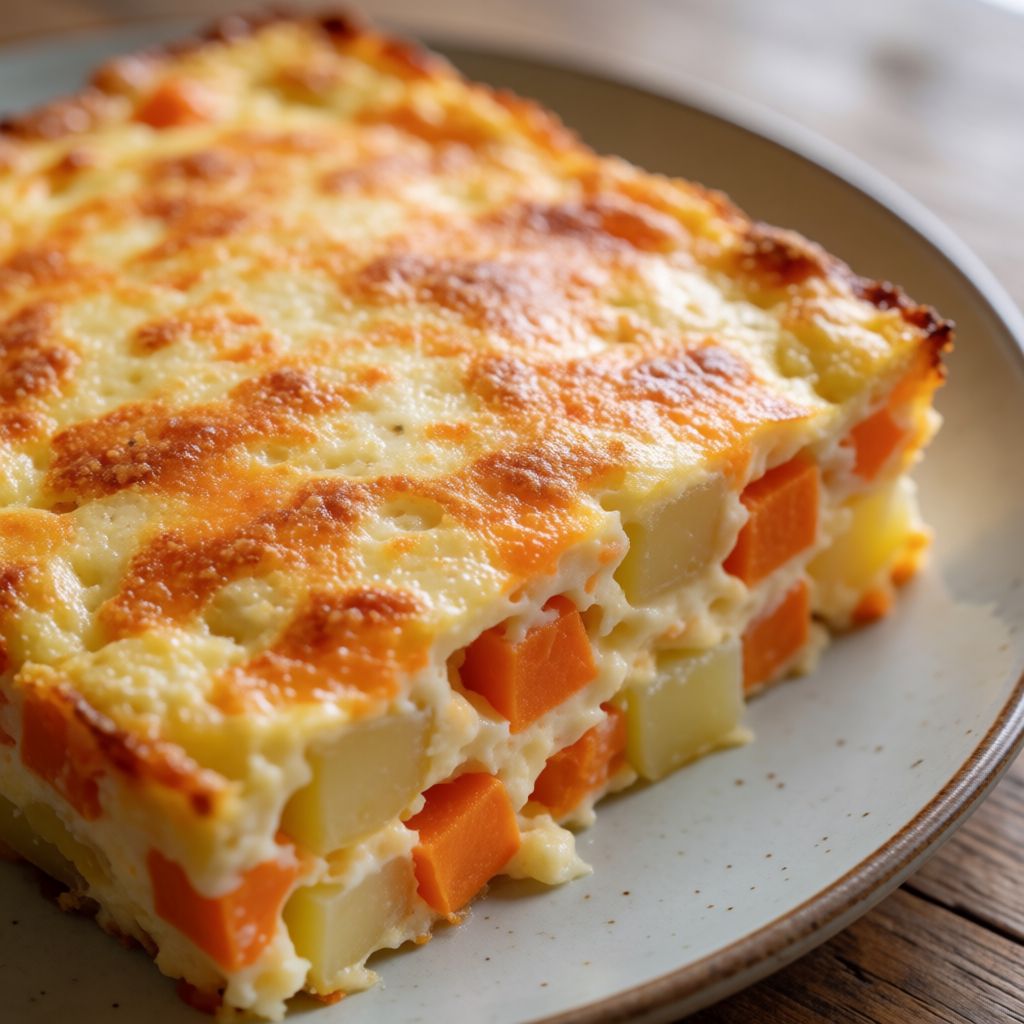
 AI photo
Carrot and Potato Bake
A creamy carrot and potato bake topped with Parmesan, finished under the grill until golden.
Labels are worked out automatically from the ingredients and can be wrong. Check the packaging if it matters to you.
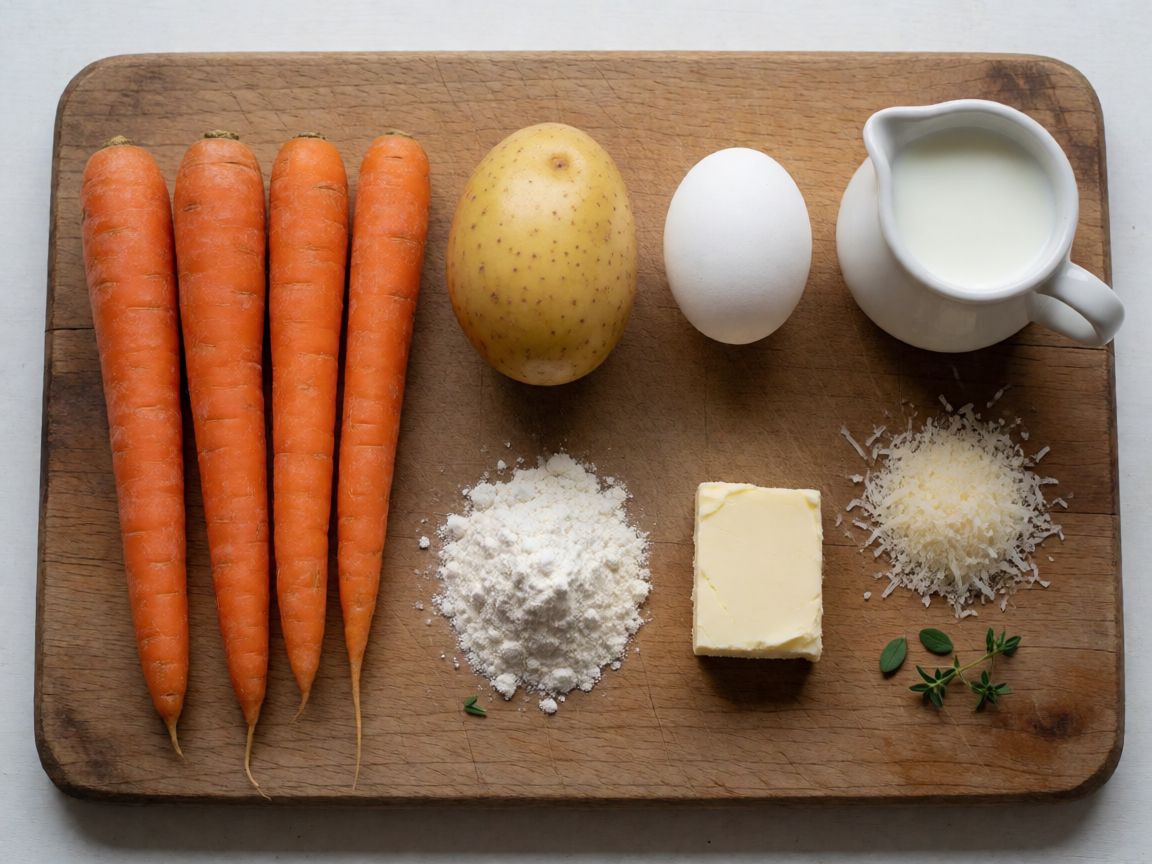
Ingredients











Steps
Wash the carrots well and pat dry, then peel with a knife or peeler and cut into large chunks. Peel the potato and cut it the same way.
10 minPut the vegetables in a pan of cold water and bring to the boil; cook until tender. You can also steam them if you prefer.
20 minDrain well and leave to cool slightly, then mash through a potato ricer into a bowl until smooth.
5 minMelt the butter in a pan, stir in the flour. Warm the milk and gradually whisk it into the butter and flour mixture.
5 minTake off the heat, stir in the mashed vegetables, and season with salt and pepper. Add the nutmeg and grated Parmesan.
3 minBeat the egg lightly and stir it in, mixing for a few more minutes until the mixture is smooth and creamy.
3 minSpoon the mixture into dishes greased with butter and dusted with flour, then sprinkle grated Parmesan over the top.
2 minBake under the grill until the top is golden brown.
10 min
This isn't a gratin and it isn't a soufflé. It sits in between — a vegetable mash bound with egg and cheese, finished under fierce top heat for a crust. What decides whether it holds together on the plate, rather than slumping into porridge, is what happens before it ever sees the grill: the texture of the mash and the exact moment you add the egg.
Carrot outnumbers potato four to one, and that ratio is the whole dish. Potato gives body — something starchy to hold a shape. Carrot gives the flavour and the colour. Get the ratio backwards and you've made mashed potato with a bit of carrot in it, which is a different and much duller thing.
The ricer earns its place here, and it isn't just about saving your wrist. Carrot keeps thin woody fibres even when it's boiled soft — a fork mash leaves them whole, and you bite into a stringy bit right in the middle of what should be silk. Forcing everything through the ricer's small holes shreds those fibres so fine they disappear into the mixture instead of ambushing you later.
And the grill isn't standing in for an oven, it's doing a different job entirely. Everything in that bowl is already cooked — the vegetables boiled soft, the sauce thickened, the egg only needs gentle heat to set, not to bake from raw. The grill's only task is to colour the top fast, direct heat from above. Don't time that part by the clock on the hob — watch it. Golden brown is the cue, and a few seconds past it is scorched Parmesan, which tastes of nothing you want.
Pick carrots of ordinary size, not the huge ones sold for stewing. Old, overgrown carrots develop a woody core that stays stubborn no matter how long you boil them — you'll feel it resist the ricer. Medium carrots, cut into even chunks, cook through at the same rate right to the centre, so you're not guessing whether the middle is done while the outside's already falling apart.
For the potato, go floury rather than waxy — a Maris Piper or King Edward, since that's what's in a UK greengrocer's. Floury potato breaks down into a fine, dry mash; waxy potato holds its structure stubbornly and turns gluey the moment you ricer it, because its starch behaves differently under pressure. One potato against four carrots is already a small amount, so this choice matters more than it looks.
The butter, flour and milk aren't there to make a sauce you'd serve on their own — they're a roux, and a roux's job is to thicken the milk enough that the whole mixture holds moisture instead of weeping it out in the oven. Warm the milk before you add it, and add it gradually, whisking — pour cold milk straight into hot butter and flour and it seizes into lumps that never smooth out again, not with any amount of stirring afterwards. Any neutral butter works; salted is fine too, just taste before you add more salt later, since Parmesan is salty on its own.
Let the boiled vegetables sit and cool slightly before you ricer them. Too hot, and the steam they're still throwing off adds moisture straight back into your sauce, loosening it. Too cold, and the starch sets stiff, and you'll be leaning on the ricer like you're trying to open a jar. A few minutes' patience here is the ingredient nobody lists on the card.
The egg goes in off the heat, once the mixture has cooled a touch — that's not caution for caution's sake, it's because egg dropped into something still near-boiling scrambles instead of binding, and you end up with visible threads of cooked white instead of a smooth set. One egg for this amount is a binder, not a leavener — don't wait for it to rise like a soufflé, that's not its job here.
Parmesan matters for two separate reasons: salt and umami in the mix, and — crucially — protein and fat that actually brown under grill heat, which is what gives you a crust rather than just melted cheese. Any hard, aged cheese with no sweetness to it does the same job — a mature Cheddar, a Gruyère if you have one open. A young, soft cheese won't crisp, it'll just go rubbery and sad under the heat.
Nutmeg is traditional with milk-based sauces and carrot specifically because it cuts the vegetable's sweetness rather than adding to it — use a pinch, grated fresh if you can, since the ready-ground stuff loses its edge sitting in the cupboard. And the butter-and-flour on the dish before you fill it isn't decoration — it's a release layer, the same logic as flouring a cake tin, so the bake comes out in one piece instead of leaving half its crust behind.