
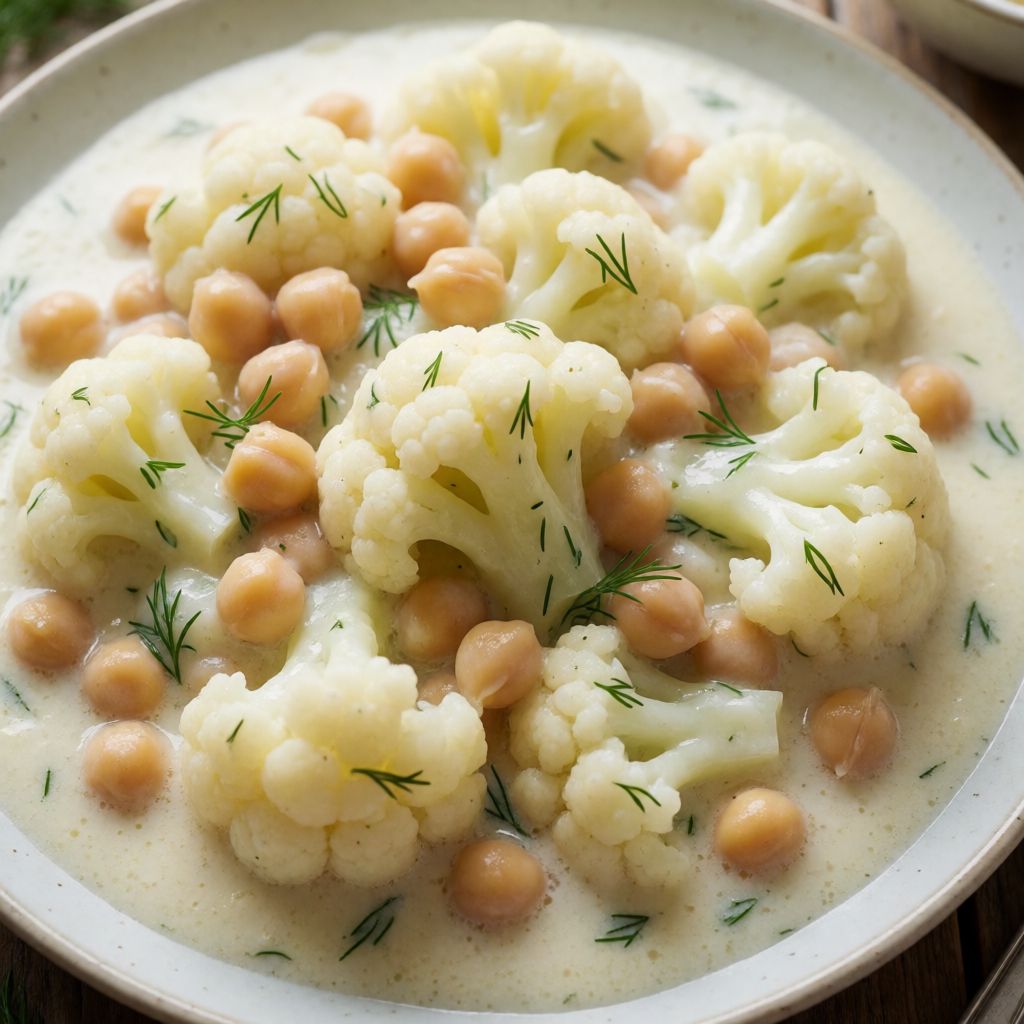
 AI photo
Cauliflower and Chickpeas in Cream Sauce with Dill
A creamy cauliflower and chickpea side dish finished with dill, served with potatoes and pointed cabbage.
Labels are worked out automatically from the ingredients and can be wrong. Check the packaging if it matters to you.
Ingredients
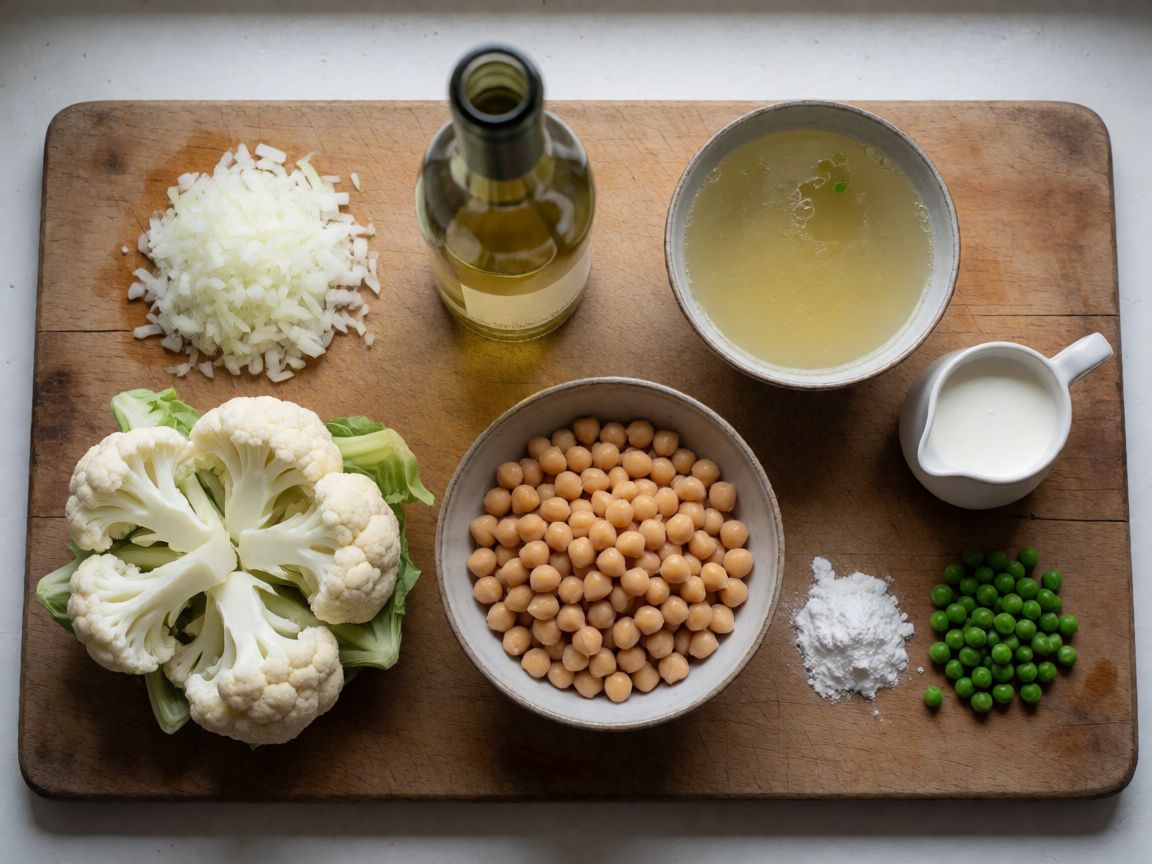
- 1 pcs Onion finely chopped
- 100 ml White wine
- 200 ml Stock
- 1 pcs Cauliflower broken into florets
- 1 can Chickpeas drained and rinsed
- 100 ml Whipping cream
- 1 tsp Cornflour
- 75 g Peas frozen or fresh
- 2 bunch Dill fresh
- ½ pcs Lemon
- 15 g Butter
- 2 tbsp Olive oil for frying
- Salt
- Black pepper freshly ground
- 1 kg Potatoes
- 1 pcs Pointed cabbage cut into quarters
- 20 g Butter














Steps
Boil the potatoes until soft in lightly salted water. Drain and cover the pan with a lid to keep the potatoes warm.
20 minFry the pointed cabbage in a hot griddle pan with butter until striped and tender. Sprinkle with coarse salt and freshly ground pepper.
6 minFry the onion in a pan with a little butter and olive oil until soft.
4 minPour in the white wine and let it evaporate.
2 minAdd the vegetable stock, cauliflower florets and chickpeas.
Simmer for 3-5 minutes, until the cauliflower is tender.
4 minStir the cornflour into the cream and pour into the pan together with the peas, mixing well.
1 minBring to a brief boil, then season with dill, a little freshly grated lemon zest, a few drops of lemon juice, salt and freshly ground pepper.
1 minServe hot with the potatoes and pointed cabbage.
This is a vegetable stew dressed up as something richer than it is — cauliflower and chickpeas cooked down in a wine-and-stock base, then finished with cream and dill so it reads as a sauce, not a boil-up. What decides whether it works isn't any single ingredient — it's whether you let the pan do two separate jobs in order: first build a savoury base with real reduction, then treat the cream as a last-minute addition, not something that simmers for ten minutes and turns grainy.
Some say you can skip the wine step, just tip everything in together and simmer. No — because the wine isn't there for flavour alone, it's there to deglaze and to burn off its own sharpness. Pour it in, let it bubble down to almost nothing — you'll see the pan go from wet and sloshy to just coating the onions — and only then is it safe to add stock. Skip that and you carry raw alcohol's bite straight into the final dish, and no amount of cream fixes that afterwards.
The cauliflower goes in with the chickpeas and simmers in stock, not water — this is the difference between a dish that tastes of vegetables and one that tastes of vegetables in something. Watch the floret rather than the clock: a knife should go in with almost no resistance, but the floret should still hold its shape, not slump into mush. Three to five minutes is a lower bound, not a target — cauliflower cut thick needs longer, thin pieces less.
The onion is doing real work before the cauliflower even goes in — fried gently in butter and oil until soft, it's building the sweetness that carries the whole dish, because cauliflower and chickpeas on their own are quiet vegetables, short on character. Use a mix of butter and oil rather than one or the other: oil alone won't brown the onion with any depth, butter alone can catch and burn before the onion's gone translucent. Any neutral oil with no smell of its own does the oil's job here — sunflower, a mild rapeseed, whatever's in the cupboard. Olive oil adds its own note, which is fine, but it's not required by the mechanism.
Chickpeas from a can are doing exactly what they're meant to — they've already been cooked, so their job in this pan is to warm through and pick up the sauce, not to soften from raw. Drain and rinse them properly; the liquid they sit in is starchy and slightly metallic-tasting from the tin, and it'll dull the sauce if it goes in with them.
Cornflour is the quiet insurance policy in this recipe, and it's worth understanding why it's there rather than just following the instruction. Cream thickened by reduction alone takes patience and a watchful eye — reduce it too hard and you risk the fat separating out, especially in a thin domestic pan rather than a heavy-bottomed one. A teaspoon of cornflour mixed into the cream before it goes anywhere near heat means you get a sauce that coats a spoon within a minute of simmering, with far less risk of it breaking on you. If you don't have cornflour, a flour-and-butter paste — a small knob of soft butter worked into a teaspoon of plain flour — does the same job, though it wants a minute or two longer to lose its raw-flour taste.
Dill goes in at the very end, off any real heat, because its whole value is a top note — bruise it in a hot sauce for a few minutes and you lose the thing you added it for. The lemon zest and juice are doing something similar: a few drops, not a good squeeze, because this isn't a dish built around acidity, it's one where cream needs a sharp edge to stop it tasting flat and one-note.
The potatoes and cabbage are the domestic economics of this plate made visible — plain boiled potato and a griddled cabbage quarter are there to be a backdrop, not a second showpiece, and they ask nothing of you beyond patience with the water and a hot enough pan to get stripes on the cabbage rather than a grey braise. Keep the potato pan lidded once drained; that's not tradition, that's just physics — steam holds the heat in far better than an open pan loses it to the room.
If you don't have a griddle pan for the cabbage, any wide frying pan that gets properly hot will do — you're after contact and colour, not grill marks specifically. The stripes are cosmetic; the real job is driving off enough moisture that the cabbage has some bite left rather than going to mush, the same failure boiling it would guarantee.
None of this needs a kazan or specialist kit — it's one wide pan for the cauliflower stage, one pan for the potatoes, one pan or griddle for the cabbage, and a watchful eye more than a timer. The timings given are honest lower bounds: a floret that still resists the knife needs another minute, a cabbage that hasn't taken colour needs the pan left alone a little longer rather than poked at. That's not a flaw in the recipe — that's just what cooking vegetables properly looks like.