
 AI photo
Cauliflower Couscous Salad
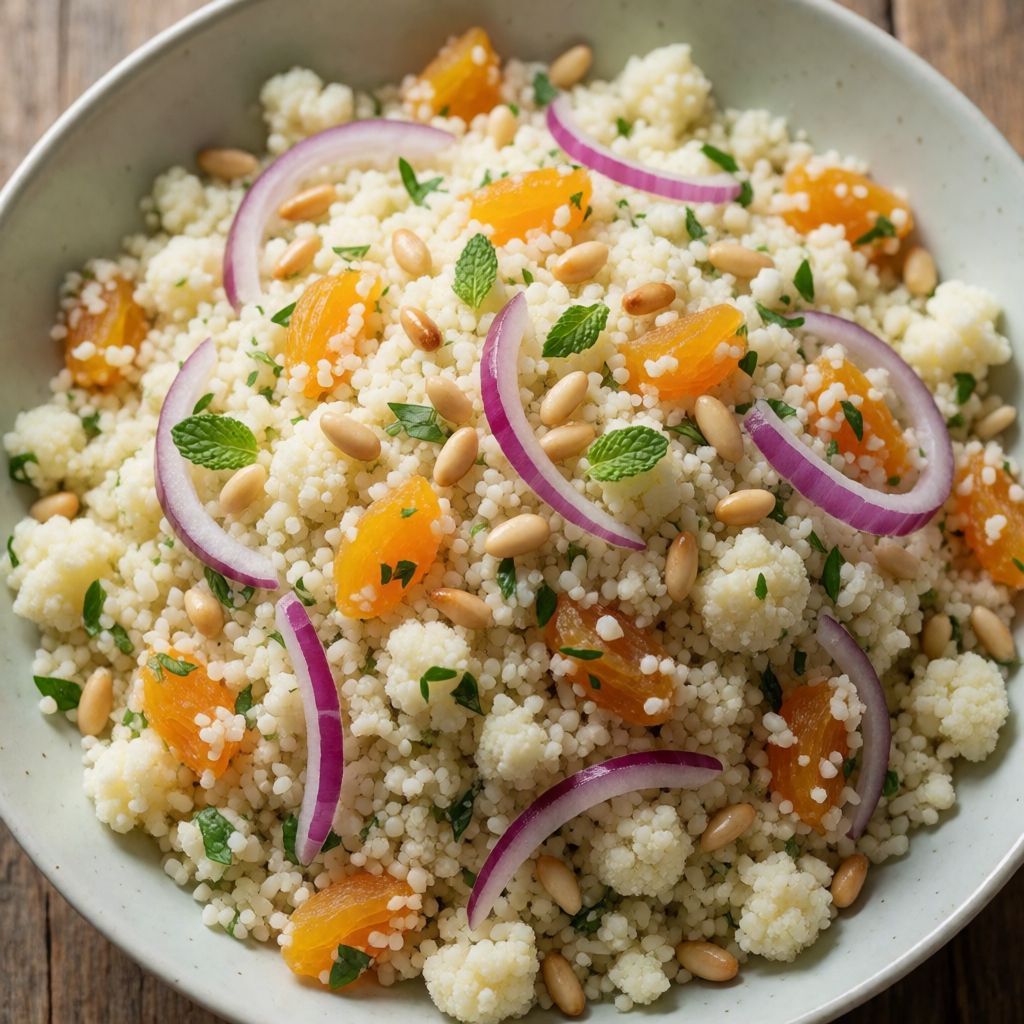
A fresh cauliflower "couscous" salad with dried apricots, herbs and a honey-mustard dressing, finished with toasted pine nuts.
Labels are worked out automatically from the ingredients and can be wrong. Check the packaging if it matters to you.
Ingredients
- 1 pcs Cauliflower broken into florets
- 8 pcs Dried apricots finely chopped
- 2 bunch Parsley finely chopped, leaves only
- 2 bunch Mint finely chopped, fresh
- 0.5 pcs Red onion finely chopped
- 40 g Pine nuts
- 2 clove Garlic crushed
- 1 tsp Ginger freshly grated
- 1 tsp Dijon mustard
- 1 tsp Honey
- 1 pcs Lemon zest and juice
- 4 tbsp Olive oil
- Salt to taste
- Black pepper to taste, freshly ground










Steps
Put the cauliflower florets and apricots into a food processor. Pulse briefly until the mixture resembles small grains of rice.
Mix the cauliflower with the herbs and onion.
Toast the pine nuts in a dry frying pan, stirring, until fragrant.
Mix together all the dressing ingredients. Adjust the seasoning to taste.
Add the dressing to the cauliflower mixture, transfer to a plate or bowl and sprinkle with the toasted pine nuts.
This isn't a cooked salad pretending to be couscous — it's raw cauliflower, pulsed small, doing an impression of grain. No pot, no steam, no "fluffing with a fork." The whole trick is mechanical, not culinary: you're asking a blade to do in two seconds what cooking usually does over ten minutes, which is reduce something tough into something you can eat in a mouthful without a knife.
What decides whether it works is restraint with the processor. Pulse too long and the cauliflower weeps — it turns to wet paste, the cell walls burst and release water, and your "couscous" becomes soup with ambitions. You want grains, not purée, so you pulse in short bursts and stop while it still looks dry and separate, closer to breadcrumb than mash. The apricots go in with the cauliflower at this stage for a reason: their stickiness and sugar bind the grains slightly and stop them falling apart into dust, and chopping them with the cauliflower rather than by hand saves you a separate knife job and gets them the same size.
Cauliflower here is doing a job wheat normally does, which tells you something about why couscous itself exists: it's a grain cut small enough that it doesn't need long cooking, originally a way to stretch flour without heating a whole kazan of water. Swap in cauliflower and you get the same logic for people avoiding grain — small pieces, no real cooking, fast to eat. Choose a head that's tight and pale, no grey patches or loose florets falling off already; a cauliflower that's starting to go soft will pulse into paste even faster, because it's already lost structure before the blade touches it. No food processor? A box grater does the same job by hand — more effort, same result, just don't grate it into a bowl of its own juice; tip it into a sieve first if it looks wet.
Dried apricots bring sweetness and a chewy contrast to the crumbly cauliflower — any dried stone fruit does the same job: dried figs, sultanas, even dates chopped small. What matters is "dried and sweet," not the specific fruit; this is a pantry habit from cuisines where fresh fruit was seasonal and dried fruit was the all-year sweetness in savoury dishes, not a magic ingredient that can only be apricot.
Parsley and mint together are doing two different things, not one "herby" thing — parsley is grassy and slightly peppery, mint is cool and sharp, and together they cut through the raw cauliflower's edge far better than either alone. Leaves only, no stalks: stalks are fibrous and won't break down the way the leaves do when chopped fine, and you'll find them as stringy bits in your mouth later. Red onion goes in raw and finely chopped for bite and colour; if raw onion repeats on you, a ten-minute soak in cold water softens its sulphur compounds without losing the crunch.
The dressing is where a Dijon, honey, lemon combination earns its keep — it's a basic vinaigrette logic (acid, fat, something to help them bind) with mustard acting as the emulsifier that stops oil and lemon juice separating into slicks on your plate. Any mild olive oil works — "mild" meaning no strong pepperiness fighting the mint — and if you don't have one, a flavourless vegetable oil loses nothing but the faint grassiness. Ginger and garlic, both raw and finely worked, are there for heat and depth that cooking would normally supply; since nothing here is cooked, they're doing double duty as both seasoning and the only "warmth" the dish gets.
Pine nuts are expensive for a reason worth knowing: they're slow-growing, hand-harvested from pine cones, which is why a small bag costs what it does and why walnuts or flaked almonds, toasted the same dry way, are a fair stand-in if you want crunch without the price. Toast only as many as you need for this bowl — they go rancid faster than most nuts once opened, because they're so oil-rich, so buy little and use it soon rather than keeping a big bag "for next time."
In a UK kitchen this sits well as the thing you make alongside a roast when you want something that isn't another potato, or as a packed-lunch bowl that holds up for a day in the fridge without going soggy the way leaf salads do — the cauliflower grains don't wilt, they just keep absorbing the dressing, so it's often better the next day, not worse. That's patience doing its quiet work: give it the resting time and the dish improves on its own, no extra effort from you.