
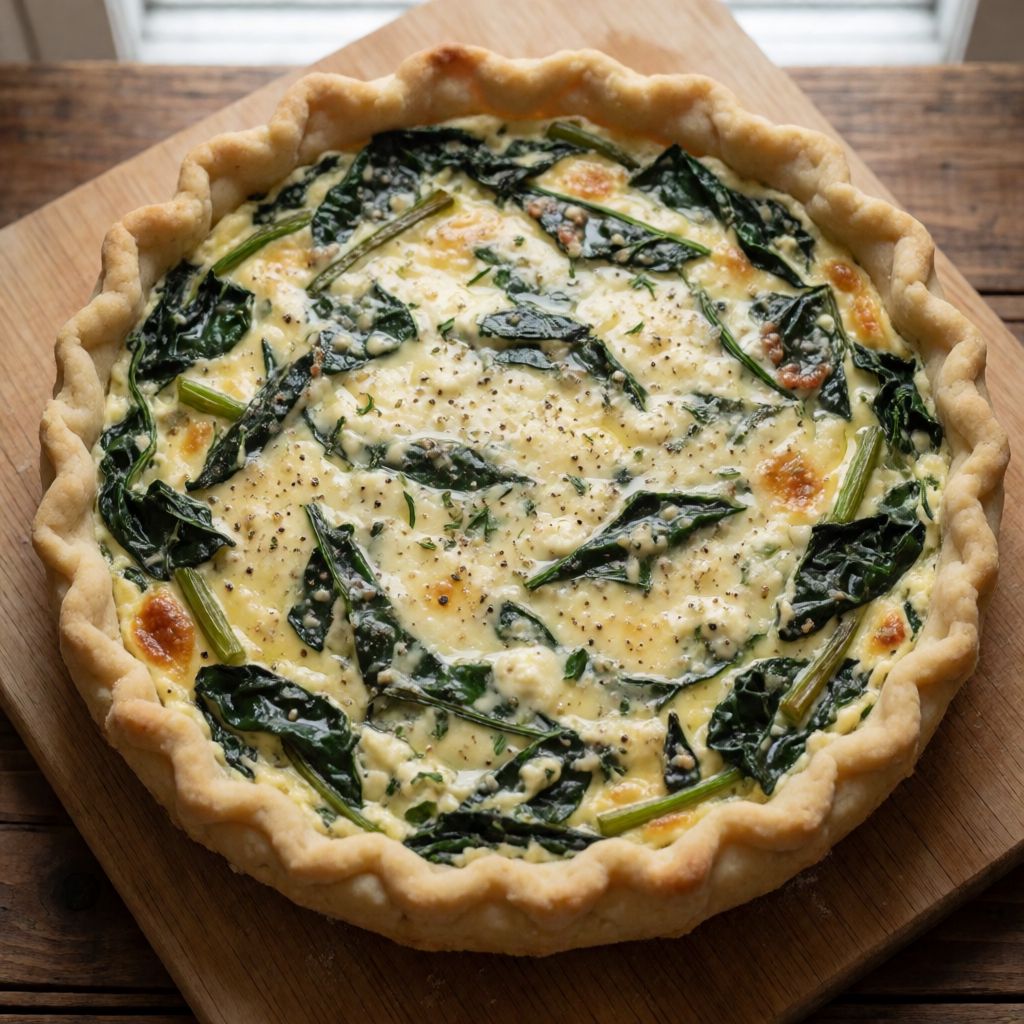
 AI photo
Swiss Chard and Ricotta Pie
A savoury pie with Swiss chard and ricotta, with a layer of ham on the pastry base.
Labels are worked out automatically from the ingredients and can be wrong. Check the packaging if it matters to you.
Ingredients
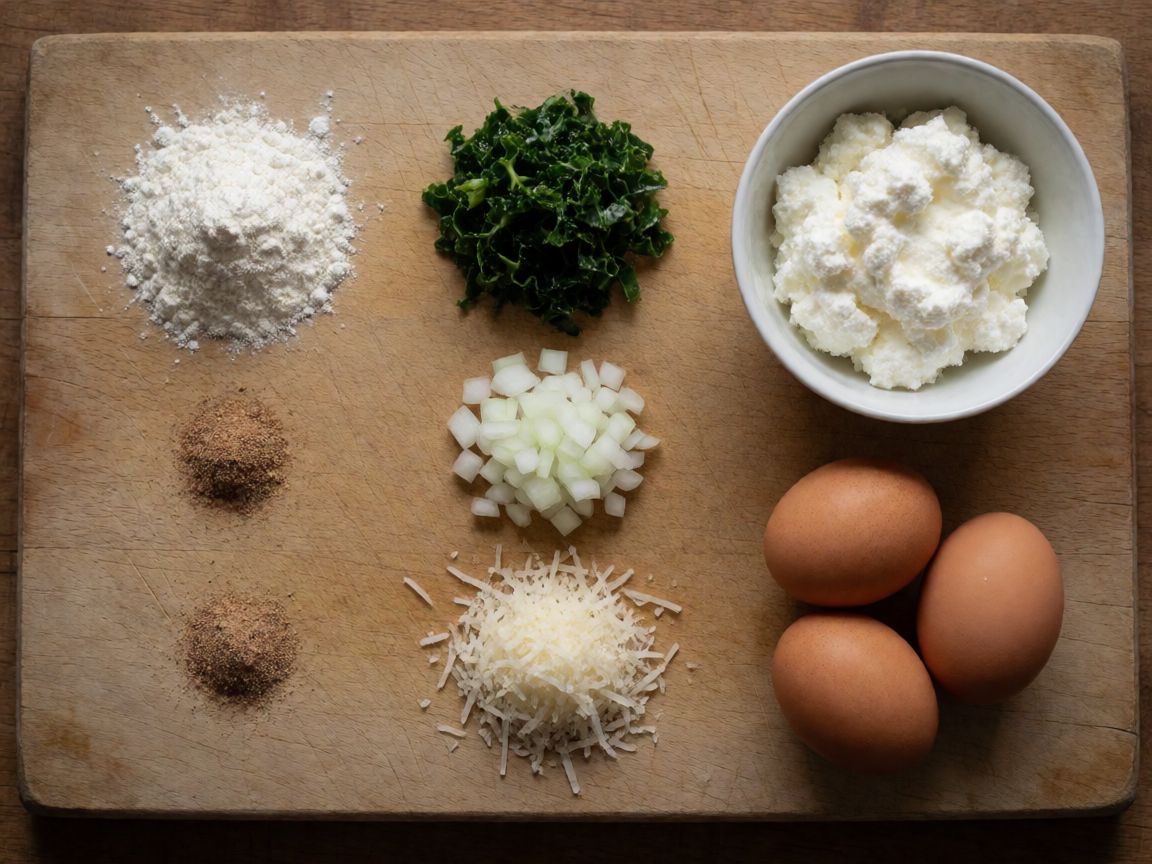
- 250 g Plain flour
- 5 g Salt
- 1 pinch Black pepper
- 1 pinch Nutmeg
- 100 ml Water
- 40 ml Olive oil
- 350 g Swiss chard
- 60 g Onion
- 300 g Ricotta
- 3 pcs Eggs
- 30 g Parmesan
- Salt to taste
- Black pepper to taste
- Nutmeg to taste
- 120 g Ham
- 3 tbsp Flaked almonds optional











Steps
Make a simple dough: pour in the flour, salt, pepper and nutmeg, and mix. Make a well, pour in the water and olive oil, and combine the ingredients.
Turn the dough out and knead by hand into a smooth ball. Wrap in cling film and leave at room temperature.
30 minWash, trim and dry the Swiss chard, then cut it into thin strips. Slice the onion.
Pour olive oil into a pan, add the onion and a pinch of salt, and cook.
5 minAdd the Swiss chard, a pinch of salt and some olive oil, stir, cover and cook.
5 minTurn off the heat and set the chard aside to cool.
In a bowl combine the ricotta, eggs, Parmesan, a pinch of salt, pepper and nutmeg, and mix.
Take the chard, squeeze out excess water and add it to the ricotta mixture. Mix until smooth.
Preheat the oven to 180°C with the fan setting.
Roll out the dough and line a 26 cm tin. Lay the ham slices on the base.
Spread the filling evenly. If you like, decorate with flaked almonds.
Bake at 180°C until the ham reaches an internal temperature of 70°C.
35 minRemove from the oven, let it cool, take it out of the tin and serve.
This is an Italian torta salata — a savoury pie built the way Italian households build most of their savoury pies: out of whatever green is cheap that week, a tub of ricotta, a few eggs to bind it, and a thin oil dough that asks for no butter and no fuss. Chard, ricotta, ham, a pastry shell. Nothing exotic. It sits in the same family as the pie you'd make from Sunday's leftover greens and a heel of ham — which, if you keep a British kitchen, you already understand instinctively.
What decides whether it works is water, not flavour. Chard holds a surprising amount of liquid in its cell walls, and wilting it in the pan only breaks those walls open — it doesn't make the water disappear. If you skip squeezing it dry before it goes into the ricotta, that water has nowhere to go but into the filling, and from the filling straight down into your pastry base. The result isn't a disaster, but it's a pie with a soggy bottom and a filling that never quite sets into slices — it stays loose, more like a wet scramble than a tart. Squeezing the chard with your hands, properly, until it stops dripping, is the one unglamorous job in this recipe that the whole dish depends on.
Flour here just needs to be ordinary and soft — a strong bread flour will build too much gluten even in a short knead, and the dough will fight you when you roll it, pulling back like elastic. Plain flour, the kind in every British cupboard already, is exactly right.
Olive oil gives the crust a faint fruitiness and a short, slightly crumbly bite rather than the long flake of a butter crust. The real criterion for substituting it is simple: use any oil with no strong smell of its own if you don't want that olive flavour coming through — a light sunflower or rapeseed oil will do the structural job just as well, you'll just lose the taste, not the texture.
Swiss chard can be swapped for any leafy green that collapses down to a fraction of its raw volume when cooked — spinach, kale, even the chard's cousin, beetroot leaves. The adjustment isn't flavour, it's water. Spinach holds even more moisture than chard and needs a longer, harder squeeze; kale holds less, so it may need an extra minute in the pan before it's soft enough to fold into ricotta without stringy bits.
Ricotta should be the fresh, moist kind sold loose or in a tub, not the dry, salted ricotta salata used for grating — that one has had its water pressed out deliberately and will give you a crumbly, not creamy, filling. If ricotta isn't to hand, a well-drained cottage cheese blitzed smooth gets you close, though it brings a sharper tang with it. The eggs are the actual binder in all this — their protein is what coagulates under heat and turns a bowl of soft cheese and wilted greens into slices you can lift cleanly. That's the whole reason the internal temperature matters: it's telling you whether that protein has set all the way through, not whether the ham is safe to eat — the ham, cured, is already there.
Parmesan's job is pure savoury depth, concentrated salt and umami in a small amount — any hard aged cheese does the same work; Grana Padano is nearly interchangeable, pecorino works too but is saltier, so ease off the added salt if you use it. The ham, laid directly on the pastry base before the filling goes in, is doing double duty: flavour, yes, but also a thin barrier between the wet filling and the raw dough underneath, taking some of that moisture onto itself before it can soak the crust. Any dry-cured, sliceable meat with real saltiness — a good cooked gammon, a cured pork shoulder — will do the job the same way. The almonds are the one purely decorative, optional element here: crunch against softness, nothing structural, leave them off without consequence.
One more thing worth saying plainly: there's no shortcut through the squeezing of the chard, the resting of the dough, or the cooling of the pie before you cut it — that last cooling isn't laziness, it's the filling finishing its set as it comes down in temperature, the same way a custard tart firms up properly only once it's no longer hot. Patience, in this recipe, is doing as much work as any single ingredient on the list.