
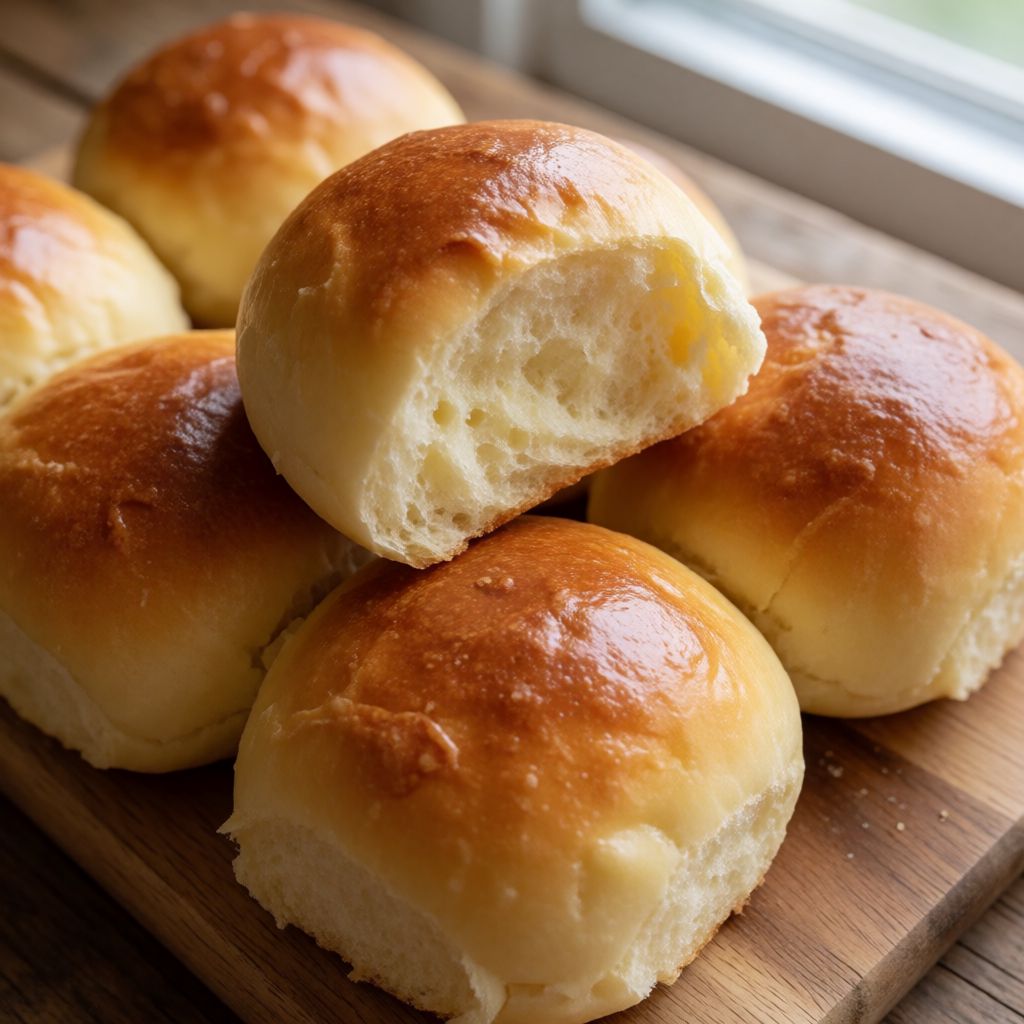
 AI photo
Cheese-Stuffed Bread Rolls
Soft yeasted rolls, each wrapped around a cube of cheddar, boiled briefly then baked until golden.
Labels are worked out automatically from the ingredients and can be wrong. Check the packaging if it matters to you.
Ingredients
- 400 ml Water
- 20 g Yeast
- 550 g Plain flour
- 1 tbsp Caster sugar
- 1 tsp Salt
- 40 g Butter cold
- 200 g Mature cheddar cut into 15 cubes
- 1 l Water for boiling
- 1 pcs Egg beaten
- pinch Salt
- 1 tbsp Sesame seeds
- 1 bunch Thyme fresh








Steps
Crumble the yeast into the water in a bowl and stir until dissolved.
3 minPut the flour, sugar and salt in a clean bowl and rub in the butter until the mixture looks like fine crumbs. Gradually pour in the yeast water and knead into a dough.
3 minKnead the dough for several minutes until it is smooth and elastic.
7 minPut the dough in a bowl, cover with a clean towel and let it rise for 45 minutes on the kitchen counter.
45 minDivide the dough into 15 equal pieces so all the rolls are the same size. Oil your hands with olive oil to make the dough easier to work with. Wrap each piece of dough around a cube of cheese and seal the edges well. Roll the rolls into balls.
Pour water into a large pot and bring to the boil.
6 minLower three rolls at a time into the boiling water and cook for 30 seconds. Lift them out with a slotted spoon and place on a baking tray lined with baking paper. Continue with the remaining rolls.
Brush the rolls with beaten egg and sprinkle with salt and sesame seeds. Bake in a preheated fan oven at 175°C for about 15–17 minutes.
16 minIf you like, sprinkle with fresh thyme leaves and enjoy the rolls while still warm and freshly baked.
This is a bagel's cousin that forgot to be savoury-only — a yeast roll boiled for half a minute before it ever sees the oven, with a cube of cheddar hiding in the middle like a small bribe. What decides whether it works is the seal around that cheese cube. Get a gap in the dough and the cheddar will find it the second it melts, and you'll pull out fifteen rolls sitting in their own little puddles of orange grease on the baking paper. So when you wrap the dough round the cube, pinch it shut properly, then roll the ball between your palms to smooth the seam into nothing — you're not shaping for looks, you're welding a seal.
The boiling step looks like an odd detour for a bread recipe, and people skip it thinking it's decorative — no, because it's the thing that gives you the chewy, slightly glossy skin instead of a soft supermarket-roll crust. Thirty seconds in boiling water gelatinises the starch on the surface fast, before the yeast dough even gets near heat that would otherwise just bake a crust straight through. It's the bagel principle borrowed for something that isn't a bagel. Skip it and you get a perfectly nice roll — just not this roll.
Flour first: 550g plain flour here, not strong bread flour, and that's deliberate — this isn't a huge airy crumb like a sourdough loaf, it's meant to be dense enough to hold a cube of melting cheese without collapsing round it. If you only have strong flour in the cupboard, use it, you'll just get a slightly chewier, more structured roll, which does no harm.
The cold butter rubbed into the flour before the liquid goes in is the same move as in shortcrust pastry — you're coating flour particles in fat so gluten develops a little less aggressively, which keeps the crumb tender rather than tough. Some people think you can just melt the butter and stir it in to save time — no, because melted butter soaks straight into the flour instead of sitting between particles, and you lose that slight short texture the rolls should have. Keep it cold, keep it in pieces the size of small crumbs.
Yeast: 20g is a proper dose for 550g flour, dissolved first in water rather than mixed dry into the flour — this just gives you certainty the yeast is alive before you commit the rest of your ingredients to it. If it doesn't foam a little after a few minutes, it's dead, and no amount of rising time on the counter will fix that; better to know now than in 45 minutes.
Cheddar is the obvious cheese here, and mature is the right call, not mild — because the cube is small and buried, and a mild cheddar will just go gooey and anonymous once it melts, whereas a mature one still tastes of something through the bread around it. The criterion is a cheese that melts cleanly without weeping too much oil — any firm, well-aged hard cheese fits that, so a mature Gouda or a firm Comté works if that's what's in the fridge, but anything very oily (a greasy, overripe block) will push out fat through your seal under heat.
The egg wash and sesame seed finish are cosmetic and adhesive, nothing mystical — egg gives you shine and helps the seeds stick, salt on top is there because the dough itself is only lightly salted and the surface needs its own hit for contrast. Thyme at the end is a garnish, not structural — leave it off entirely and nothing about the roll changes except what it looks like on the tray.
On the oven: 175°C in a fan oven for around 15–17 minutes is your number to work from, but judge the actual rolls by colour and sound — golden all over, and a slight hollow knock if you tap the base, same test you'd use on any bread. A conventional (non-fan) UK oven runs a touch cooler for the same dial setting, so give it a few minutes longer and trust your eyes over the timer. And do have everything — the egg wash, the seeds, the tray lined — ready before the rolls come out of their boiling water, because once they're boiled they want to go into the oven without hanging about losing heat on the counter.