
 AI photo
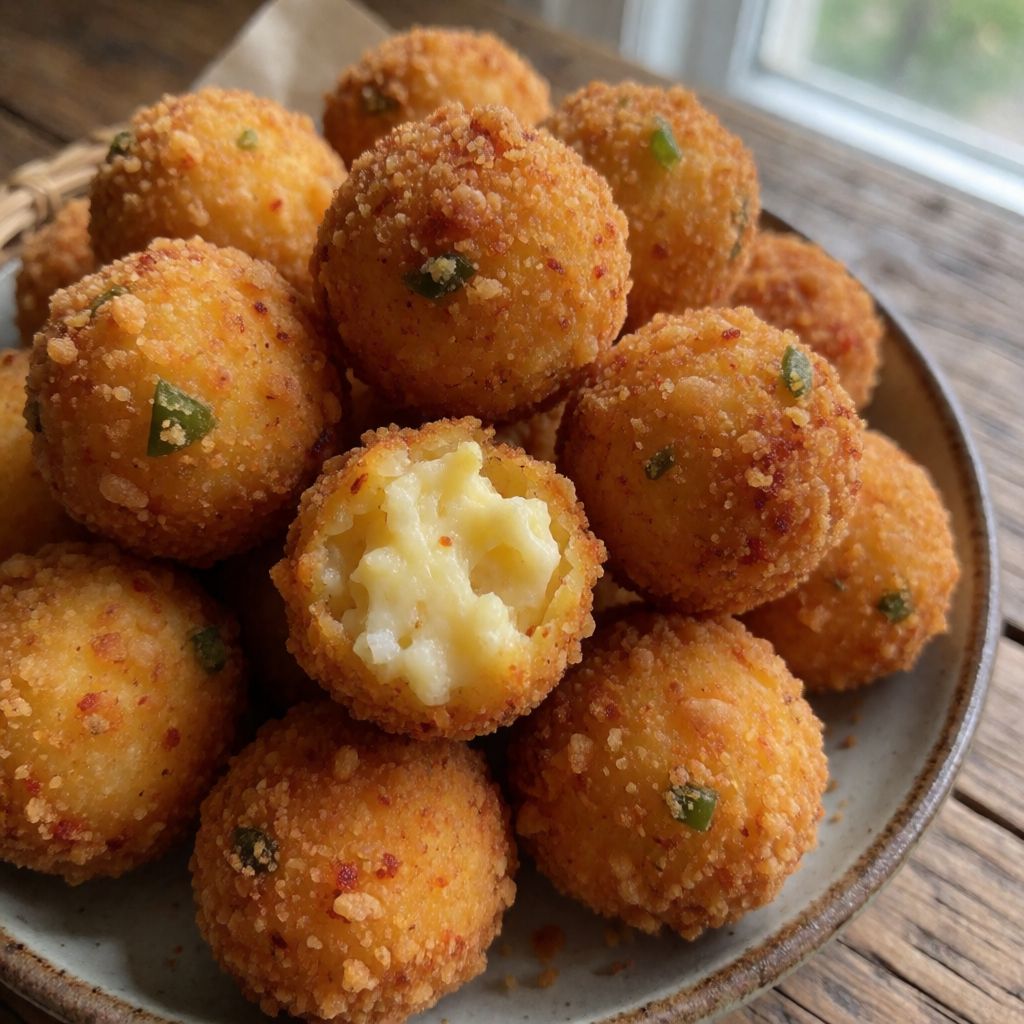
Spicy Cheese Balls with Chilli
Crispy fried cheese balls with jalapeño and smoked paprika, coated in breadcrumbs.
Labels are worked out automatically from the ingredients and can be wrong. Check the packaging if it matters to you.
Ingredients
- 150 g Cheddar freshly grated
- 2 tbsp Jalapeño pickled, finely chopped
- 1 tsp Smoked paprika
- 60 g Plain flour
- 1 pcs Egg white
- 100 g Breadcrumbs
- Salt to taste
- Black pepper freshly ground, to taste
- 1 l Vegetable oil for frying




Steps
Mix the cheese with jalapeño and smoked paprika. Shape into balls about 2 cm in diameter and coat them in flour, then in egg white, and finally in breadcrumbs mixed with salt and pepper.
Deep-fry the balls in hot oil until golden and crispy.
5 minPlace the balls on a paper towel to drain excess oil, and serve warm within a few minutes of frying, while they are still crispy.
This is a fried cheese nugget — the family mozzarella sticks belong to, except here the filling is sharp cheddar, not mild mozzarella, and the heat comes from pickled jalapeño and smoked paprika instead of a side of tomato sauce. Eight small balls per batch, meant for drinks before a meal, not as the meal itself. What you're eating is contrast: a crisp, dry shell against cheese that has gone soft and runny on the inside, with a slow burn and a whiff of smoke underneath.
What decides whether this works has nothing to do with the cheese or the chilli — it's the crust, and the timing of two things against each other. The breadcrumb shell has to seal shut before the cheese inside gets hot enough to melt and look for a way out. And once the balls are fried, the clock runs the other way: the cheese is molten and soft for only a few minutes before it cools and sets back into something rubbery. Fry them too gently and the shell takes too long to firm up, so the cheese finds a crack and weeps into the oil — you'll see it as a dark slick spreading, and a ball that comes out half-empty. Fry them hot and fast and the shell colours before the inside has had time to go soft, so you get a crisp shell around cheese that's barely warmed.
Go through what each thing in the bowl is actually doing, and the coating step stops being a ritual and starts making sense.
Cheddar is the whole point, so pick one on the sharper, drier end — mild, wet cheddar has more moisture to turn into steam inside the shell, and steam is what blows a hole in a coating that isn't sealed well. Grate it yourself if you can; pre-grated bags are often dusted with anti-caking starch, which is fine for a salad but makes the cheese clump instead of binding into a ball. If cheddar isn't in your fridge, look for the same thing in a different passport: any firm, aged cheese that holds its shape when grated and doesn't flood oil when it melts — a mature Gouda or a hard Monterey Jack both do the job. Soft, high-moisture cheeses — mozzarella fresh out of its brine, feta, anything that weeps liquid on the chopping board — will fight you at the frying stage.
Pickled jalapeño brings acid as much as heat, and that acid is doing real work: it cuts through the fat of the cheese and the frying oil so the whole thing doesn't taste one-note rich. Chop it fine — not for looks, but because a big chunk is a weak point in the ball, a seam the cheese can split along as it melts. No jalapeño in the cupboard — any pickled chilli with some bite and some vinegar will do: pickled peperoncini, a pickled scotch bonnet used sparingly, even chopped pickled gherkin with a pinch of dried chilli flake if heat alone is what you're missing. The vinegar is the non-negotiable part, not the particular pepper.
Smoked paprika is colour and aroma, not real heat — it's doing the job a kazan's wood smoke would do if you had one and weren't frying on a hob in a flat. Don't mistake it for chilli powder; it won't make the balls hotter, only rounder in smell. If you haven't got it, sweet paprika plus the smallest pinch of ground cumin gets you partway there, though it's an approximation, not a swap.
The three-stage coating — flour, then egg white, then breadcrumb — is a chain, and each link exists because the one before it fails on its own. Flour first because a cheese ball's surface is slightly oily and smooth, and raw egg white slides off smooth surfaces instead of gripping them; a thin dusting of flour gives the egg something dry and rough to cling to. Egg white, not whole egg, because you want glue without extra fat or yolk sugars that brown too fast and scorch before the crumb underneath has coloured — egg white sets firm and clear, holding the crumb in place without adding richness the cheese doesn't need more of. Breadcrumbs last, seasoned with salt and pepper right in the mix, because the shell is what your tongue meets first — season the crumb and you season the bite, even though the cheese inside is already salty on its own.
For the frying oil, the only real rule is a smell test: use anything with no character of its own and a high tolerance for heat — a plain vegetable or sunflower oil, the same bottle you'd use for chips. Olive oil has too much personality and too low a ceiling before it starts to smoke and turn bitter; save it for where its taste is wanted, not drowned out and wasted at frying temperature. A litre sounds like a lot for eight small balls, but it's about having enough depth in the pan to cover them, not about how much actually gets used — most of it goes back in the bottle once it's cooled and been strained.