
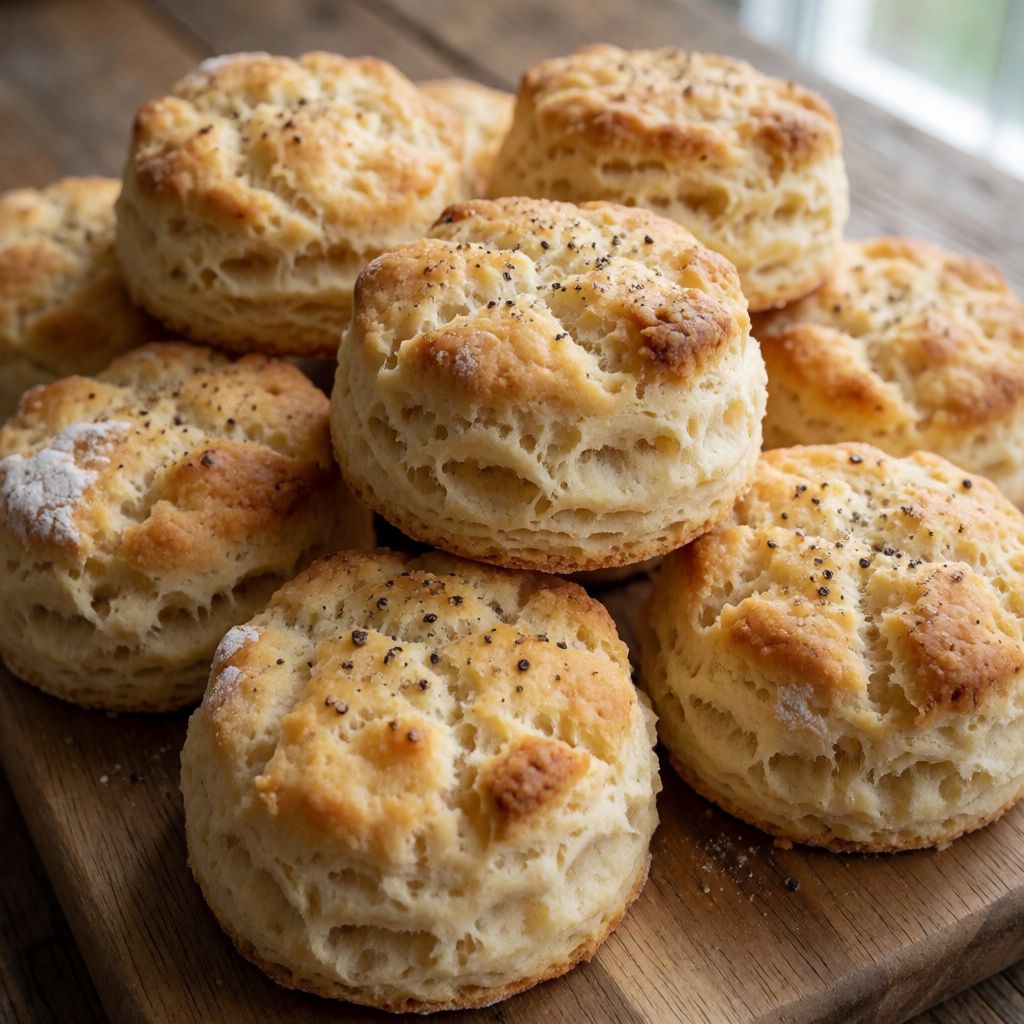
 AI photo
Cheese biscuits with salt and pepper
Crisp parmesan biscuits seasoned with flaky salt and freshly ground black pepper, baked until golden.
Labels are worked out automatically from the ingredients and can be wrong. Check the packaging if it matters to you.
Ingredients
- 100 g Plain flour
- 25 g Wholemeal flour
- 75 g Parmesan freshly grated
- ½ tsp Baking powder
- 100 g Butter cold
- 3 tbsp Whipping cream
- ½ tsp Salt flaky
- 1 pinch Black pepper freshly ground








Steps
Put the plain flour, wholemeal flour, salt, freshly ground pepper, Parmesan and baking powder in a bowl and mix well.
5 minCube the butter and rub it in until the mixture resembles finely grated Parmesan. Bring the dough together with the whipping cream and shape it into a log about 4 cm thick, then wrap it in baking parchment. Chill in the fridge for at least 1 hour.
60 minSlice the dough into 5 mm thick rounds and arrange them on a baking tray lined with baking parchment. Bake in a preheated fan oven at 180°C for about 10-12 minutes, until golden.
11 minLet the biscuits cool on a wire rack, then serve.
10 min
What you are making here is not really a biscuit in the rising sense — it's a savoury shortbread. Parmesan stands in for the sugar, butter does the same job it does in any shortbread: it coats the flour instead of binding it. That's the whole trick, and it decides whether these come out short and sandy or tough and biscuity in the bad sense.
The word that matters most in this recipe is "cold." Cold butter, cubed and rubbed in until it disappears into crumb — that's not a texture instruction for its own sake, it's physics. Flour develops gluten (the stretchy protein that makes bread chewy) only when water gets at it freely. Coat the flour particles in fat first, and water from the cream can't reach them properly — so no long gluten strands form, and the dough stays short, meaning it shatters under your teeth instead of bending.
Some say a biscuit dough should be worked smooth, like a bread dough, to "bring it together properly." No — the opposite is true here. You want it to look slightly rough, like fine crumbs with the cream just holding them, because every bit of visible butter is a tiny pocket that will melt in the oven and leave a gap behind it. That's what gives the crumb its short, almost sandy bite rather than a dense, cakey one.
On the flour: plain flour gives you the structure, the fine crumb. The wholemeal fraction is there for flavour and a slightly gritty, nutty background — it's a quarter of the total, enough to notice, not enough to toughen things, since wholemeal has more bran and a little more gluten-forming potential than plain. If you've only got plain flour in the cupboard, use all plain — you lose a bit of character, nothing structural breaks.
Parmesan is doing more than flavour duty — it's also carrying salt and some of the dish's moisture balance. Grate it yourself. The bagged pre-grated stuff is dusted with starch to stop it clumping, and it's drier and less aromatic because it's been sitting cut for weeks; it won't melt or bind the same way. The criterion for a substitute is a hard, dry, aged cheese with enough character to stand on its own without butter or sugar propping it up — a mature Grana Padano works, mature Cheddar works too but it has more moisture, so expect the dough to be a touch softer and the biscuits to spread a fraction more.
Cream, not egg, is the binder here, and that choice is deliberate. Egg brings protein that sets on baking — that's what gives a cake its spring. You don't want spring, you want shatter, so cream, which is mostly fat and water with no structural protein to speak of, holds the crumbs together without building a cake crumb. Any plain cream with enough fat to coat will do; don't reach for anything flavoured.
The baking powder is a half-teaspoon for a reason — it's there to stop the biscuit being flatly dense, not to make it rise. Too much and you'd get something closer to a savoury scone, puffed and soft, which defeats the whole shortbread logic. Flaky salt mixed through, rather than fine table salt, means pockets of saltiness rather than an even hit — you taste it unevenly, in a good way, the way you notice flaky salt on good butter. Freshly ground pepper matters because pepper's aroma is in volatile oils that are mostly gone within a day of grinding — pre-ground pepper gives you heat with none of the scent behind it.
At 180°C fan, what's actually happening is water leaving the butter as steam (giving the faint lift you see, nothing like a cake rise) while the cheese's proteins and sugars start to brown at the edges — that's your doneness cue, not the clock: a pale gold rim, not a uniform tan. Eleven minutes is where that usually happens in this dough at this thickness; it is not a guarantee, ovens lie.
Cheese biscuits like these are a British pantry habit that grew out of economy, not luxury — cutting an expensive block of hard cheese with flour and butter let a household serve a cheese course to more people than the cheese alone ever could, which is also why this batch makes fifty-five: it's built for a gathering, a cheeseboard at Christmas or alongside drinks, not an afternoon snack for two. The log keeps well wrapped and chilled, or frozen whole, so you can slice and bake a few at a time rather than firing the oven for the lot. And once they're out, get them onto a wire rack, not left on the tray — a hot tray traps the steam underneath and softens the base just as you've spent an hour making sure the rest stays short.