
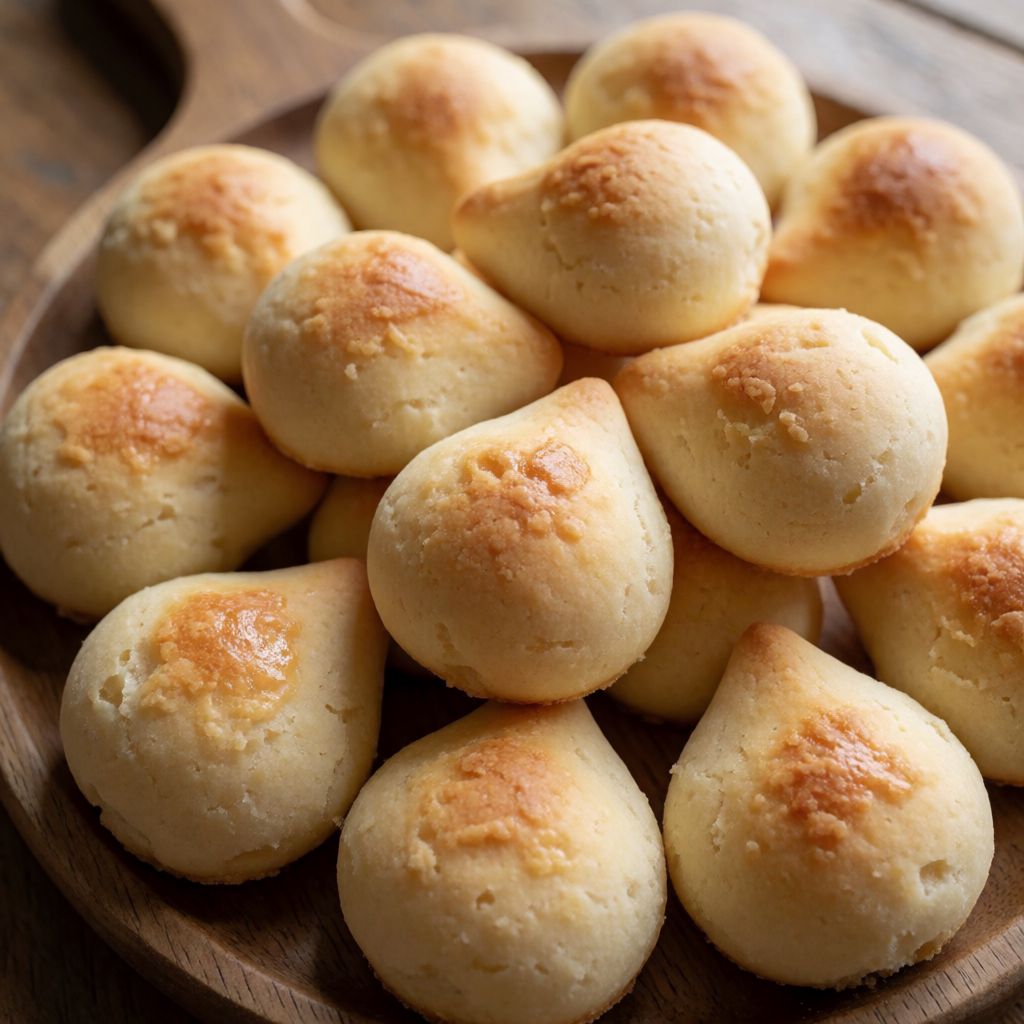
 AI photo
Savoury Cheese Kisses
Little savoury cheese biscuit sandwiches filled with a creamy goat cheese filling, perfect for a tea-time nibble.
Labels are worked out automatically from the ingredients and can be wrong. Check the packaging if it matters to you.
Ingredients
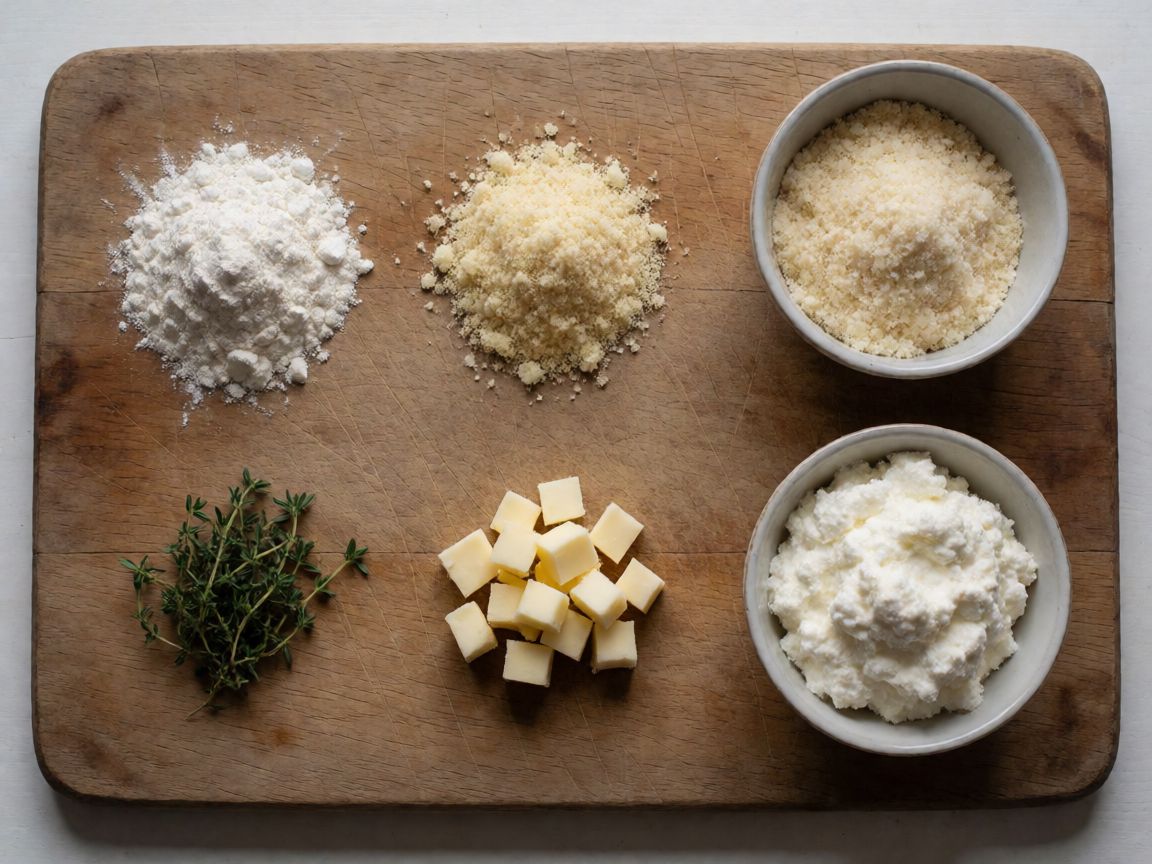
- 180 g Plain flour
- 20 g Almond flour
- 70 g Parmesan
- 80 g Butter diced
- 15 ml Water
- Salt to taste
- Black pepper to taste
- 150 g Goat's ricotta or robiola, ricotta, or a soft spreadable cheese
- 20 g Olive oil
- Thyme to taste










Steps
In a food processor, combine the flour, almond flour, Parmesan, salt and water. Add the diced butter.
Blend for a few minutes until you get a smooth mixture.
Transfer the dough onto a work surface and knead briefly until smooth.
Wrap the dough in cling film and leave in the fridge for 30 minutes.
30 minPinch off pieces of dough and shape into balls weighing about 7-8 g each.
Place the balls on a baking tray lined with baking paper.
Bake the biscuits in an oven preheated to 180°C for 15 minutes.
15 minMix the goat's cheese with the olive oil, then add salt, black pepper and thyme to taste.
Mix until creamy but fairly thick, then transfer to a piping bag.
Take the biscuits out of the oven and let them cool.
Pipe a little of the cheese cream onto each base and top with a second biscuit, pressing gently.
Repeat until all the ingredients are used up, and serve.
A savoury kiss is two short, sandy biscuits with a filling between them — in this case Parmesan dough instead of sweet, and soft cheese instead of jam. The "kiss" name is just the shape family: two rounds, filling, no top showing. What decides whether these work is the same thing that decides any shortcrust pastry: how little you let the gluten develop and how cold the butter stays before it hits the oven.
This is a short pastry, in the family of sablé — French for "sandy" — and that word is the whole instruction manual. You want sand, not dough that stretches like bread. Flour plus fat plus very little liquid, mixed just enough to bind, gives you crumb instead of chew. The almond flour is doing real work here, not decoration: it has no gluten in it at all, so swapping in more wheat flour for it will give you a tougher, more biscuit-ish bite, not a better one.
Some say a food processor "overworks" pastry and a bowl with cold hands is the only proper way. No — the opposite is usually true for this amount of butter and this little liquid: the blade cuts fat into flour fast, before your hands warm it, and that speed is exactly what keeps the butter solid at the point it melts in the oven, not before. Warm, soft butter in dough is what gives you flat, greasy biscuits that spread instead of holding a neat round edge — that's the fault you're avoiding, not an abstract rule.
The fridge rest matters for the same reason: cold dough holds its shape when the first blast of oven heat hits it. Skip it and the balls slump before the structure sets.
On doneness: 180°C "for 15 minutes" is a floor, not a verdict. These are small, 7–8 g balls, barely a heaped teaspoon, so they go from pale to too dark quickly on a domestic fan oven that runs hotter at the back. Look for the edge turning from the raw cream colour of the dough to a faint gold, and the base lifting cleanly off the paper when you nudge one with a fork — that's set, not just coloured. Pull them a shade paler than you think looks right; they firm up as they cool, and a biscuit that looks slightly underbaked warm is usually right once it's cold. Let them cool fully before filling — warm biscuit plus cold cheese cream is how you get a soggy middle by teatime.
On the flours: plain flour gives structure, almond flour breaks it. Parmesan is doing a third job — it's salt, savour, and a bit of extra fat and protein all at once, which is why there's comparatively little added salt in the dough itself. Don't go for the ready-grated stuff in a tub; it's often cut with starch to stop it clumping, and that starch will throw off your sand-to-paste ratio. A block, grated fine yourself, or at a pinch a hard, dry sheep's cheese like a mature Pecorino, gives the same dry, savoury crumble.
Butter: diced and used cold, because its only job before the oven is to sit as separate solid lumps coating flour, not to blend into a paste. Any butter will do as long as it's the real thing and cold from the fridge, not "room temperature for baking" as so many cake recipes insist — this is pastry logic, not sponge logic. No butter substitute with a high water content (most margarines) belongs here; water in the fat means steam in the oven, and steam means a biscuit that puffs and loses its sandy bite.
The filling is the one place you can really play. Goat's ricotta is light and a little tangy, which balances the richness of a butter-and-Parmesan biscuit nicely, but the recipe itself offers you robiola or plain ricotta as equals — the real criterion is "soft, spreadable, not wet." If a cheese weeps liquid when you stir it, it will seep into the biscuit and soften it before serving. Cream cheese, mascarpone loosened slightly with oil, or a soft goat's log all meet that criterion. The olive oil isn't for flavour so much as texture — it loosens the cheese just enough to pipe without making it runny, so choose one without a strong taste of its own if you don't want it fighting the thyme.
A word on patience, because this is a recipe built entirely from small, unglamorous waits. Thirty minutes in the fridge, full cooling before filling, piping neatly rather than dolloping — none of it is hard, all of it is skippable, and skipping any of it is exactly where these go soft, flat, or greasy. This isn't a dish you rush to get ahead of a Sunday roast; it's one you make the day before, with a cup of tea at hand, and leave in a tin till people arrive.