
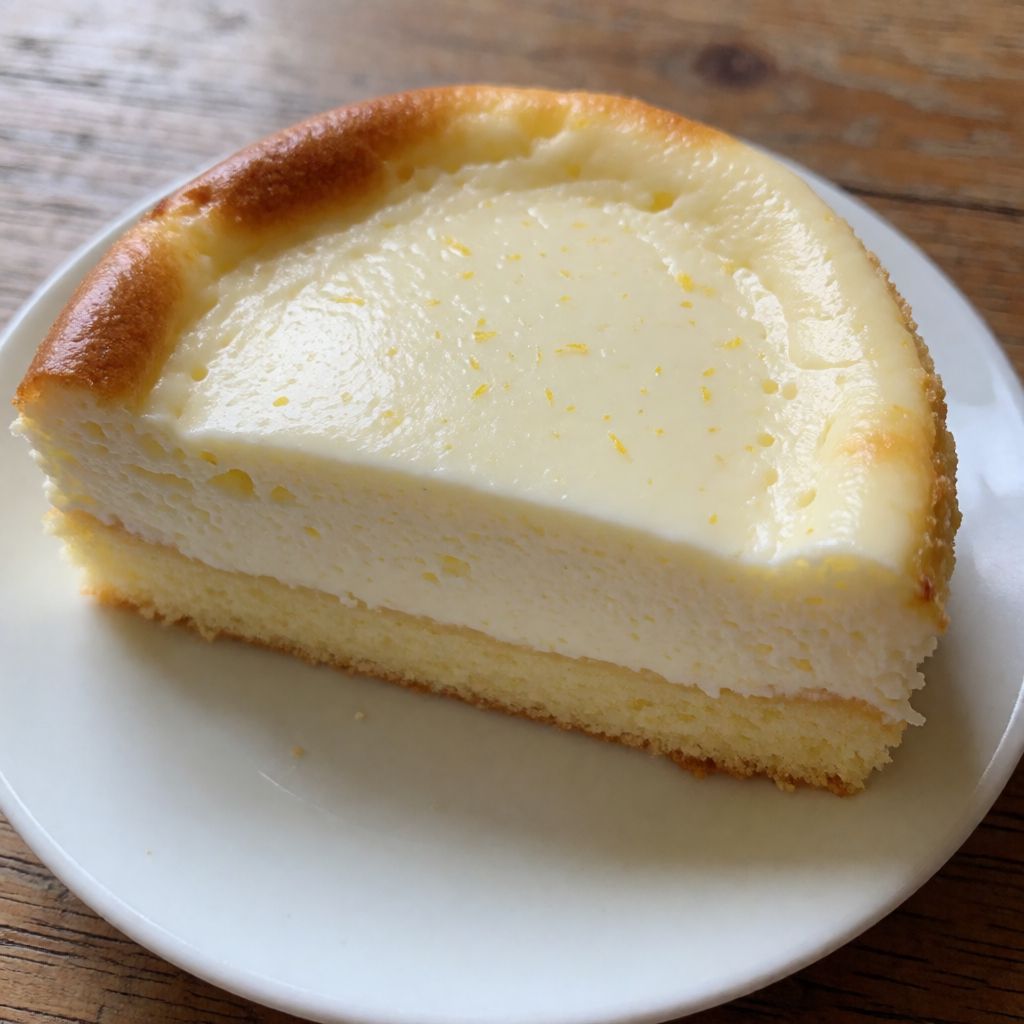
 AI photo
Cheesecake with Sponge Base
A creamy cheesecake set on a soft homemade sponge base, chilled until firm.
Labels are worked out automatically from the ingredients and can be wrong. Check the packaging if it matters to you.
Ingredients
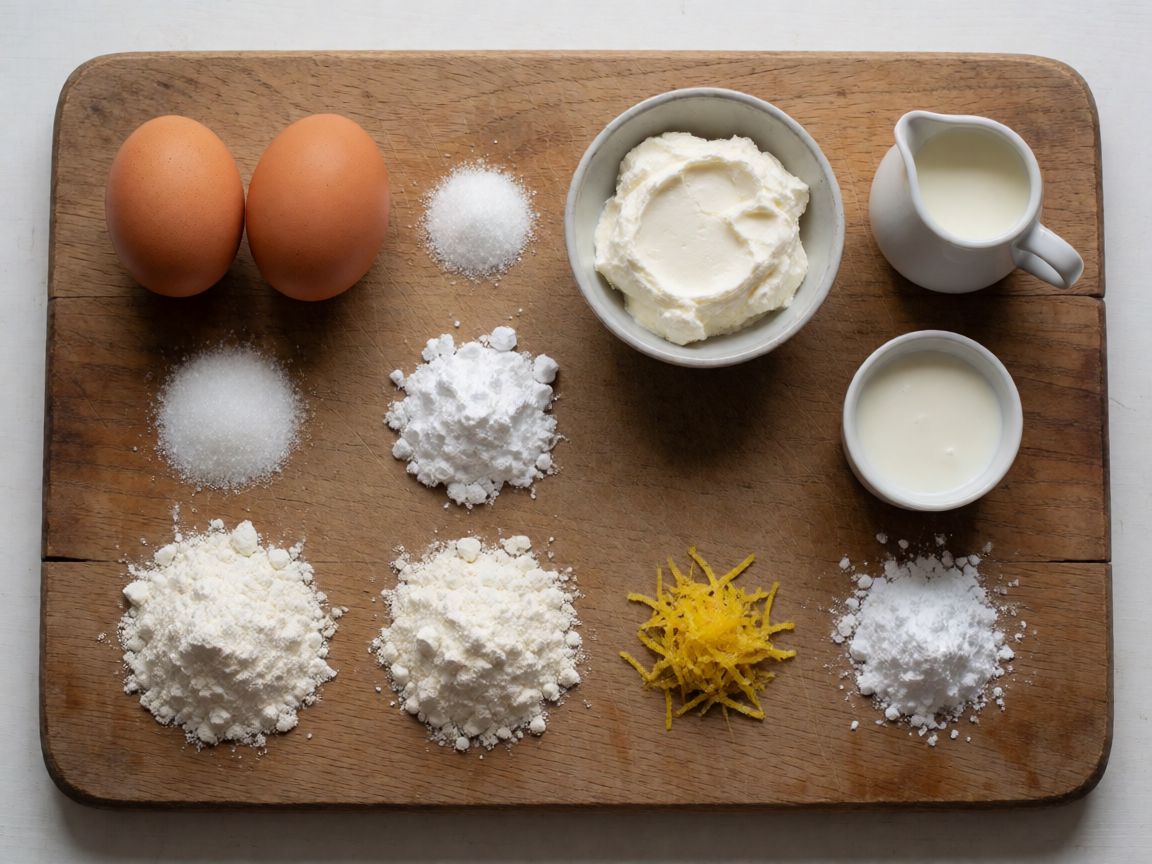
- 2 pcs Eggs
- 50 g Caster Sugar
- 30 g Potato Starch
- 30 g Plain Flour
- 500 g Cream Cheese
- 1 pcs Lemon Zest or orange zest
- 250 g Double Cream
- 120 g Icing Sugar






Steps
Crack the eggs into a bowl, add the sugar and whisk for at least 15 minutes, until the mixture is pale and fluffy.
15 minSift the flour and potato starch together, then gently fold into the whisked eggs, mixing from the bottom up.
Pour the batter into a 22 cm springform tin and bake in a preheated fan oven at 180°C for about 25 minutes.
25 minLet the sponge cool completely, remove it from the tin and slice it into two layers.
Mix the cream cheese with the lemon zest and icing sugar. Whip the double cream separately and gently fold it into the cheese mixture.
Place one fully cooled sponge layer in the tin, spread the cheese cream on top, smooth it well and chill in the fridge for at least 4 hours.
240 minRemove the cheesecake from the tin and decorate to taste.
This is two techniques stacked in one tin: a sponge that only stands up because of air you've beaten into it, and a cream layer that only sets because you've chilled it, not cooked it. No raising agent in that sponge — no baking powder, nothing chemical. The eggs and sugar, whisked until pale and thick, are doing all the lifting themselves, trapping bubbles that the oven's heat then locks in place by setting the egg protein around them. Skip the long whisk, or rush it, and you get a flat, dense disc that behaves like a biscuit, not a cushion for cream.
The other half of the dish runs on the opposite principle. There's no gelatine in this recipe, which is unusual for a "cheesecake" of this type — most shortcuts reach for a sachet of it to force the cream-cheese layer to hold a cut edge. Here the only setting agent is cold: butterfat in the double cream and in the cream cheese itself goes hard in the fridge the same way butter does, and that's what lets you slice through it cleanly four hours later rather than watching it ooze. Which means patience isn't a nice-to-have here — it's literally the ingredient doing the structural work. Four hours is a floor, not a target; check by pressing the edge gently, it should resist, not give.
Eggs and caster sugar: caster sugar is chosen, not icing sugar, because its crystals are fine enough to dissolve fully into the foam as you whisk, rather than sitting there as grit scratching the bubbles apart. If the mixture still feels sandy under your fingers after a few minutes, keep going — undissolved sugar is one of the quiet reasons sponges come out coarse rather than fine-crumbed.
Flour and potato starch together, not flour alone: flour alone, fully hydrated and worked, builds gluten, and gluten in a sponge means chew where you want softness. Swapping part of it for starch dilutes the gluten-forming protein without touching the flavour, so the crumb stays tender. If you've no potato starch, cornflour does the identical job — it's the same category of ingredient, pure starch with nothing to add on its own. Fold this mixture in from the bottom up, not stirred — stirring cuts straight through the air pockets you spent fifteen minutes building; folding moves the batter around them.
Cream cheese: you want the firm block kind sold for baking, not the lighter spreadable tub meant for toast. The difference is moisture and fat — the baking block has less water and a tighter protein-fat network, which is exactly what lets it firm up in the fridge rather than stay loose. Mascarpone will substitute at a pinch, but it's richer, so you might want to ease back the icing sugar slightly or it tips sweet and heavy.
Lemon or orange zest: what you want from it is the oil sitting in the coloured skin, not the juice — juice would add liquid and acid you haven't accounted for, and acid near cream cheese is a small risk of thinning it. Zest only, grated fine, and stop before you hit the white pith, which is bitter and brings nothing useful. Any citrus works on this principle — lime, grapefruit — pick whichever you have, the job is the same: cutting through the flatness of all that cream and cheese with something sharp-smelling.
Double cream: in the UK this sits around 48% fat, high enough to whip to stable peaks on its own. Whip it only to soft peaks before folding it into the cheese mixture — go further, to stiff, and you're one step from it splitting into butter and liquid, because you've knocked the fat past the point it can hold air and started clumping it instead. Cold cream whips faster and more reliably than cream at room temperature, for the same reason room-temperature eggs whip better than cold ones: it's about how the fat behaves, not a rule for its own sake — solid fat crystals in cold cream give the air bubbles something to cling to.
Icing sugar here instead of caster: this mixture isn't heated and isn't whisked for fifteen minutes, so there's no time for coarse sugar to dissolve — it would stay grainy under the tongue. Icing sugar is already powder, so it blends in cold with nothing left to feel.
One honest note on the method: you cut the sponge into two layers but the recipe only asks for one in the tin. The second disc isn't wasted — it's the baker's own ration, the bit that historically never made it into the dish that went to the table. Keep it for a trifle, or split it, soak it in tea or a splash of something sweet, and eat it standing at the counter while the cheesecake sets. That's not me padding out the recipe — that's just what happens to the spare half of every sponge cut like this, going back generations of cooks who didn't throw food away because they couldn't afford to.
On the oven: fan-assisted ovens move air across the surface of the sponge, which browns and crusts it a little faster than a still oven would — keep an eye near the end rather than trusting the clock alone. And don't open the door early to check. A sudden cold draught on a sponge that's still mostly air and barely-set protein is exactly how a good rise collapses in the last five minutes — the structure hasn't locked yet, and the shock drops it. Let it sit and dome before you look.