
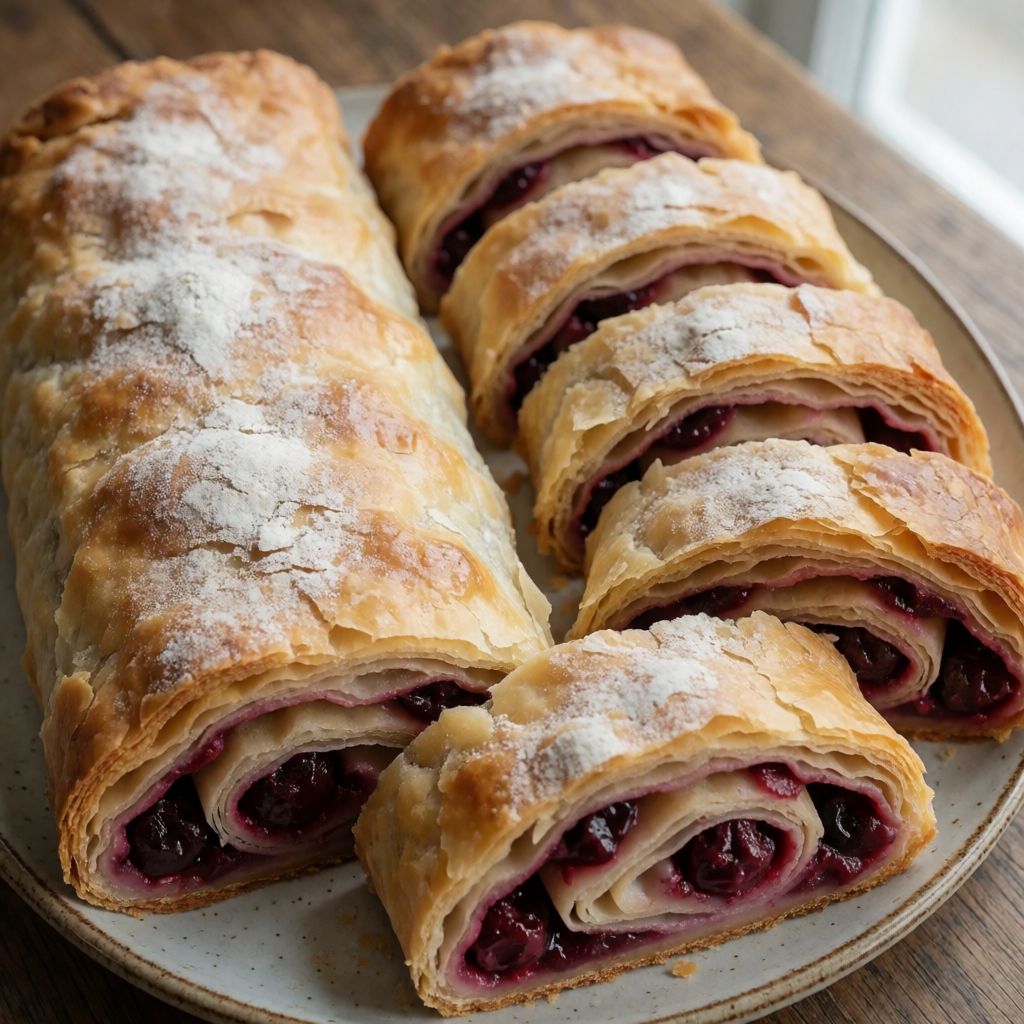
 AI photo
Cherry Strudel
A sweet cherry strudel with a crisp pastry wrapped around spiced, buttery cherries.
Labels are worked out automatically from the ingredients and can be wrong. Check the packaging if it matters to you.
Ingredients
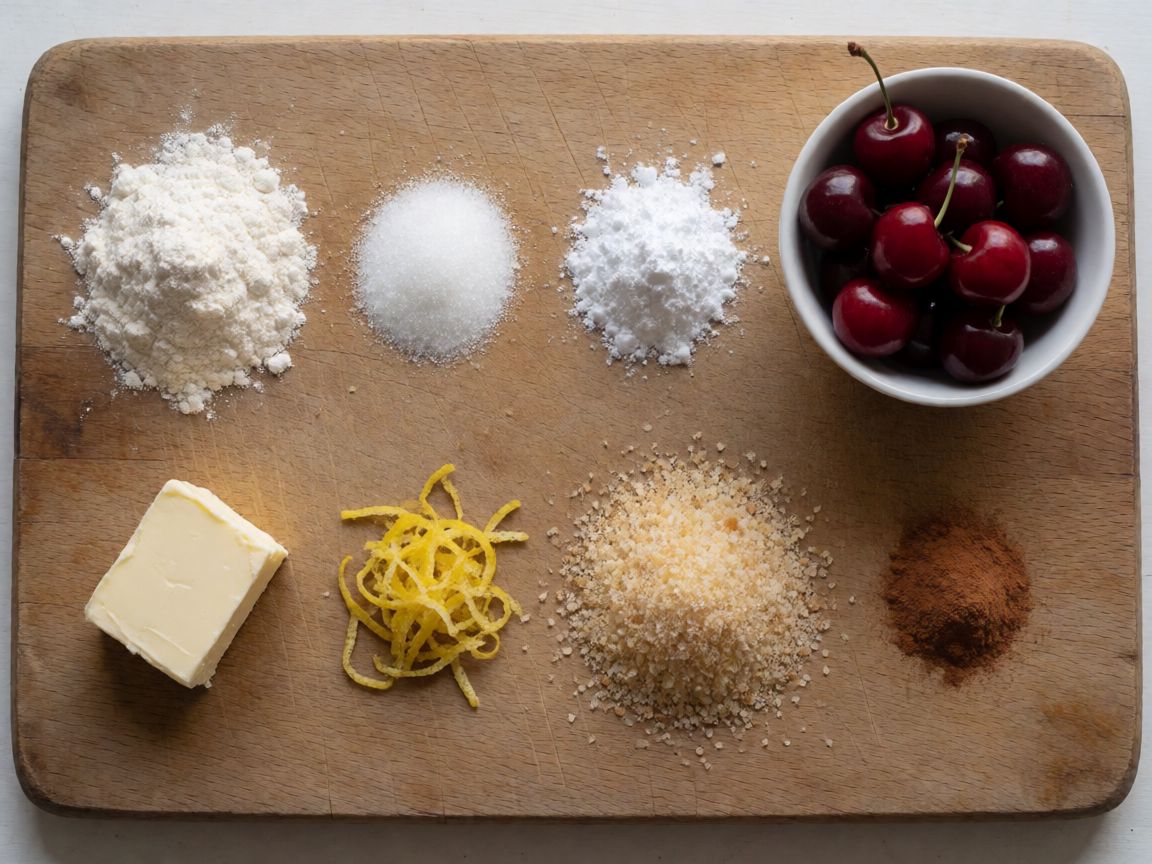
- 250 g Plain flour
- 120 g Caster sugar
- 30 ml Olive oil
- 250 ml Water
- pinch Salt
- Icing sugar to taste
- 1 kg Cherries
- 50 g Butter
- 120 g Breadcrumbs dried
- 1 pcs Lemon zest
- 1 tsp Cinnamon
- 1 pcs Egg yolk beaten












Steps
Sift the flour, add the salt and olive oil, knead the dough, cover and let it rest for at least 30 minutes.
30 minWash the cherries, pat dry, remove the stones, cut into pieces, put in a bowl, add the sugar and mix.
Melt the butter over low heat, add the cinnamon and breadcrumbs.
Roll out the dough on a flour-dusted cloth, shaping it into a thin rectangle.
Spread the cherries over the dough, drizzle with the melted butter, and sprinkle with lemon zest.
Roll the sheet into a log, sealing the edges, and place on a baking tray lined with baking paper.
Brush the strudel with egg yolk and bake for 35–40 minutes at 200°C until golden.
38 minTransfer to a plate, let cool slightly and dust with icing sugar before serving.
A strudel is really a bet: can you get a sheet of dough thin enough to see newsprint through it, without it tearing, around a kilo of wet fruit? That's the whole mechanism. Everything else — the breadcrumbs, the butter, the resting time — exists to make that bet pay off.
Cherries are mostly water held in a loose net of cell walls. The moment you cut them and mix in sugar, they start weeping — that's osmosis pulling liquid out through the broken cells. If that liquid goes straight onto your pastry, you get a soggy bottom before the oven even gets a chance. So the breadcrumbs toasted in butter aren't a texture for their own sake; they're a dry sponge, sitting between fruit and dough, built to drink the cherry juice as it's released during baking rather than let it pool and dissolve the sheet underneath.
The dough resting for 30 minutes isn't you being patient for the sake of it — though patience is the main ingredient in any dough that has to stretch instead of snap. Gluten, once worked, is tight and elastic like a rubber sheet pulled hard; try to stretch it immediately and it springs back or splits. Rest lets the gluten relax, so when you finally pull it out over the cloth, it yields instead of fighting you. Skip the rest and you'll tear the dough at the thin point, and the fruit juice will find that tear in the oven — that's the actual cause of a strudel that leaks all over the tray, not "bad luck."
The flour itself wants to be plain, low in protein, because this isn't bread that needs strength — it's a sheet that needs to stretch without resisting you. Strong bread flour will fight back at the thin stage and tear. If plain flour isn't to hand, a mix of plain with a spoon of cornflour softens it further and gets you closer to the stretch you want.
Olive oil here is doing a quiet job: it coats some of the flour's protein strands so the dough stays workable and doesn't turn tough as you knead it. Any neutral oil with no smell of its own does the same — sunflower, a mild vegetable oil. Skip olive oil specifically if you don't want its flavour sitting faintly under sweet cherries; it won't ruin anything, but it's there to be felt, not announced.
The cherries: fresh, stoned by hand, is the only way to control how big the pieces are, and that matters because bigger chunks hold their shape and keep some bite after 35–40 minutes in the oven, while cherries mashed too fine collapse into jam and flood the breadcrumb barrier anyway. If fresh cherries aren't in season — and in the UK that's most of the year — frozen ones work, but thaw and drain them properly first; frozen fruit carries extra water from ice crystals rupturing the cells even more than fresh ones do, so your breadcrumb layer needs to be generous, not stingy, to cope with that extra liquid.
The butter and breadcrumbs aren't just a moisture trap — melting the butter first and warming the crumbs in it means the crumbs start absorbing fat and toasting slightly before they even meet the fruit, which means they're already primed to soak rather than just sitting there dry and useless. Dried breadcrumbs specifically, not fresh — fresh ones are still half water themselves and can't do the drying job. If you're out of breadcrumbs, crushed digestives or even ground nuts do the same work of standing between juice and pastry.
Lemon zest and cinnamon aren't decoration, they're correction: a kilo of cherries plus sugar is a sweet, slightly flat note on its own, and the zest's sharpness and cinnamon's warmth cut through that flatness so the filling doesn't taste like one single idea repeated.
The egg yolk brushed on before baking is for colour and a bit of shine, not structure — it's the browning you're chasing when the instructions say "until golden," because 200°C is simply the heat at which that Maillard browning happens at a sensible pace without drying the thin pastry out before the fruit inside has had a chance to soften and release its juice onto the crumbs. Go by the colour of the dough, not purely the clock — ovens vary enough on a standard British hob-oven that 35 minutes in one kitchen is 42 in another.
One more myth worth breaking while we're here: some think strudel must be rolled on a special cloth and lifted with great ceremony, Austro-Hungarian style, or it isn't "proper." No — the cloth is just leverage, a way to roll a fragile sheet without your hands tearing it by direct contact. A clean tea towel, well floured, does the job in a British kitchen exactly as well as whatever cloth sat on a Viennese table a century ago. Let it cool slightly before the icing sugar goes on too — dust it hot and the sugar just melts into the butter sheen instead of sitting as a visible layer.