
 AI photo
Chicken Burrito
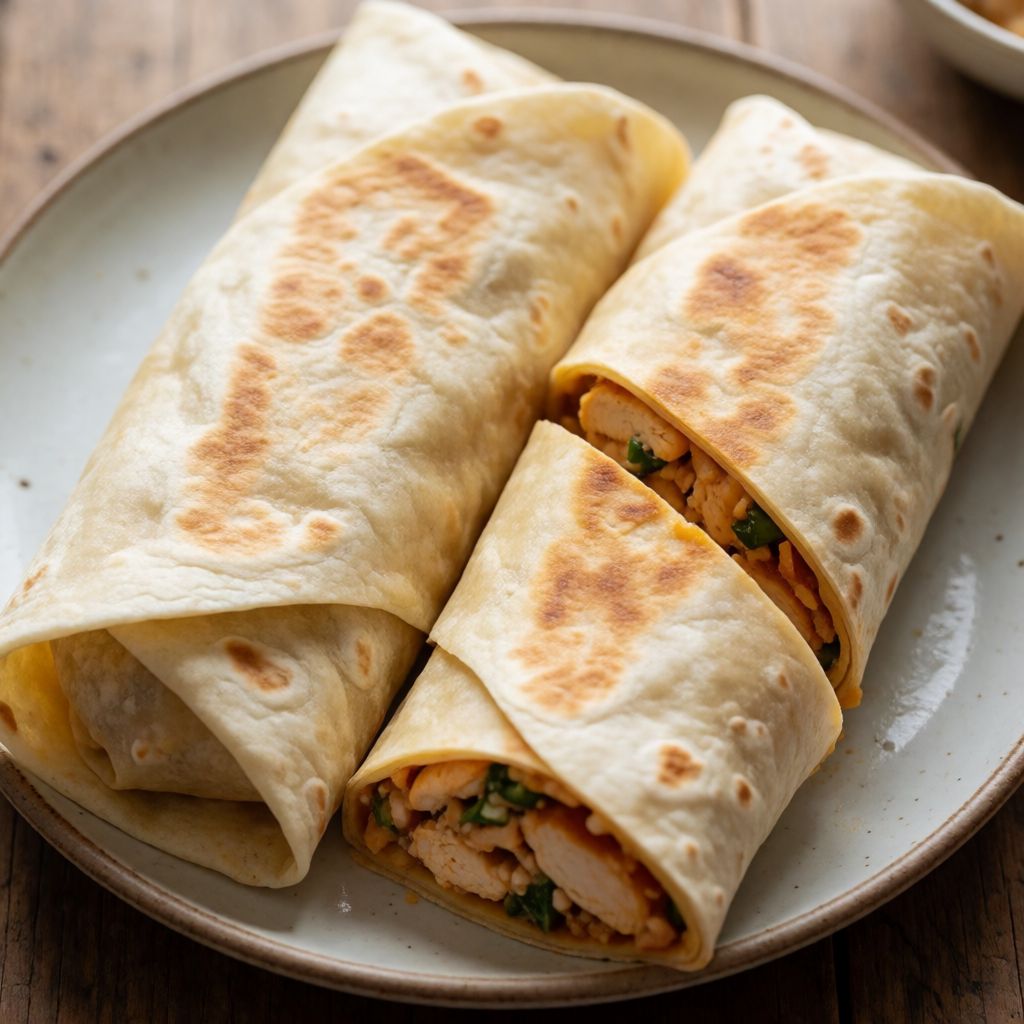
Burrito with chicken, bell pepper, onion and melting cheese, served in a tortilla with lettuce and salsa.
Labels are worked out automatically from the ingredients and can be wrong. Check the packaging if it matters to you.
Ingredients
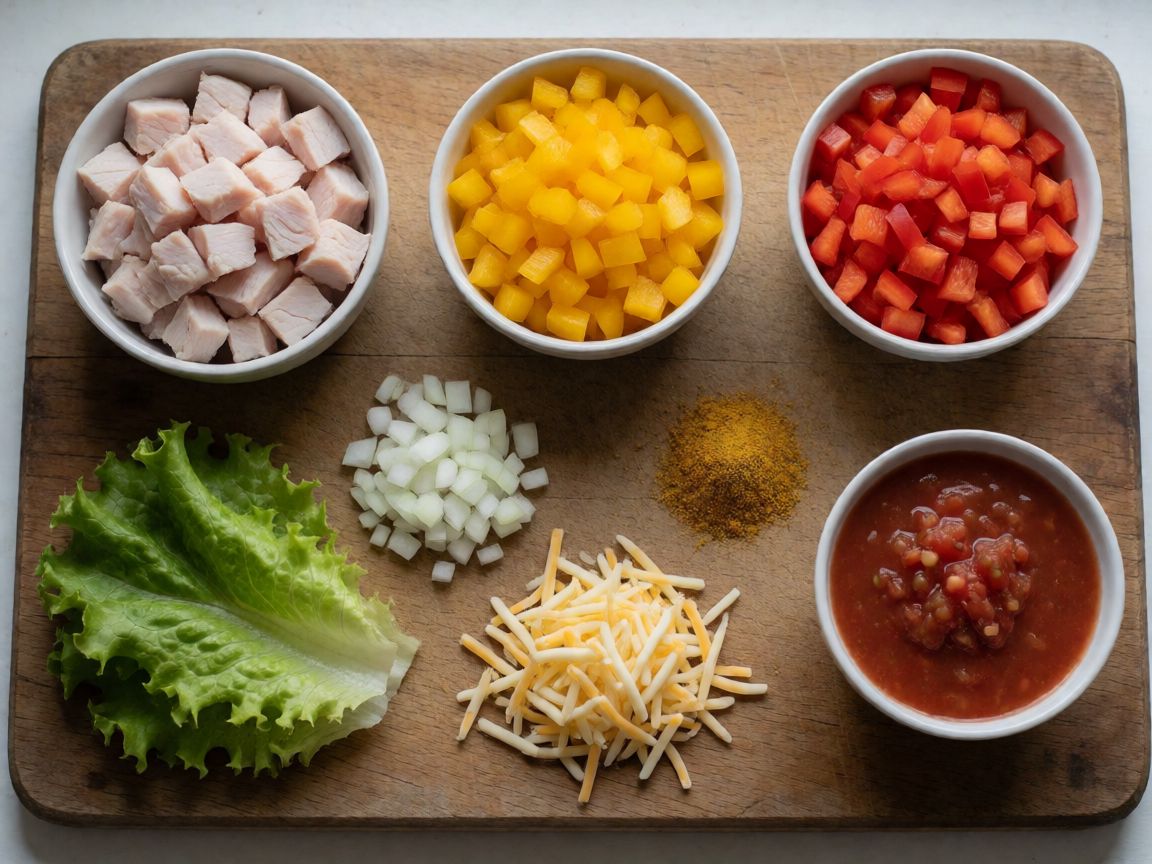
- 400 g Chicken breast
- 200 g Bell pepper
- 200 g Bell pepper
- 100 g Onion
- 150 g Edam-type cheese
- Curry powder to taste
- Salt to taste
- Black pepper to taste
- Iceberg lettuce as needed
- Salsa to taste, or guacamole
- Olive oil for frying
- Tortilla as needed










Steps
Heat the oil in two frying pans. In one, fry the onion and bell pepper; in the other, fry the thinly sliced chicken breast.
Season both with salt and pepper.
Cover the pan with a lid and keep cooking until the pepper and onion are softened and lightly browned.
When the chicken is almost done, add a little curry powder for aroma and keep frying until fully cooked (74°C). Lower the heat to minimum.
Combine the pepper and onion with the chicken, then add the Edam-type cheese.
Wait until the cheese starts to stretch — the filling is ready.
On the tortilla, place iceberg lettuce, a pinch of salt and some of the chicken, pepper, onion and cheese filling.
Finish with hot salsa or guacamole.
Fold the tortilla and serve.
A burrito is really two separate frying jobs that meet only at the very end, in the bowl, and that's the whole trick of it. You run two pans at once — one doing the vegetables, one doing the chicken — because they want different things from the heat and you'd ruin one waiting on the other. Put peppers and onion in with the chicken from the start and the chicken sits in released water and steams instead of browning. Keep them apart, and each gets what it needs.
What decides whether this works is two separate doneness checks, not a clock. The pepper and onion go in hard enough to catch some colour, then get a lid — not because the recipe says 40 minutes, but because a lid traps the steam that softens them without you needing to add water or babysit the pan. You're watching for them going soft and picking up brown edges, gold sliding toward amber. That's the cue. Time is just the minimum it takes to get there, never the reason to stop.
The chicken is the part people get nervous about, and the nervousness is misplaced. "Cut it open to check it's not pink" is a myth — no, because pink can mean perfectly safe meat near a bone or just slightly undercooked collagen, and it tells you nothing reliable. What tells you something reliable is 74°C at the thickest piece, checked with a thermometer, because that's the number where salmonella and campylobacter actually die, not a guess based on colour. If you don't own a probe, cut your slices thin and even — thin chicken breast cooks through fast and uniformly, so the risk of a raw centre mostly disappears by cut, not by staring at it.
Then comes the moment that makes it a burrito rather than a stir-fry on a plate: chicken and vegetables combine, the heat drops right down, and cheese goes in last, off strong heat, so it melts and stretches rather than splitting into grease and rubber. Edam is chosen for a reason — it's a semi-hard cheese with decent fat content that stretches when warm without turning oily, and it isn't trying to dominate the filling with sharpness. The job is mild and meltable. If you can't get Edam, anything in that same family does the job: young Gouda, mild Cheddar, even a supermarket mozzarella in a pinch — the criterion is "melts smoothly, doesn't fight the spice", not the brand on the wrapper.
Chicken breast is the right cut here because it's lean and cooks fast when sliced thin, which matters on a domestic hob — you don't have a wok ring blasting heat from underneath, you have one or two rings on an electric or gas stove doing their honest best. Thin slices compensate for that by giving the heat less meat to get through. If you only have thigh, use it — it's more forgiving of a slightly overcooked moment because it carries more fat, and nobody will complain.
The two bell peppers, 200g and 200g, aren't a typo for one big pepper — using two means you likely get two colours, which is really about flavour spread as much as looks, since a green pepper is grassier and a red or yellow one is sweeter, having ripened longer on the plant. Use what's cheap that week; the dish doesn't demand a specific colour, just "firm, not wrinkled."
Iceberg lettuce earns its place by contrast, not virtue — it's mostly water and crunch, with almost no flavour of its own, and that's exactly the point. It gives the wrap a cold, crisp layer under the hot filling so the whole thing doesn't collapse into one soft mouthful. Any crisp, mild lettuce substitutes fine; a peppery rocket changes the character more than you'd expect, so go easy if that's what's in the fridge.
Salsa or guacamole at the end is where the acidity and fat come from — salsa brings sharpness to cut through the cheese, guacamole brings more fat and creaminess instead. They're doing opposite jobs, so pick based on whether the filling feels like it needs brightening or softening, and don't feel obliged to use both.
Oil for frying just needs to carry heat without adding its own smell to compete with the curry powder — olive oil works, but any neutral oil you already have, sunflower or vegetable, does the same job and won't taste of anything once it's hot.
Last thing: patience is the ingredient nobody lists. Two pans, two different rhythms, a lid you don't lift every thirty seconds to check — that takes a bit of standing around doing less than you think you should. Resist stirring the peppers every ten seconds; let the lid do its steady, boring work.