
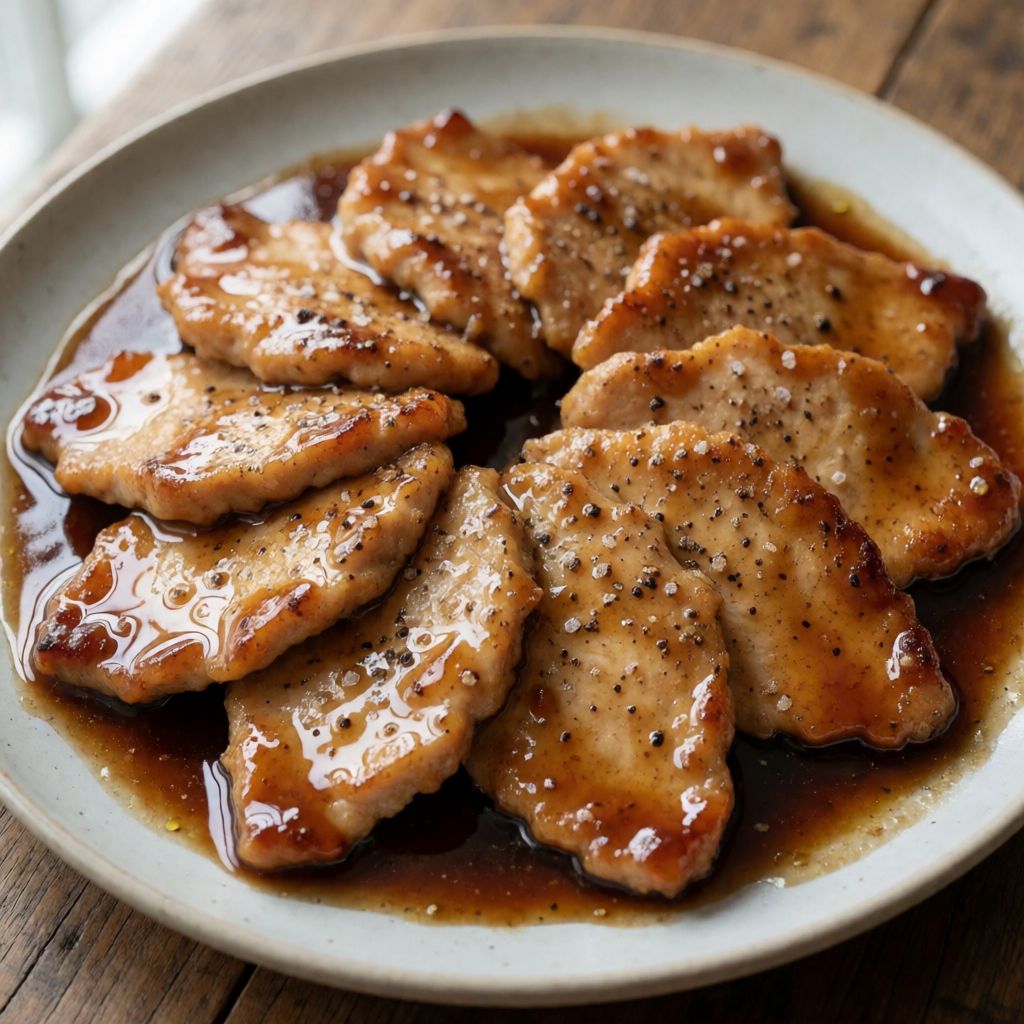
 AI photo
Honey-Glazed Chicken Piccatini
Tender chicken breast marinated in a honey and balsamic glaze, pan-fried and finished with mixed herbs.
Ingredients
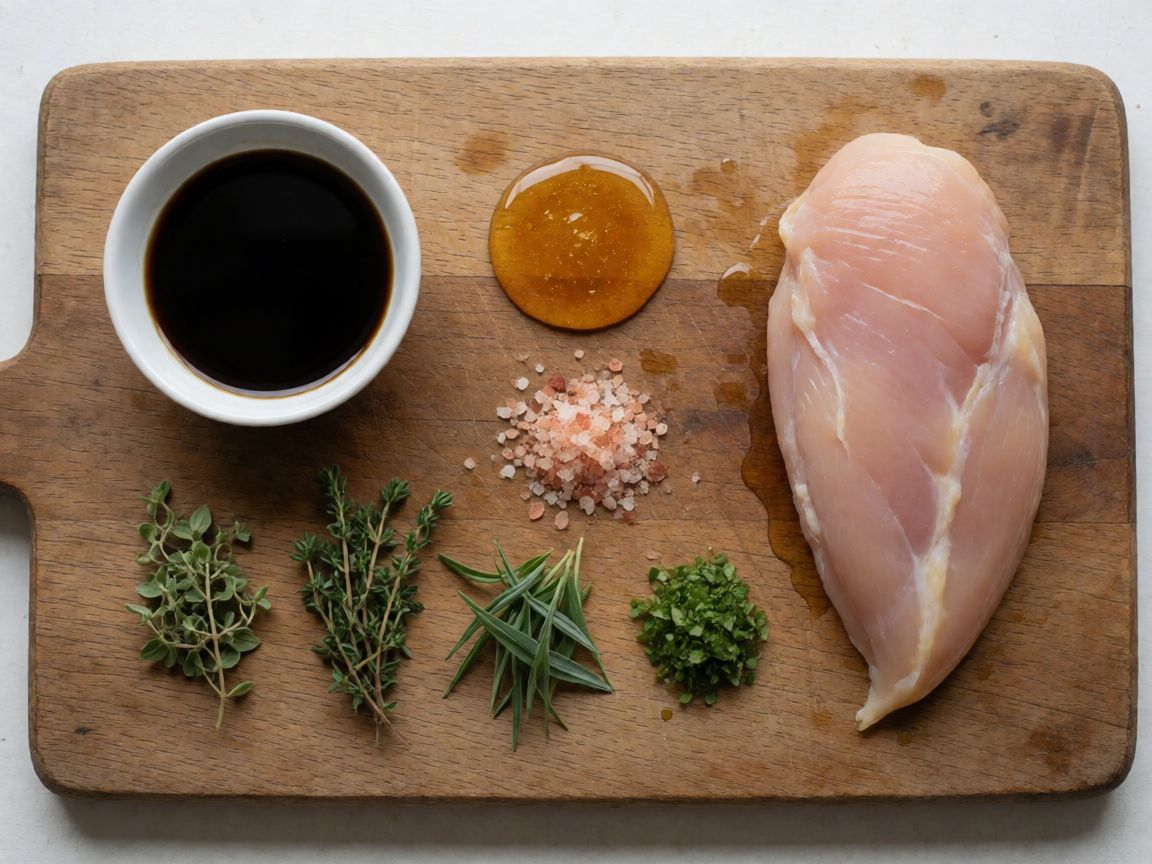
- 1 pcs Chicken Breast
- 250 ml Balsamic Vinegar
- 2 tbsp Olive Oil
- 2 tbsp Honey
- Smoked Salt to taste
- Black Pepper to taste
- Marjoram to taste
- Thyme to taste
- Tarragon to taste
- Basil to taste










Steps
Prepare the marinade: combine the olive oil, honey, balsamic vinegar, smoked salt and black pepper.
Cut the chicken breast into pieces and marinate for at least 2 hours.
120 minHeat a non-stick frying pan without oil.
Fry the chicken pieces on all sides until cooked through, then pour over the marinade and sprinkle with the herbs.
Serve with mashed potatoes or grilled vegetables.
Forget the name piccata for a second. In Italian kitchens that word means a thin, pounded veal cutlet in a sharp lemon sauce. What you've actually got here is its English-countryside cousin: chicken cut into pieces, seared dry, then finished in a sweet-sour glaze — closer kin to a honey-glazed gammon than to anything Milanese. What's borrowed is the method, not the name: cut thin, cook fast, coat at the end.
What decides whether this works is not the marinating, it's what happens in the pan, twice over. First, a dry pan takes the chicken from raw to properly browned, a crust forming because there's no film of oil sitting between meat and hot metal to get in the way. Second, that same hot metal takes the leftover marinade and drives the water out of it until balsamic and honey stop being a sauce and start being a coating that clings — a reduction, same trick as a gastrique, just with honey standing in for refined sugar.
Some say searing seals the juices in — no, because juice loss has nothing to do with the crust and everything to do with how far past done you push the inside. The crust buys you flavour and colour, full stop. The juice is saved by taking the pan off heat at the right moment, not by any sealing.
You'll know the chicken has arrived when a piece, pressed with a finger, springs back rather than giving like dough, and the thickest one, cut open, is white to the middle with no glassy pink streak left. That's the clock that matters. The fifteen minutes on the card is only so you know roughly what you're walking into.
Cut the breast into pieces no thicker than a finger, and keep them roughly the same size as each other — that's what lets them all finish browning in the same couple of minutes instead of the thin ones drying out while you wait for the fat ones to catch up. And on the marinade itself: some say a vinegar marinade works its way deep into meat and tenderises it through and through — no, because acid only travels as far as it can diffuse in the time you give it, a couple of millimetres at most. What it tenderises is the surface, sometimes past pleasant into mush. The inside stays exactly as tender as it always was; what actually keeps a chicken breast tender is simply not overcooking it.
On the balsamic vinegar: true aged balsamico from Modena is a reduced grape must, aged for years, expensive for good reason — and wasted here, because you're about to reduce it again in a pan anyway. The supermarket bottle, which is mostly wine vinegar with some caramel and a little real balsamic for character, does the job just as well for a marinade that's going to be boiled down regardless. If you've only got a plain vinegar in the cupboard, the honest substitute is any vinegar with a bit of sweetness already in it, or a plain one with an extra spoon of honey added to compensate.
The olive oil's job in the marinade is small but specific: it's a carrier for fat-soluble flavour, and it stops the honey and vinegar seizing into a sticky syrup before it's even touched the chicken. The criterion for swapping it is any oil with no smell of its own, so it doesn't compete with the balsamic — sunflower or rapeseed will do the carrying just fine. Save the good, peppery olive oil for something you'll actually taste it in, like a salad.
Smoked salt is there for an aroma that used to come free, from cooking over an actual wood fire, and now gets bottled instead. If you haven't got any, ordinary salt plus a pinch of smoked paprika gets you most of the way there; plain salt alone just means the dish reads one note simpler, which isn't a disaster.
The herbs go in raw, at the very end, off the heat, and that's deliberate — a dry, hot pan would cook the volatile oils out of thyme, tarragon, basil and marjoram in seconds, turning fragrant into bitter. Thrown in after the glaze has formed, they stay perfumed. The two hours of marinating, meanwhile, is not a step you can rush by adding more vinegar or more heat — it's the kind of waiting no timer shortcuts, so start it before you do anything else, not once you're already hungry and eyeing the pan.
One thing the card glosses over: that marinade has been sitting on raw chicken, so before it goes back over the cooked meat it needs to actually boil in that hot pan — not just warm through. That's not a nicety, it's the difference between a glaze and a reason to feel off tomorrow. If you're working on stainless or cast iron rather than a non-stick pan, wipe the surface with an oiled paper rather than pouring oil in, so you keep the dry-sear logic that gives you the crust in the first place. And on quantity: one breast across four people is thin unless you slice it properly thin and lean on the mash or grilled vegetables alongside — which is exactly the arithmetic of a Sunday roast, where the meat is the smallest thing on the plate by weight.