
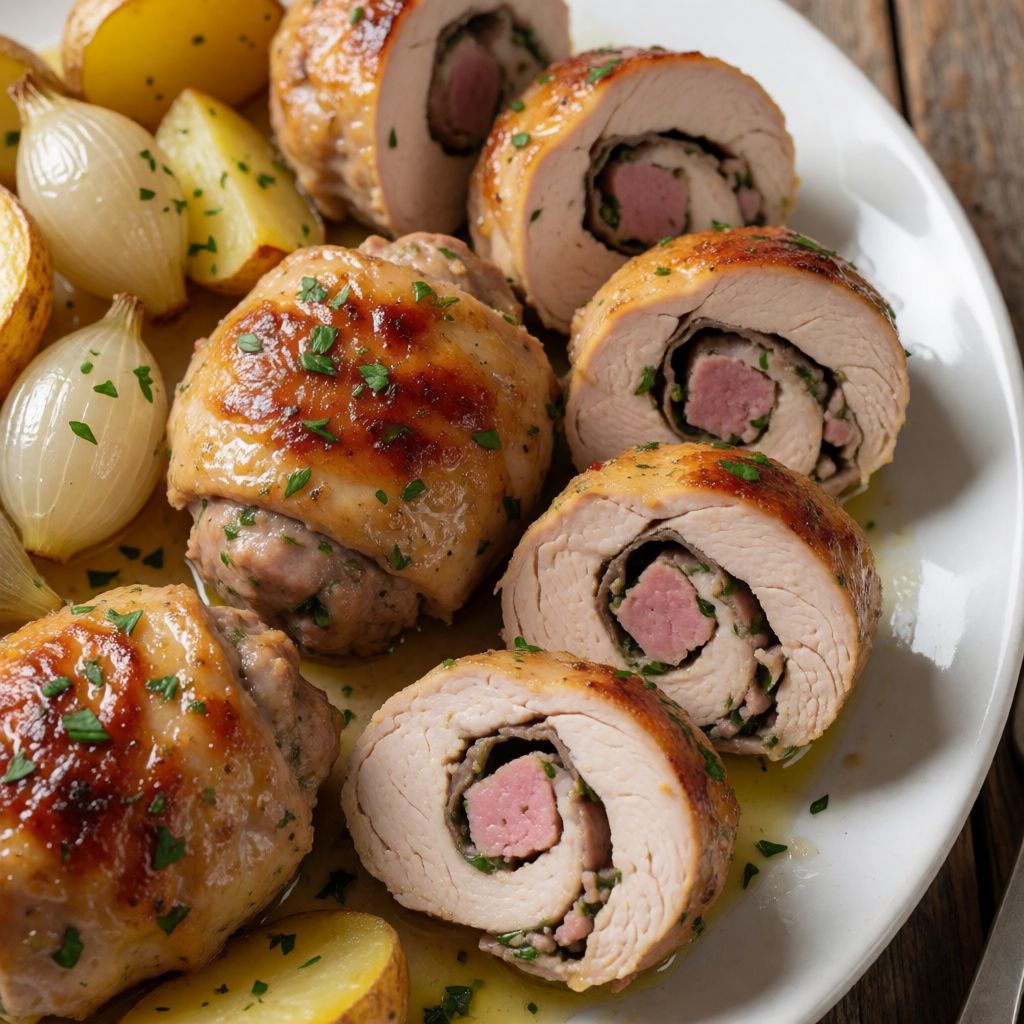
 AI photo
Chicken and Ham Roulades with Potatoes and Baby Onions
Pan-seared chicken and ham roulades baked with potatoes and baby onions in white wine.
Ingredients
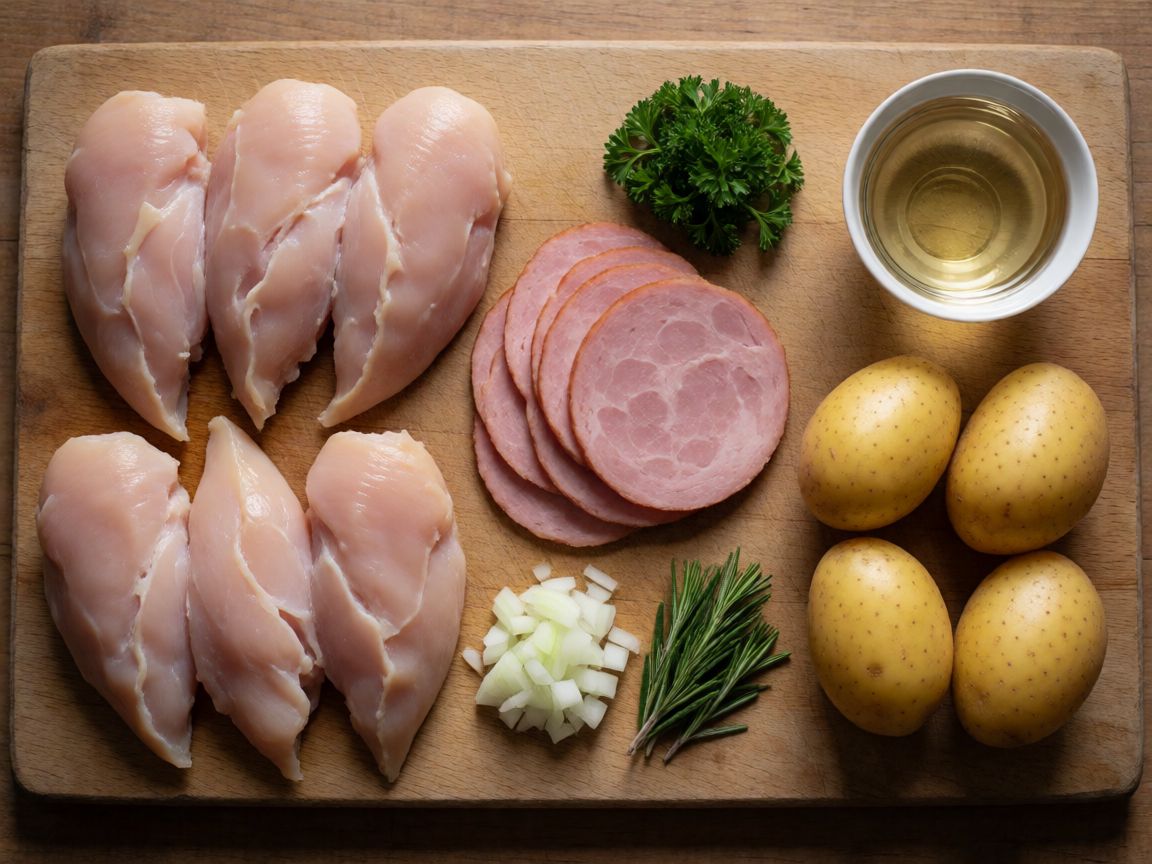
- 6 pcs Chicken breast
- 6 pcs Ham
- Parsley to taste
- Salt to taste
- Black pepper to taste
- Olive oil to taste
- 4 pcs Potatoes
- 200 g Baby onions a small, flat variety if available
- Rosemary to taste
- 125 ml White wine










Steps
Place a slice of ham and a little less than a tablespoon of chopped parsley on each piece of chicken breast.
Roll up and secure with kitchen string or a toothpick.
In a roasting tin brushed with olive oil, sear the rolls on high heat on all sides, pour in the wine and let it evaporate.
Season with salt and pepper, then add the potatoes and baby onions.
Add a little rosemary, a touch of salt and pepper, and drizzle with olive oil.
Bake in an oven preheated to 200°C until the chicken is fully cooked — the internal temperature at the thickest part of the roll should reach at least 74°C.
40 minRemove from the oven and serve.
This is a Sunday roast shrunk down and dressed up: chicken, potatoes, onions, all in one tin, out in under an hour. The trick is the ham. Chicken breast on its own is lean meat with no fat reserve, and in a hot oven it dries out fast — so you line it with ham, which is fat and salt, and as the roll turns in the heat that fat bastes the chicken from the inside. The parsley riding along with it isn't decoration either, it's steam and aroma trapped inside the roll instead of lost into the tin.
Some say the first hard sear is there to "seal in the juices." No — meat has no seal, muscle fibre is a bundle of open tubes, you cannot cork it shut with heat. What the sear actually does is build a browned crust with its own flavour, and leave bits stuck to the tin that the wine can lift off and turn into a thin sauce around the potatoes. Skip the sear and you don't lose juiciness, you lose flavour and a sauce.
What decides whether the whole dish works is one thing only: the chicken. Potatoes forgive overcooking, baby onions caramelise and get sweeter the longer they sit, but a chicken breast roll goes from juicy to rope in the space of a few minutes once it's past done. So treat the dish as a clock running on the chicken, with the vegetables along for the ride — check the roll, not the oven timer. Cut into the fattest part of the thickest roll: the meat should be opaque right through with no pink thread near the string, and the juice that runs out should be clear. If you own a probe thermometer, use it — 74°C at the centre is the number, and it's a floor, not a target to rush past.
On chicken breast: buy pieces of even thickness, because an uneven roll cooks unevenly — the thin end will be done and dry while the thick end is still raw at 74°C. If your breasts are thick and lopsided, flatten them a little with the flat of a knife before you roll; it costs nothing and solves the problem at the source instead of fixing it with a longer bake, which only punishes the thin end more.
The ham needs to be thin enough to roll without tearing and fatty enough to render as it cooks — a dry, over-lean ham does nothing for the chicken, it just sits there as a second slice of lean meat. If you can't get sliced ham, cooked bacon or even a thin rasher of pancetta does the same basic job: salt and fat lining a lean roll. Parsley is there for moisture and smell, not strictly tradition — any soft, non-woody herb works, though rosemary (which you're already using outside the roll) is too tough and resinous to put inside it.
Baby onions, left whole, hold their shape through the roast and go sweet rather than sharp because their sugar has nowhere to escape to inside an intact skin. Some say they need blanching first to peel cleanly — that's a step for pearl onions you're keeping whole for pickling, where the skin has to come off without bruising the onion. Here, if peeling whole baby onions is a fight, just halve them; nobody checking the tin will mind, and halved onions caramelise at the cut face anyway, which is extra flavour, not a loss.
Potatoes: choose a waxy variety, the kind that holds its shape when boiled, not the floury kind that collapses into mush. In this tin they're partly roasting in oil, partly braising in wine and chicken fat — a floury potato under that treatment falls apart before the chicken is anywhere near done.
White wine is there for acid, to cut the fat from the ham and chicken skin and to lift the browned bits off the tin into something you can spoon over the plate. Any dry white does it; if you don't keep wine in the house, a splash of cider vinegar or lemon juice loosened with a little water and stock gets you the same acid lift, just without the wine's own perfume. Olive oil here just needs to be an oil that can take high, direct heat for the sear without smoking and turning bitter — ordinary olive oil manages that fine, a cold-pressed "finishing" oil does not, save that one for drizzling at the table, not for searing.
On the domestic oven: 200°C in a fan oven and 200°C in an old conventional one are not quite the same oven, and most home ovens run a few degrees hot or cold wherever the thermostat happens to sit. Use a roasting tin wide enough that the rolls and potatoes sit in one layer with space between them — crowd them and they steam each other instead of roasting, and you lose the crust you worked for at the sear.