
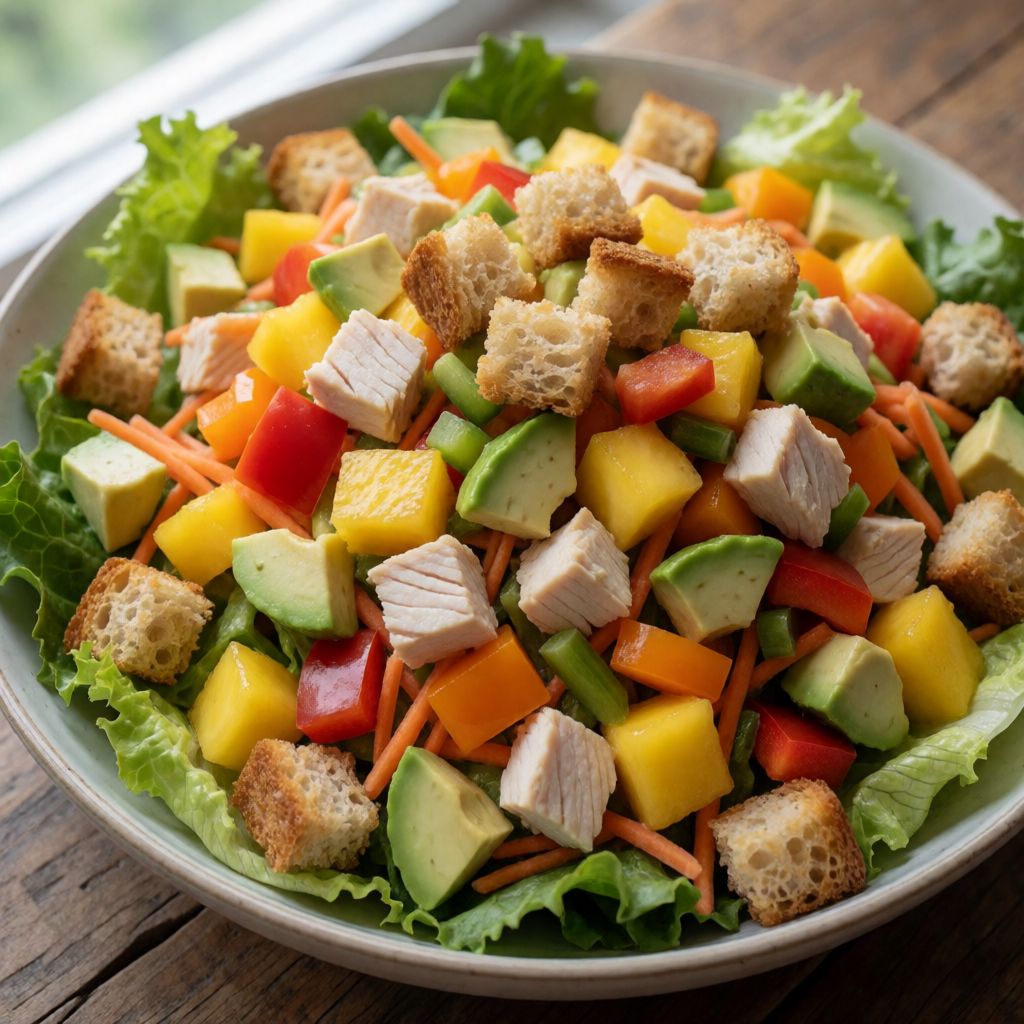
 AI photo
Tropical Chicken Salad
A fresh salad pairing poached chicken breast with crisp vegetables and tropical fruit.
Labels are worked out automatically from the ingredients and can be wrong. Check the packaging if it matters to you.
Ingredients
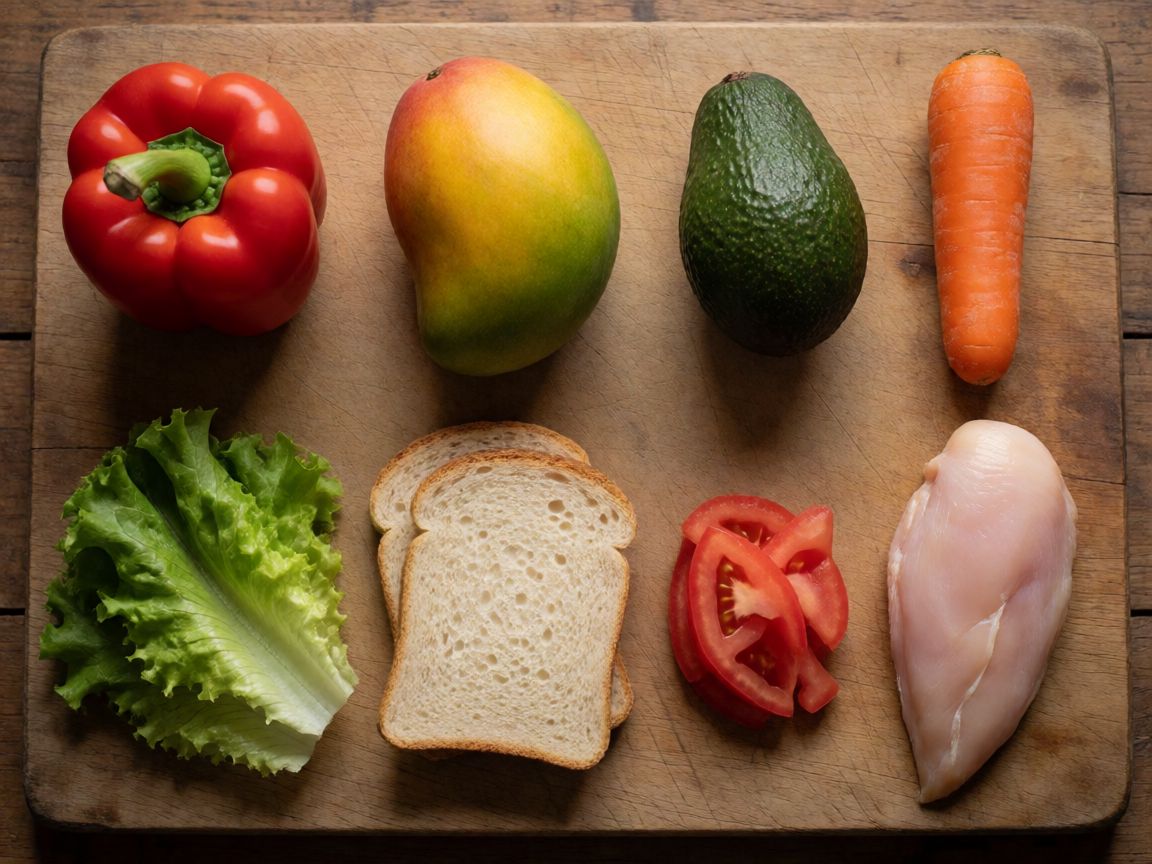
- 1 pcs Bell pepper
- 1 pcs Mango
- 1 pcs Avocado
- 1 pcs Carrot
- Iceberg lettuce to taste
- 2 pcs Stale bread slices
- Plum tomatoes to taste
- 1 pcs Chicken breast
- Pineapple to taste
- 1/2 pcs Chilli pepper
- Capers to taste
- 1 pcs Anchovies
- Salt to taste
- Black pepper to taste
- Olive oil











Steps
Cut the chicken breast lengthways in half, trim away any bone and sinew, wrap tightly in cling film and poach in a pan of water.
15 minWash the lettuce, then cut the bell pepper, mango and pineapple into thin strips and finely chop the chilli; toss together in a bowl.
Blitz the anchovies and capers with the olive oil, salt and black pepper, then toss the fruit mixture through this dressing.
Cut the tomatoes into wedges and peel the carrot into thin ribbons.
Fry the cubed bread in a little oil until golden and crisp.
Slice the avocado just before serving.
Sear the poached chicken breast in a pan with a little oil, then slice; it's ready when the centre reaches 74°C.
Assemble the salad with the lettuce leaves, bell pepper, carrot, tomatoes, chicken, avocado, the tropical fruit mix and the croutons.
This isn't a salad in the cold-plate sense — it's a cold-and-warm construction held together by one trick: poaching the chicken in its own cling-film parcel so it never touches water directly. That's the thing that decides whether it works. Chicken breast poached naked in a pan of water bleeds flavour into the water and comes out grey and stringy; wrapped tight, it steams in its own moisture, stays pale and dense, and you get a breast that slices clean instead of shredding.
Everything else on the plate is built around contrast, not harmony. Sweet mango and pineapple against anchovy-and-caper dressing, which is salt and umami doing the job salt alone can't — anchovies dissolve into a dressing the way salt never does, giving it backbone instead of just sting. Soft avocado against torn croutons for crunch. Raw carrot ribbons and iceberg for the cold crisp base that lets the warm seared chicken sit on top without wilting everything into mush.
Some say a salad has to be entirely cold, otherwise it's "not really a salad." No — because the warmth of the chicken is doing work: it releases the smell of the sear, and it slightly softens the mango and avocado touching it, which is exactly the texture you want. Serve it stone cold all over and you lose that.
On temperature: 74°C at the centre is not a suggestion, it's the point where chicken is safe and still just moist — a thermometer earns its keep here, because by eye, a sliced breast can look done and still be raw at the core, especially one this thick after halving lengthways. If you don't have a probe, cut into the thickest part: the juice should run clear, not pink, and the flesh should look opaque right through, no translucent streak in the middle.
On the chicken itself: breast, not thigh, because you want it lean and pale for slicing into neat strips that sit on a salad rather than falling apart in it. Halving it lengthways before poaching isn't fussy — it halves the thickness, which halves the time it takes heat to reach the centre, and that's what keeps it from overcooking at the edges while the middle catches up. Trimming bone and sinew now means you're not fighting gristle with a knife later, on a plate, in front of people.
On the anchovy and capers: one anchovy fillet, blitzed, disappears completely into the oil — you won't taste "fish," you'll taste a dressing that has more depth than oil and lemon ever manage alone. This is the same logic behind Worcestershire sauce and fish sauce in a dozen cuisines that have nothing else in common: a small amount of fermented or cured fish reads as savoury depth, not as fish. If you have no anchovies, a teaspoon of fish sauce does the same job, or failing that, upped salt and an extra caper or two for the brine-sharpness — it won't be identical, but it fills the same role in the mechanism, not just the same slot in the list.
On the fruit: mango and pineapple are there for acid-sweetness, not just sweetness — a ripe mango and a fresh pineapple both carry real acid alongside the sugar, which is why they survive next to anchovy and chilli instead of just turning the whole thing into dessert. If your pineapple is tinned, drain it hard — the syrup will drown the dressing. Any firm, tart-sweet fruit works on the same principle: a slightly underripe nectarine, even a tart apple in a pinch, as long as it holds its shape when cut into strips and doesn't collapse into mush when dressed.
On the bread: stale, cubed, fried — this is a crouton born of not wasting bread, the same economics behind every bread salad from panzanella to fattoush. Fresh bread fries to a soft, oily crumb; stale bread has already lost its moisture, so the oil crisps it instead of soaking it limp. Any dense, dry-ish bread works here — a stale baguette, a leftover roll, even the heel of a sandwich loaf you'd otherwise bin.
On the vegetables: carrot in ribbons, not grated, because a ribbon still has bite and doesn't weep water the way grated carrot does sitting in a bowl waiting to be plated. Iceberg specifically for its water-crisp crunch and near-zero flavour — it's a textural vegetable, not a flavour one, so it won't fight the dressing. If you want more character, swap in Little Gem, but don't reach for a soft leaf like butterhead — it'll wilt under the warm chicken instead of holding its shape.
Patience here isn't about long hours — the cook time is twenty minutes — but about not rushing the avocado. Cut it too early and it browns and goes slick before it hits the plate; cut it last, right before serving, and it still has its own texture instead of becoming another soft thing in a bowl of soft things.