
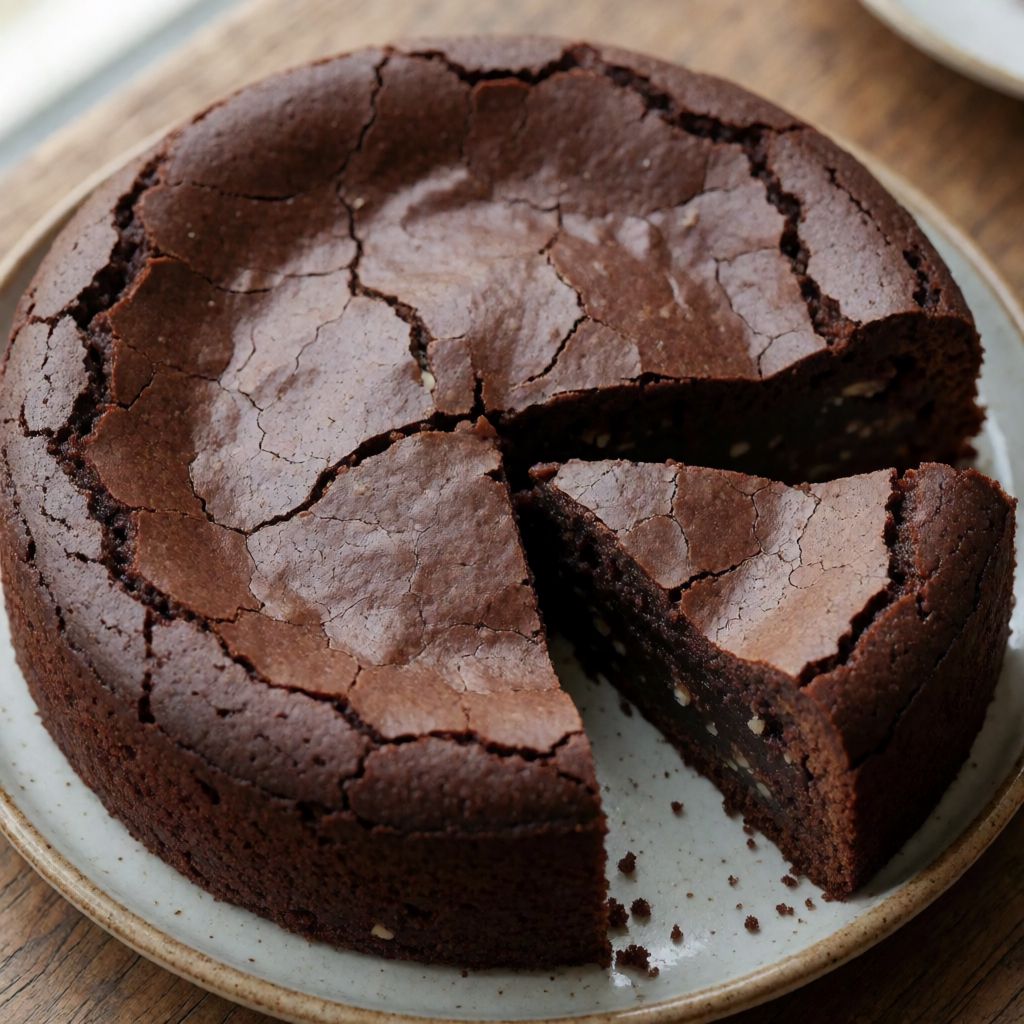
 AI photo
Chocolate Almond Caprese Cake
A flourless Italian chocolate and almond cake, rich and fudgy, finished with a dusting of icing sugar.
Labels are worked out automatically from the ingredients and can be wrong. Check the packaging if it matters to you.
Ingredients
- 200 g Butter
- 250 g Dark chocolate
- 5 pcs Egg yolk
- 200 g Sugar
- 5 pcs Egg whites
- 300 g Almonds
- 1 pcs Icing sugar for dusting
- 1 pinch Plain flour for dusting the tin







Steps
Finely chop the dark chocolate and add it to the softened butter.
Melt over a low heat, stirring constantly so the mixture does not burn.
Remove from the heat and leave to cool.
Beat the egg yolks with the sugar using a mixer until light and fluffy.
Add the melted chocolate and butter and beat with the mixer until smooth.
Whisk the egg whites into a stiff, firm foam.
Gently fold the egg whites into the mixture with a spatula, stirring carefully from bottom to top.
Add the chopped almonds and mix thoroughly.
Grease a 24 cm baking tin with butter and dust with flour.
Pour the batter into the tin.
Bake at 180°C.
25 minRemove the cake from the oven and leave to cool.
Dust with icing sugar on top.
Caprese is a Capri cake that has no flour in it — not a modern gluten-free trick, but an old Capri bakery that supposedly ran out of flour one day and had to work with what it had: chocolate, butter, eggs, almonds. Whether that story is true or just good marketing for a tourist island, the cake it left behind is real and it works on a simple principle — ground almonds do the structural job flour usually does, and they do it with fat instead of starch. That's why the cake is dense, damp, almost fudgy, and why it stays that way for days instead of drying out like a sponge.
What decides whether it works is not the oven, it's your arms. The whole architecture of this cake rests on egg whites whipped stiff and then folded in — gently — to carry air into a mixture that is otherwise heavy with butter, chocolate and ground nuts. Beat too hard when folding and you knock the air back out; the cake won't rise, it'll sit flat and sulky in the tin. Fold too timidly and you leave streaks of egg white that cook into dry, holey patches. The motion is bottom to top, cutting and lifting, not stirring — because stirring is for mixing, and here you're not mixing, you're trying not to undo the whisking you just did.
Melting the chocolate and butter together over low heat matters for one reason: chocolate seizes and grains if it gets too hot too fast, especially with butter already in there fighting for space. Low heat, constant movement, patience — not because the recipe says so, but because scorched chocolate tastes of ash and there's no fixing it once it's in the batter.
Chocolate: 250 g of dark chocolate is doing more than flavouring — it's one of the two fats-and-solids pillars (with the butter) that flour would normally supply as structure in a sponge. Use something with real cocoa content, 60–70%, not a sweetened bar — a milk chocolate here just melts into greasy sweetness with nothing to hold the crumb together. If dark chocolate at that strength isn't to hand, plain cocoa powder plus extra butter can stand in, but you lose some of the glossy density that makes this cake what it is.
Butter: 200 g, softened before it meets the chocolate. Soft butter blends evenly at low heat; cold butter forces you to push the temperature up to melt it, and that's exactly the risk zone where the chocolate grains. Any unsalted butter works — salted will just mean you taste a faint savoury edge against the sugar, not a disaster, but not the intention either.
Almonds: 300 g, and this is the ingredient the whole cake is named for and built on. Ground almonds carry fat and protein, not starch, so they bind the batter without making it bread-like — this is why "flourless" doesn't mean "collapsed," it means "differently built." If you're grinding whole almonds yourself, don't over-process them into paste; you want meal, not almond butter, or the texture turns gummy instead of tender. Hazelnuts can replace them — Italians do this too, especially inland from Capri — but the flavour shifts from clean-nutty to roasted-rich.
Eggs: five yolks beaten with 200 g sugar until pale and thick give you the base that carries fat; five whites whipped stiff give you the lift. Separating them isn't fussy tradition, it's mechanical: yolks and whites do opposite jobs here, enriching versus aerating, and mixing them together from the start would let the fat in the yolks deflate any air you try to whip into the whites later. If a yolk breaks into the white bowl while separating, fish it out — even a trace of fat stops whites from whipping stiff at all.
Flour and icing sugar: the pinch of flour on the tin is pure mechanics, nothing to do with the batter — it gives the butter-greased surface enough grip for a dense, eggless-rise batter to climb the sides a little rather than sliding back down as it sets. Icing sugar on top at the end is decoration and a touch of contrast against the bitter chocolate, not sweetness the cake structurally needs — a British kitchen with a bag of icing sugar already open from scones will have exactly what's wanted here.
On your hob and oven: 180°C with no fan-adjustment note means you're trusting the oven's true heat, not a guess — if yours runs hot, the outside crust can set and crack before the inside is barely cooked, since there's no flour here to firm up the middle quickly. A skewer won't tell you much on a cake that's meant to stay molten-centred; look instead for the top losing its wet shine and the edges just beginning to pull from the tin — that's your real cue, time is the lower bound, not the verdict. Twenty-four centimetres in a domestic tin, six people, and this is a cake better eaten the next day than the same evening — the butter and chocolate need the hours in the fridge to set properly, so if you can resist cutting it warm, do.