
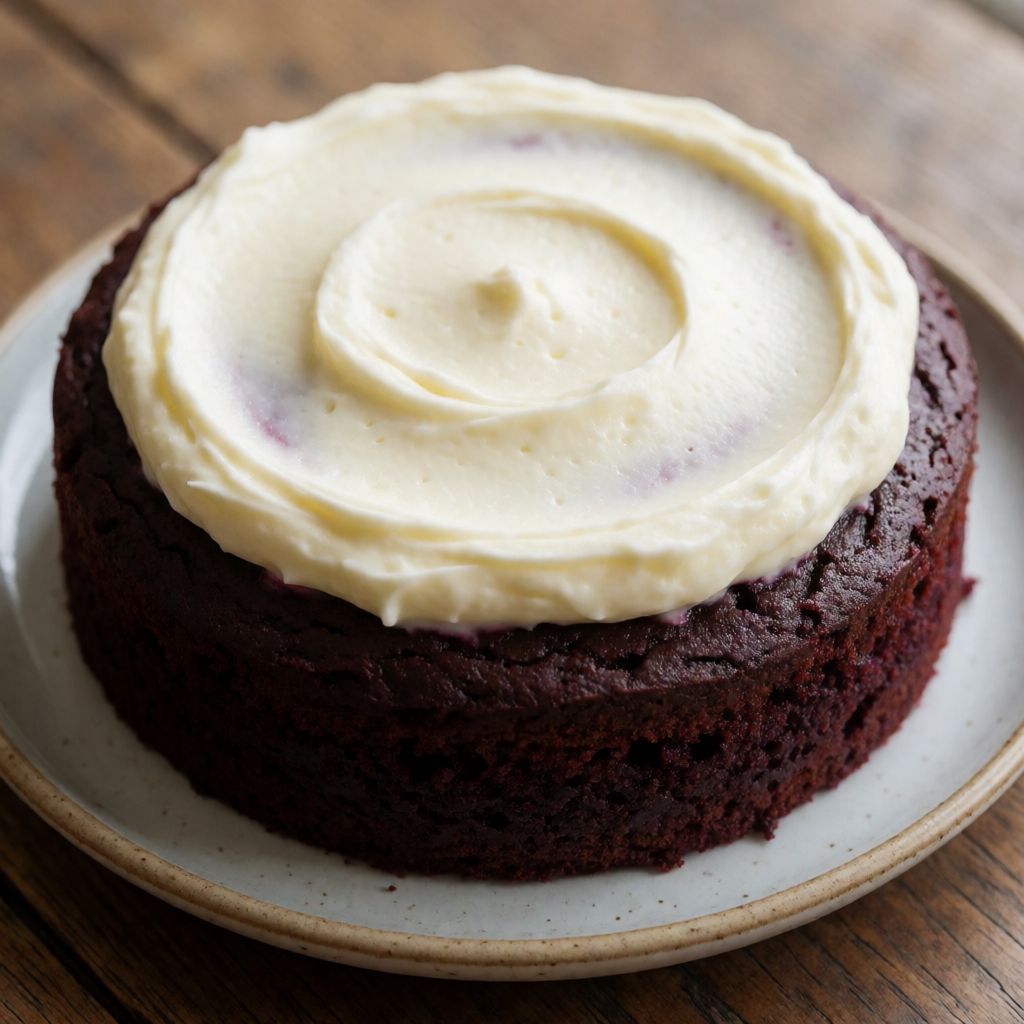
 AI photo
Chocolate Beetroot Cake with Cream Cheese Frosting
A rich chocolate cake with grated beetroot, topped with a sweet cream cheese frosting.
Labels are worked out automatically from the ingredients and can be wrong. Check the packaging if it matters to you.
Ingredients
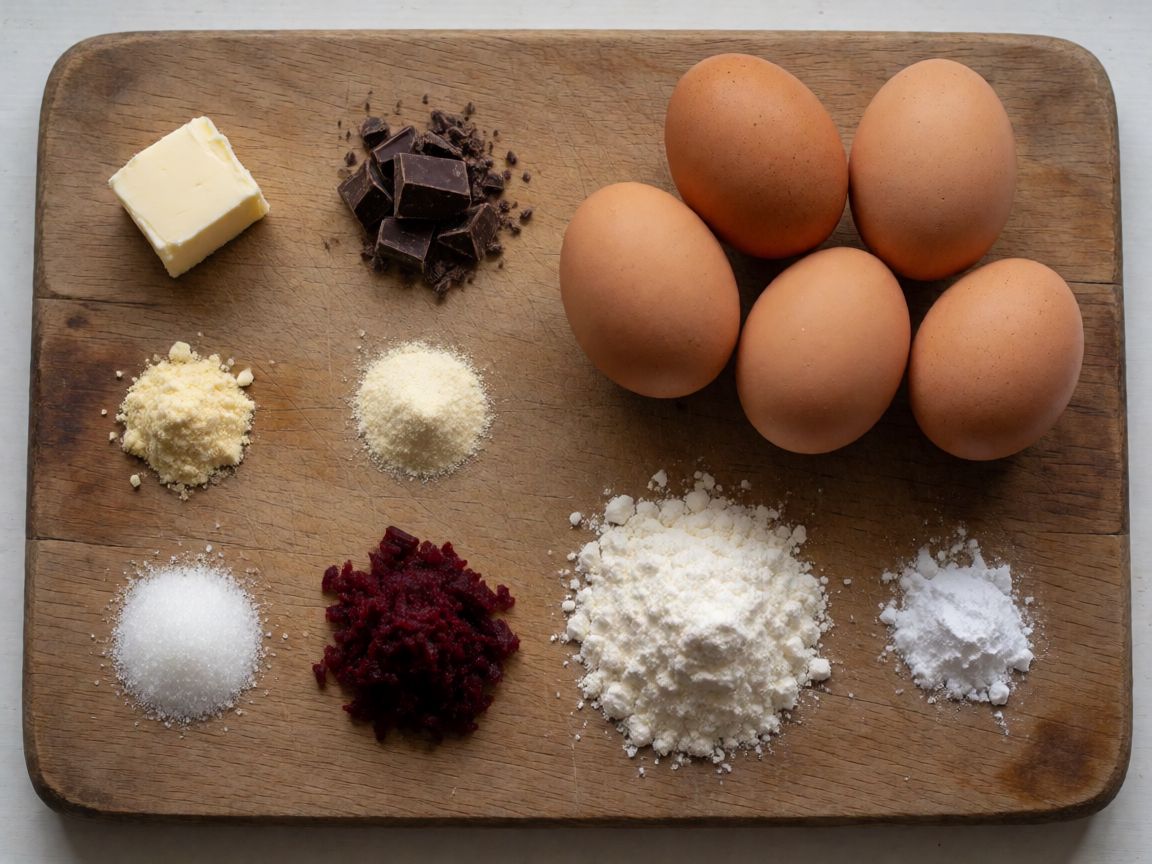
- 75 g Butter
- 100 g Dark chocolate
- 4 pcs Eggs
- 0.5 tsp Vanilla powder
- 175 g Sugar
- 175 g Beetroot coarsely grated
- 125 g Plain flour
- 1 tsp Baking powder
- 1 pinch Salt
- 100 g Icing sugar









For the frosting
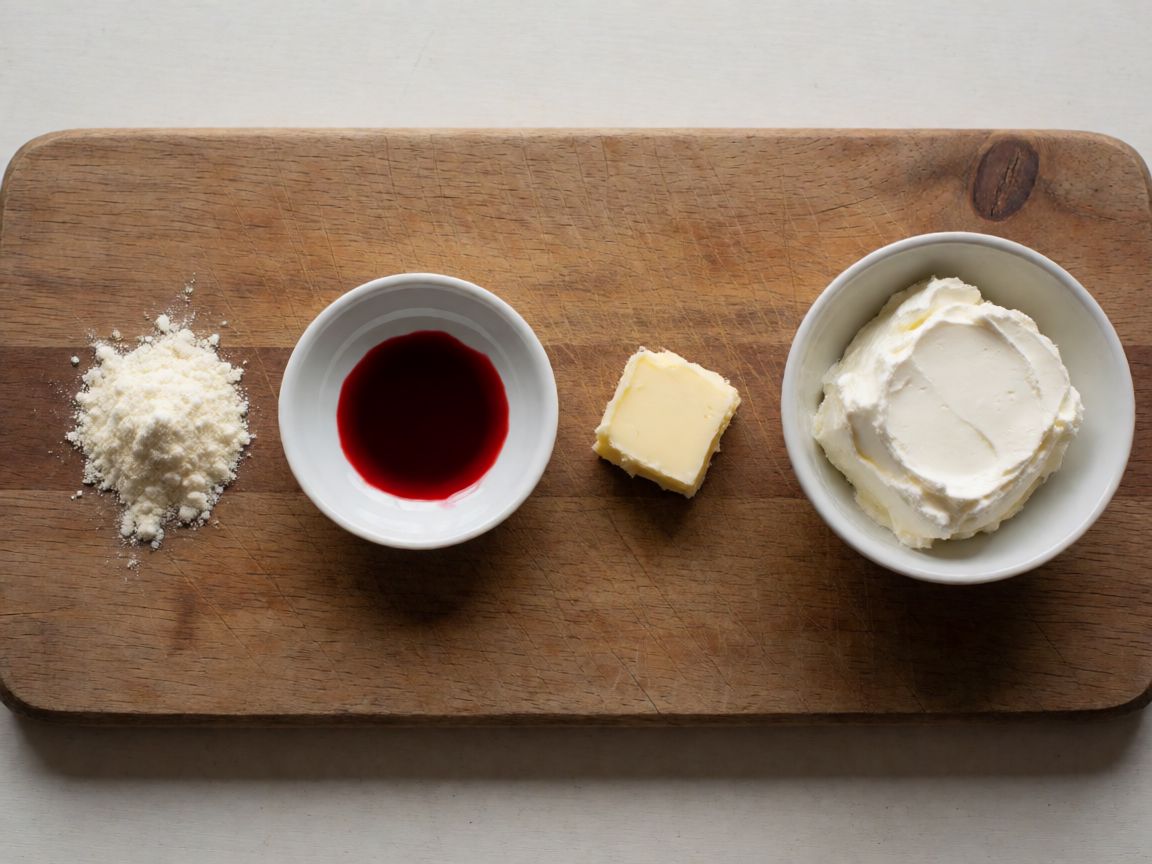
- 1 pinch Vanilla powder
- 2 pcs Red food colouring drops, colour paste or beetroot juice
- 100 g Butter at room temperature
- 100 g Cream cheese


Steps
Melt the butter in a pan over low heat, remove from the heat and stir in the chocolate.
Beat the eggs, vanilla and sugar with a mixer until light and fluffy, pour in the melted butter and chocolate, then add the beetroot.
Mix the flour, baking powder and salt, sift into the batter and combine.
Pour the batter into a 22 cm tin and bake in a preheated oven at 170°C (fan) for about 50 minutes.
50 minLet the cake cool in the tin, then turn out and cool completely on a wire rack.
Beat the icing sugar, colour paste, vanilla and butter with a mixer until light and fluffy. Add the cream cheese and mix.
Spread the frosting over the cooled cake.
Beetroot in a chocolate cake is not a trick, it's a vegetable doing the job sugar beet already does in half the processed sugar you've ever eaten — it's wet, it's sweet underneath the earthy note, and it keeps crumb moist for days after a butter cake would've gone dry. Grate it coarse, not fine: fine grating turns it to mush and bleeds too much liquid into the batter before baking, coarse keeps little threads of texture that you can still see as faint purple flecks once it's baked and cooled.
What decides whether this works is two separate emulsions, not one bake. First: melted butter and chocolate, folded into whisked eggs and sugar that have actually tripled in volume — that whisking is the only rise this cake gets, there's barely a teaspoon of baking powder in it, so if the eggs aren't pale and thick before the chocolate goes in, you get a dense disc, not a cake. Second: the frosting, where butter is beaten first, alone, until it's pale and holds air, and only then does the cream cheese go in. Reverse that order — cream cheese first — and the frosting goes slack and weeps, because cream cheese has water in it that the butter's air pockets need to be established before they can bear.
Dark chocolate: pick one you'd eat off the bar, 60-70% cocoa is the useful range. Go much higher and the cake turns bitter and dry because there's less sugar and fat in the chocolate itself to carry moisture; much lower (milk chocolate) and the cake turns sickly sweet and the beetroot note vanishes under it. No dark chocolate in the cupboard — cocoa powder plus a bit more butter will get you close, but you lose the gloss and the slight set that melted chocolate gives the crumb.
Butter, melted with the chocolate: any neutral fat would carry moisture, but butter also carries a little water that helps the chocolate melt smoothly rather than seizing. Melt it low and slow — butter burns fast once it's fully liquid and unwatched, and scorched butter in a chocolate cake is a flavour you can't mix your way out of.
Eggs and sugar whisked together: this is the engine room. The mixer is beating air into the eggs and dissolving sugar into the foam at the same time; you're looking for the ribbon stage — batter falls off the beaters in a slow thick trail that sits on the surface a second before sinking in. Rush this and your rise comes entirely from the small amount of baking powder, which isn't built to lift a cake this dense and wet on its own.
Beetroot: raw, coarsely grated, added after the chocolate-butter mix so it doesn't seize anything. Pre-cooked vacuum-packed beetroot works if that's what's in the shop — it's wetter, so you may want to squeeze a little juice out first, or the batter runs thin and the bake time stretches with no clear sign the cake's actually cooked through.
Flour, baking powder, salt: plain flour here, not self-raising — you want to control the lift yourself with the named teaspoon of baking powder, since too much rise would crack the top of a cake this dense and moist. The salt isn't for saltiness, it's there to stop the whole thing tasting flat and one-note sweet; a pinch sharpens the chocolate the way salt does in any sauce.
Icing sugar and butter for the frosting, beaten first before cream cheese joins: the red colouring is pure theatre — drops, paste, or beetroot juice itself if you want the colour to come from the same vegetable in the cake, closing the loop honestly rather than from a bottle. Cream cheese should be full-fat and cold from the fridge when it goes in — at room temperature it loosens the beaten butter too fast and you're back to weeping frosting. In a UK kitchen with a standard domestic oven, fan at 170°C behaves close enough to the stated temperature that you don't need to guess a conversion, but ovens vary enough that the skewer test still outranks the clock. A 22cm tin and a wire rack are the two bits of kit that actually matter here — turn the cake out too early, straight from the tin onto a flat plate, and the base steams against itself and goes soggy, which has nothing to do with the recipe failing and everything to do with skipping the rack.
Patience shows up twice: once while the eggs triple in the bowl, and again while the cake cools completely before frosting goes anywhere near it — warm cake meets butter frosting and you get a thin, sliding mess instead of a spread.