
 AI photo
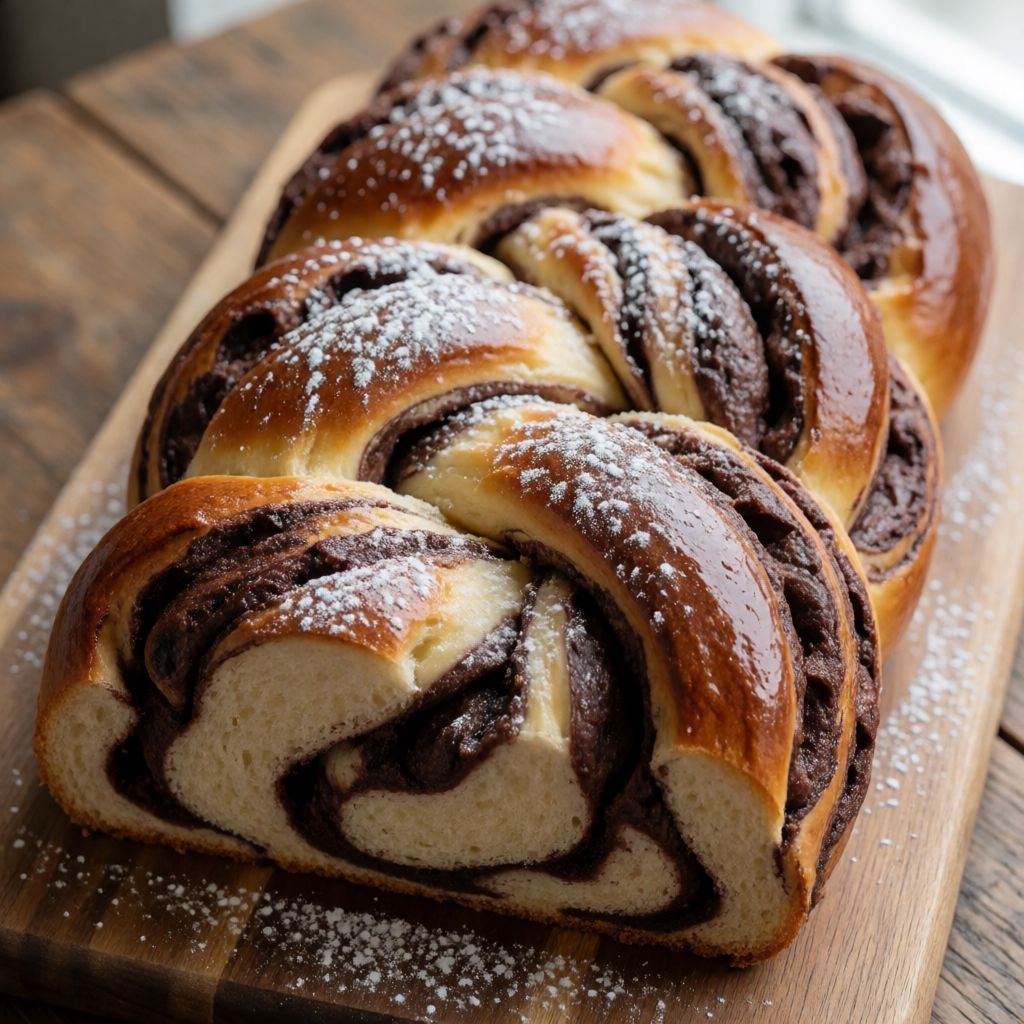
Chocolate Angel Braid
A soft, pillowy yeasted bread shaped into a braided ring and filled with melted butter and chocolate chips.
Labels are worked out automatically from the ingredients and can be wrong. Check the packaging if it matters to you.
Ingredients
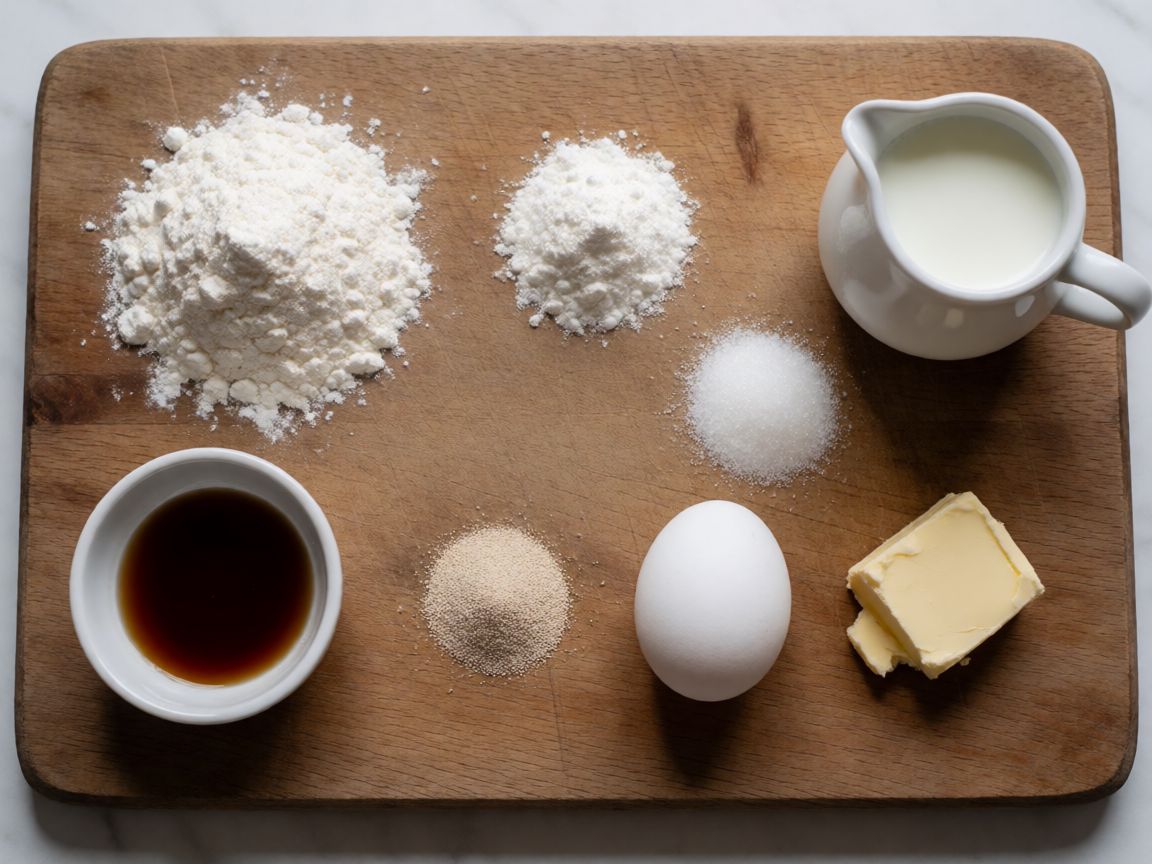
- 300 g Plain flour
- 250 g Strong white flour
- 230 g Milk
- 80 g Caster sugar
- 50 g Vegetable oil
- 1 pcs Eggs
- 10 g Yeast
- 1 tbsp Vanilla extract
- 1 pinch Salt
- 50 g Butter
- 100 g Chocolate chips
- Icing sugar to taste










Steps
Put the flour, sugar and crumbled yeast into a bowl. Add the egg, vanilla extract, oil and warm milk. Mix energetically until smooth.
10 minShape into a ball, place in a bowl, cover with cling film and leave to rise.
Roll out the dough with a rolling pin into a sheet 3-4 mm thick.
Brush the surface with melted butter and scatter over the chocolate chips.
Tightly roll up the sheet from the long side into a log.
Cut the log in half lengthways along its full length and braid the two halves together.
Join the ends of the braid to form a ring and place it in a 22 cm tin. Leave the dough to rise.
Bake in a preheated static oven at 180°C.
30 minRemove from the oven, leave to cool and dust with icing sugar.
This is a brioche-style yeasted bread, rolled with chocolate, split and braided, then bent into a ring — a wreath, not a loaf. What decides whether it works isn't the braiding, which is just theatre, it's whether the dough has enough gluten and warmth to hold a shape that's been cut in half and twisted without tearing or weeping butter everywhere.
Two flours are doing a job here, not decoration. Plain flour alone gives you a soft, slack dough — fine for a cake, useless for something that has to be rolled 3-4mm thin, slit lengthways and plaited without falling apart at the seams. Strong white flour brings the gluten that lets the dough stretch instead of rip. The mix is a compromise: all strong flour and the bread goes chewy and bready; all plain and your braid collapses into a chocolate puddle mid-prove. Some say brioche dough should use only strong flour "for structure" — no, because true brioche gets its structure from egg and butter, not gluten alone, and too much strong flour fights the softness you actually want to eat.
The rise is the part people rush, and it's the part that actually makes the crumb. Yeast needs time and a gentle warmth — not heat, warmth, the kind your airing cupboard or an oven left on its light gives, around body temperature. Too hot and you kill the yeast before it's done its work; too cold on a British kitchen counter in winter and you'll wait all afternoon for not much. Patience is the ingredient nobody weighs out, but it's the one that turns this from a dense chocolate scroll into something you can pull apart in soft strands.
On ingredients, start with the flours since that's the one thing people get wrong by instinct. "Strong white flour" is just flour with more protein — it's what's sold here for bread, versus "plain" which is milled softer, for cakes and pastry. If you've only got one bag in the house, strong flour alone will survive the braiding better than plain alone will, but the crumb turns coarser; plain alone makes a tender dough that's a genuine risk to shape. The 300:250 split in this recipe leans soft on purpose — this is meant to eat like a sweet bread, not a baguette.
The milk and egg aren't just liquid — the egg's fat and protein set in the oven heat to give the crumb that slightly yellow, close texture you get in brioche and challah, and the warm milk (not hot — hot milk scalds and can slow the yeast, not help it) wakes the yeast gently and starts hydrating the flour evenly. Vegetable oil here does a job butter normally does in richer doughs: it coats the gluten strands and keeps the bread tender days later, because oil stays liquid at room temperature while butter stiffens and can make a crumb go dry and crumbly as it cools. Any flavourless oil works — sunflower, rapeseed, whatever's in the cupboard, as long as it has no smell of its own to fight the vanilla and chocolate.
The yeast at only 10g against over 500g of flour is a slow dough on purpose. More yeast gives you a faster rise and a yeastier, slightly bitter taste; less, and slower, gives a cleaner sweetness. Don't be tempted to add more "to speed things up" — you'll taste it, and not kindly.
Butter inside, melted and brushed on before the chocolate chips, is there to glue the chips to the dough and to add richness to that filling layer specifically, separate from the oil in the dough itself. If you're short, you could skip it and just press the chips in, but you lose a bit of that fudgy, slightly caramelised line that runs through the baked braid. Chocolate chips are chosen over a chopped bar because they hold their shape better through rolling and don't bleed as much into the dough — though a roughly chopped dark or milk bar works if that's what's in your cupboard, you'll just get bigger pools instead of distinct flecks.
On your oven: 180°C static means the heat comes from top and bottom elements, not a fan pushing hot air around — if you've only got a fan oven, drop it roughly 20°C, since fan ovens cook faster and can dry out a delicate dough like this before the inside's properly set. And don't trust 30 minutes blindly — look for a braid that's deep golden-brown on top, sounds hollow-ish when tapped, and isn't pale and shiny in the gaps between the twists. That's your real timer; the clock is just where you start checking.
Icing sugar at the end isn't decoration you can skip for taste — dust it only once the braid has properly cooled, because on warm bread it melts into a wet glaze instead of sitting as a dry white dusting. That's patience again, showing up where you'd least expect it.