
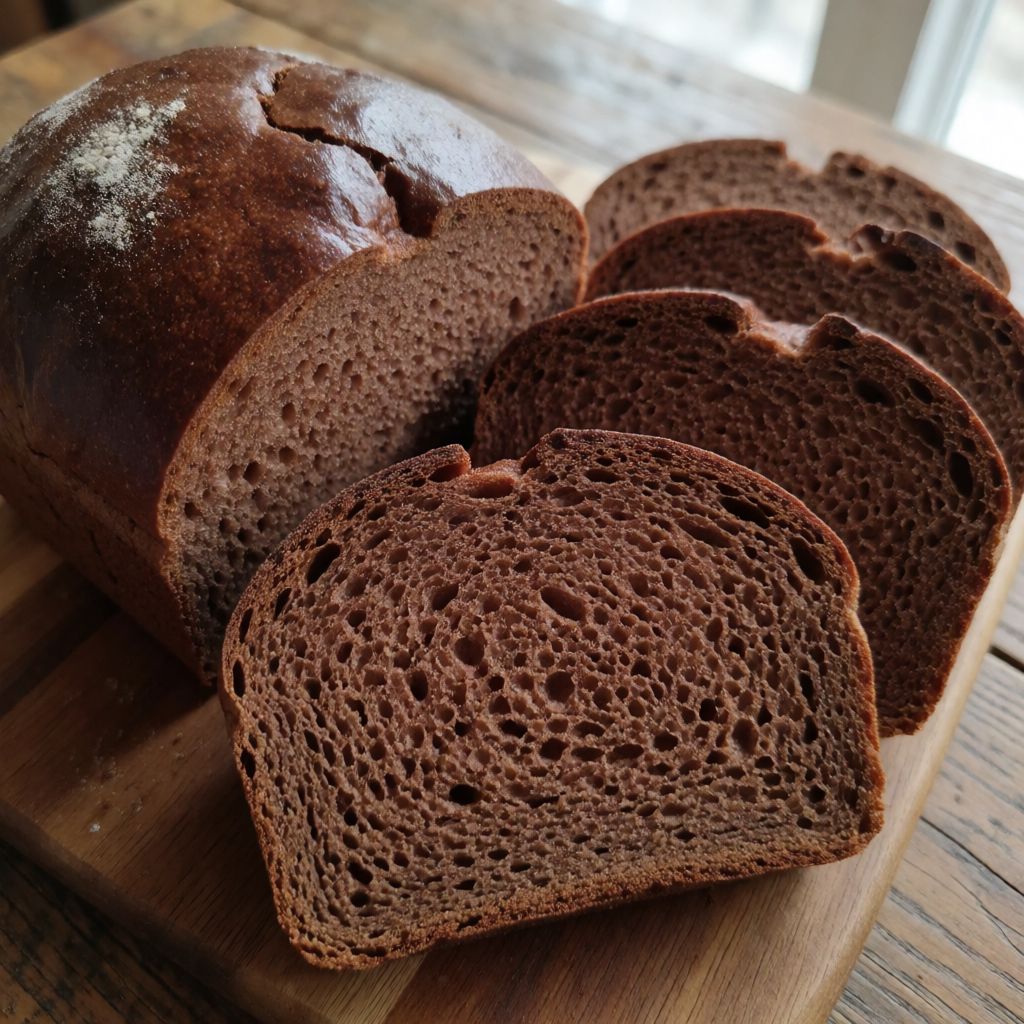
 AI photo
Chocolate Bread
A rustic bread enriched with cocoa and dark chocolate, with a crisp crust and a soft, chocolatey crumb.
Labels are worked out automatically from the ingredients and can be wrong. Check the packaging if it matters to you.
Ingredients
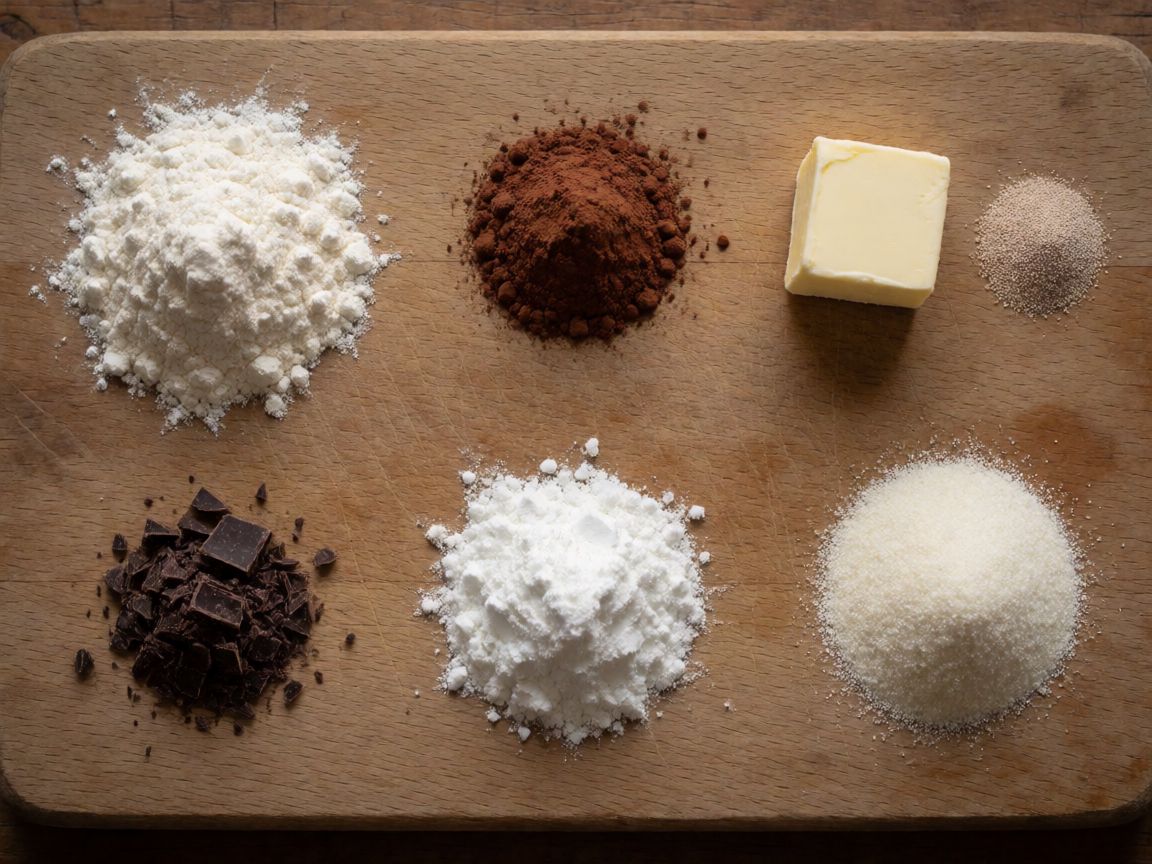
- 500 g Strong white bread flour
- 25 g Cocoa powder
- 20 g Butter
- 2 g Dried yeast
- 330 ml Water
- 8 g Salt
- 100 g Dark chocolate roughly chopped
- Olive oil for greasing
- Rice flour for dusting
- Semolina for dusting









Steps
Pour the strong bread flour and cocoa powder into the bowl of a stand mixer, then add the dried yeast. Gradually add the butter in small pieces, alternating with the water.
Add the roughly chopped dark chocolate and the salt. Add the last pieces of butter and the remaining water.
Shape into a ball by folding the dough over itself several times and pinching it together with your fingers and palm.
Pour a little olive oil into a bowl, coat the bottom and sides well, then transfer the dough into it. Cover with a tea towel.
120 minTurn the dough out onto a surface dusted with semolina or rice flour and divide it into two or more equal pieces.
Shape each piece and pinch the dough firmly closed to seal it well. Place the pieces in a box or container dusted with semolina or rice flour. Cover with a lid.
60 minUsing a serrated knife, make a 45° cut. Place the pieces on a baking tray greased with olive oil.
Bake in a preheated oven at 200°C for 45–50 minutes, or in a fan oven at 190°C for about 40 minutes.
45 min
This is not a sweet loaf. Cut it open and the crumb is the colour of wet earth, bitter from cocoa, with pockets of chocolate that have half-melted into dark streaks. You eat it the way the Italians who invented this kind of bread eat it — with a hard, salty cheese, maybe a glass of something red, not with jam. If you were expecting a chocolate-chip muffin shaped like a loaf, put the butter knife down and reset your expectations.
What decides whether this works is not the chocolate at all. It's the yeast — 2 grams against 500 grams of flour, which is almost nothing. That's not a mistake in the recipe, it's the whole point: a tiny amount of yeast means a slow fermentation, and slow fermentation is where the flavour comes from, not from the cocoa. Rush this with extra yeast to save time and you get a loaf that rises fast, tastes of yeast, and has none of the depth that two hours of patient sitting under a tea towel gives it.
The second thing that decides it is the flour. Cocoa powder has no gluten in it at all — it's a fine, dry powder that dilutes whatever gluten the flour builds. Strong bread flour, with its high protein, is there to compensate: it has to carry both its own structure and the cocoa's dead weight. Use a soft or 'plain' flour here and the dough will be slack, won't hold the chocolate chunks in suspension, and you'll end up with chocolate pooled at the bottom of the tin.
Go through the ingredients and most of them are doing a specific, narrow job.
Strong white bread flour — the 'strong' matters more than the 'white'. It's the protein content you're after, 11–13%, enough to form a gluten net that can still hold shape once you've diluted it with cocoa. If you only have plain flour, you can still make this, but expect a slacker dough that needs gentler handling and a shorter final rise, because it will tire faster.
Cocoa powder — unsweetened, the plain baking kind, not a drinking-chocolate mix with sugar and milk powder already in it. It brings colour and bitterness through the whole crumb, which is different from the job the chocolate chunks do. Think of cocoa as seasoning the whole loaf, and the chopped chocolate as the occasional surprise.
Dark chocolate, roughly chopped, not melted and not milk chocolate. Milk chocolate has enough sugar and milk solids in it to caramelise and burn at bread-baking temperatures, and it will bleed sugar into the dough and make the crust patchy. Dark chocolate with little or no added sugar holds its shape as chunks through mixing, then softens into dark pools once baked — that contrast of pocket versus crumb is the texture you're building the whole recipe around.
Butter and water go in alternating, in small amounts, and that's not fussiness for its own sake. Fat added too early, in one go, coats the flour before gluten strands have a chance to link up, which gives you a dough that never develops real structure — it stays short and crumbly instead of elastic. Adding it gradually lets gluten form first and the butter enrich it afterwards, the same logic that keeps a brioche from collapsing.
Salt goes in after the first stretch of mixing, with the chocolate. Salt tightens gluten and also slows yeast activity, so adding it too early, before the dough has had a chance to come together, fights you on both fronts — weaker structure and a sluggish rise that then gets slowed down twice.
Some say chocolate bread should be as sweet as cake. It isn't, here, because it isn't meant to be eaten alone: it's built to sit next to a sharp cheese, where the bitterness of the cocoa and the dark chocolate cuts the fat of the cheese the way a strong tea cuts through a buttered scone. If you want dessert, add sugar to the dough yourself — but then you've made a different thing.
For dusting, rice flour or semolina, not more wheat flour. Extra wheat flour on the work surface gets kneaded into the dough as you shape it and adds gluten you don't want at this stage — a gummy, tough patch under the crust. Rice flour has no gluten to contribute, and semolina is coarse enough to sit on the surface rather than absorb in, giving you a drier contact point and, on the tray, a slightly gritty base that stops sticking without flavour or extra toughness.
Olive oil for greasing wants no scent of its own competing with the cocoa — any neutral oil does the job, sunflower or a flavourless vegetable oil included. Save the peppery extra-virgin for the cheese board, not the bowl.
On a domestic oven, know its limits: home thermostats in the UK regularly run 10–20°C off what the dial says, and a fan oven dries the air and cooks faster, which is why the recipe drops the fan temperature by 10 degrees against the conventional one. An oven thermometer sitting on the shelf will tell you more truth than the dial does, and with cocoa in the dough, that truth matters — cocoa scorches and turns bitter in an unkind way well before the crust is properly dark, so a true reading saves you from a loaf that looks fine and tastes of ash at the edges.