
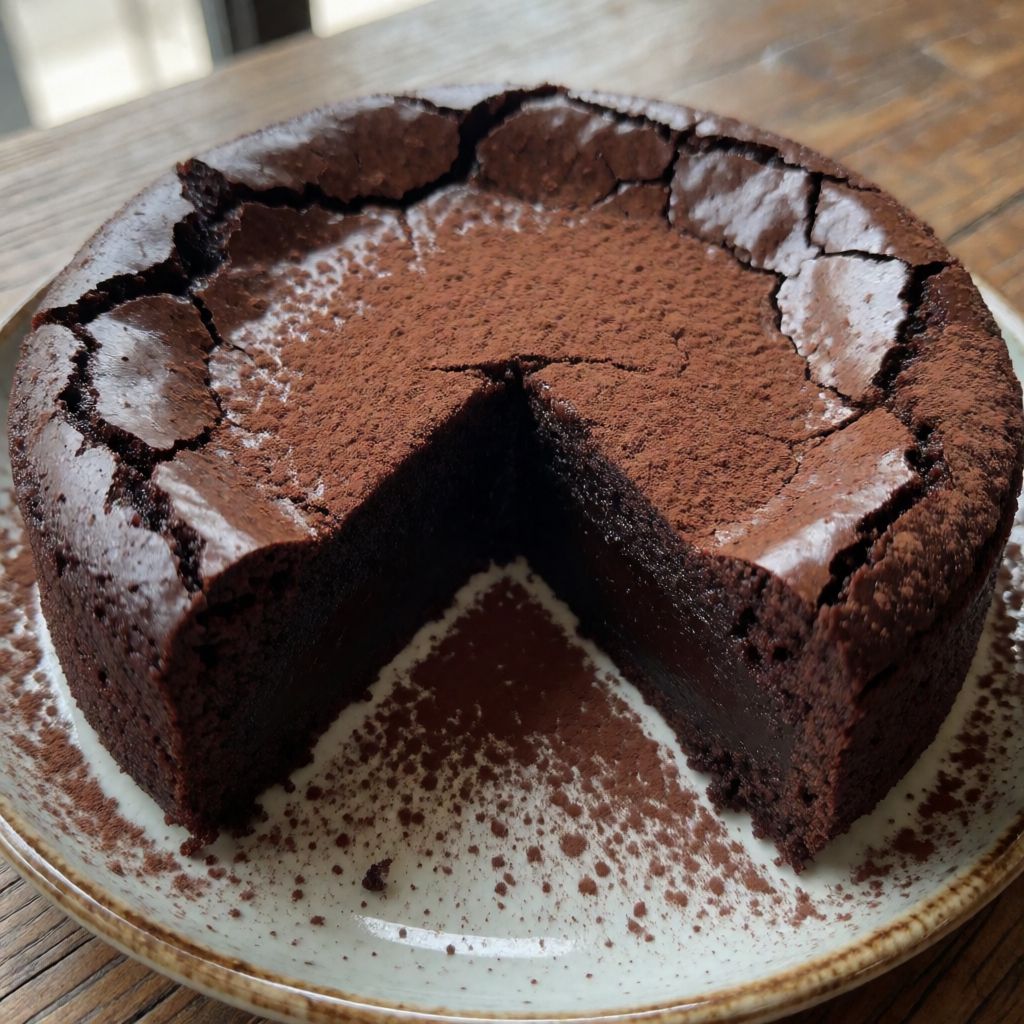
 AI photo
Chocolate Cake
A rich chocolate mousse cake finished with cocoa, chocolate shavings and a touch of gold dust.
Labels are worked out automatically from the ingredients and can be wrong. Check the packaging if it matters to you.
Ingredients
- 200 g Butter
- 200 g Dark chocolate finely chopped
- 130 g Egg yolks
- 200 g Sugar
- 170 g Egg whites
- 1 tbsp Cocoa powder
- 50 g Dark chocolate grated
- 1 tsp Chocolate balls
- 1 pinch Edible gold dust





Steps
Melt the butter and chocolate together in a bowl over a pan of simmering water, stirring. Remove from the heat and mix well.
Whisk the egg yolks with 2/3 of the sugar until pale and airy.
Pour the chocolate mixture into the yolk mixture and stir until smooth.
Whisk the egg whites to stiff peaks, adding the remaining sugar.
Fold a few spoonfuls of the whites into the chocolate mixture, then gently fold in the rest.
Line the base of a 20 cm springform tin with baking paper and grease with butter.
Spoon half the chocolate mousse into the tin and put the rest in the fridge.
Bake the cake in the springform tin in a preheated fan oven at 175°C.
30 minLeave the cake in the tin and put it in the fridge for 30 minutes.
30 minFit a cake collar around the edge of the tin and spread the remaining chocolate mousse over the cake.
Leave to set in the fridge for at least 2 hours.
120 minRemove the springform ring, carefully run a knife around the edge and transfer the cake to a plate.
Decorate the cake with sifted cocoa, chocolate shavings and chocolate balls with gold dust.
This is really two chocolate mousses from one bowl of batter — one gets baked into a dense, fudgy disc, the other stays raw and goes on top as a cold, silky layer. No flour anywhere. What holds the structure together isn't gluten, it's egg: whipped whites for lift, yolks for richness, and once it's chilled, the set butter and cocoa butter in the chocolate do the rest of the work a sponge would normally do.
What decides whether this works is temperature control at two very different moments. First, melting the chocolate and butter gently — over simmering water, not direct heat, because chocolate seizes and turns grainy the instant it gets too hot too fast, and there's no fixing that once it happens. Second, baking just enough to set the edges while the centre stays soft — this isn't a Victoria sponge chasing a skewer that comes out clean. You want underdone by cake standards, because the raw mousse layer you add later needs a soft, almost truffle-like base to bond to, not a dry one.
Some say a flourless chocolate cake is just a soufflé that collapsed on purpose. Not quite — a soufflé lives on trapped air and dies the moment it leaves the oven. This cake is built to fall a little as it cools, and that's fine, because the fridge sets it with fat, not air. The whipped egg whites here are about texture on the way in, not permanence on the way out.
The gold dust and chocolate balls are decoration, nothing more — leave them off and the cake loses nothing it needed.
Butter and dark chocolate, melted together, are the backbone — not just flavour, but the fat that will solidify in the fridge and give the top layer its sliceable set. Use chocolate with no added vegetable fat substituting for cocoa butter; cheap "cooking chocolate" with palm oil in it won't firm up the same way, and you'll get a top layer that stays soft and slumps when cut. Dark, around 60-70% cocoa, gives bitterness to balance the sugar — milk chocolate here would just be sweet fudge.
Egg yolks and whites are doing different jobs, so don't treat them as one ingredient split in two. Yolks, whisked with sugar until pale, bring richness and a bit of structure from their proteins and fat — this is what makes the baked half taste custardy rather than merely chocolatey. Whites, whipped to stiff peaks with the rest of the sugar, are pure engineering: they trap air so the mousse isn't a dense brick, and that air is also why you fold gently rather than stir — beat it hard once the whites are in and you knock out the lift you just built, ending up with a flatter, denser cake than intended.
Cocoa powder for dusting and grated chocolate for shavings are finishing touches, both forgiving. Any unsweetened cocoa works for the dusting — it's just there to cut the richness visually and on the tongue with a dry, slightly bitter top note. The grated chocolate can be any bar you have a vegetable peeler's worth of; even a rough grate looks intentional once it's on top of dark mousse. Chocolate balls and gold dust are shop-bought flourish — swap them for nothing at all, or crushed nuts, or a few berries, and the cake doesn't miss them.
On the "bake half, chill the rest" method: this exists because a fully baked flourless chocolate cake, cooled completely, becomes dense and slightly dry at the edges — baking the whole batch would waste the lightness you built into the egg whites. Keeping half raw and adding it after baking means that top layer never sees the oven's drying heat at all; it sets purely by cold, staying mousse-like rather than cakey. That's also why the cake needs the first fridge rest before the second mousse goes on — spread raw mousse onto a tin-hot or room-warm base and it half-melts into the baked layer instead of sitting as a distinct band.
A cake collar (acetate strip, or a strip of baking paper if you haven't got one) around the tin isn't fussiness — it's there because the raw mousse is loose enough to bulge over the sides of a springform ring as it sets, and without a taller wall to hold it, you get drips down the outside of the tin rather than a clean second layer. In a domestic kitchen without a proper collar, a strip of parchment taped into a cylinder does the same job.
On timing: the two hours of final chilling is a minimum, not a target to rush toward. This isn't a cake that "goes off" if left longer — unlike a sponge, which dries out the longer it sits, this one only gets a cleaner cut the colder and firmer it sets. If you're making it for a Sunday roast pudding slot, do it the day before; it slices better cold from a full night in the fridge than rushed at the two-hour mark, and one less thing to manage on the day is never a loss.