
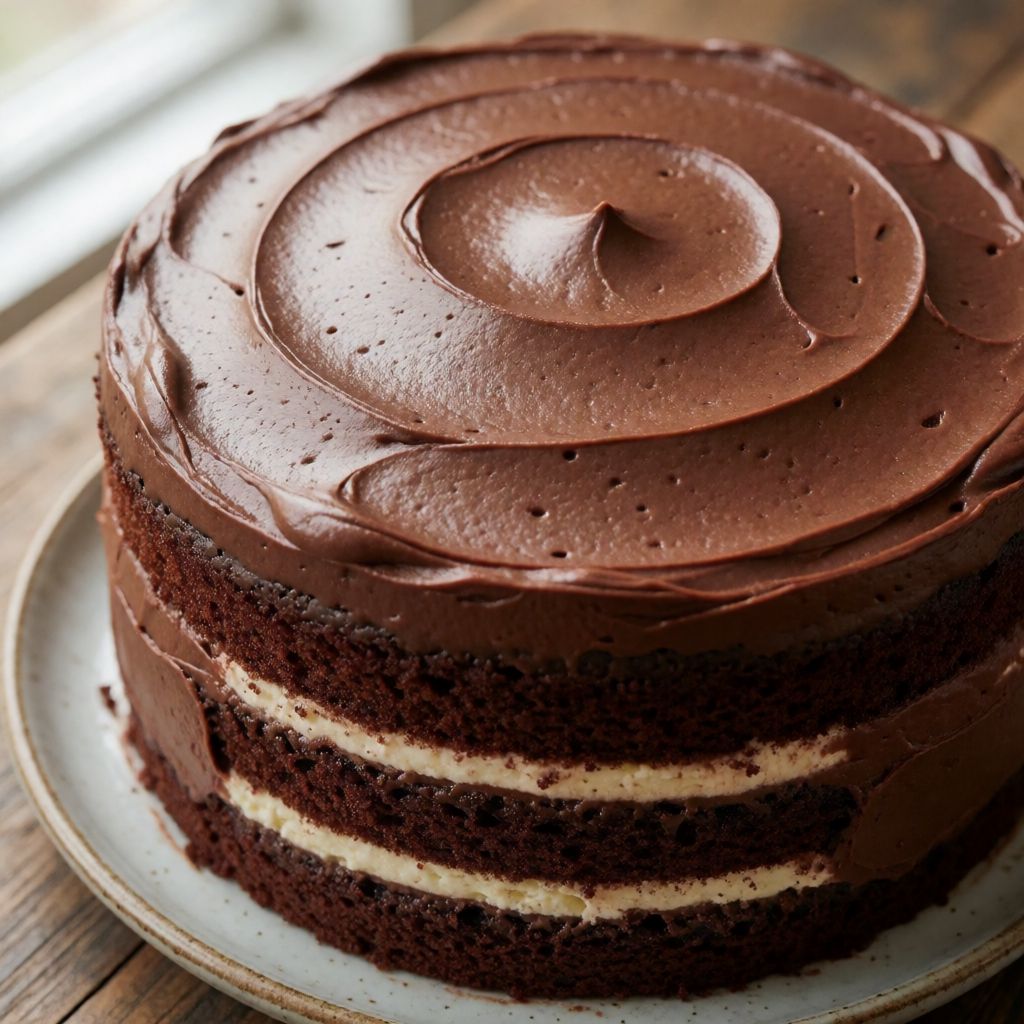
 AI photo
Birthday Chocolate Cake
A classic chocolate birthday cake with light sponge layers and a rich chocolate cream filling.
Labels are worked out automatically from the ingredients and can be wrong. Check the packaging if it matters to you.
Ingredients
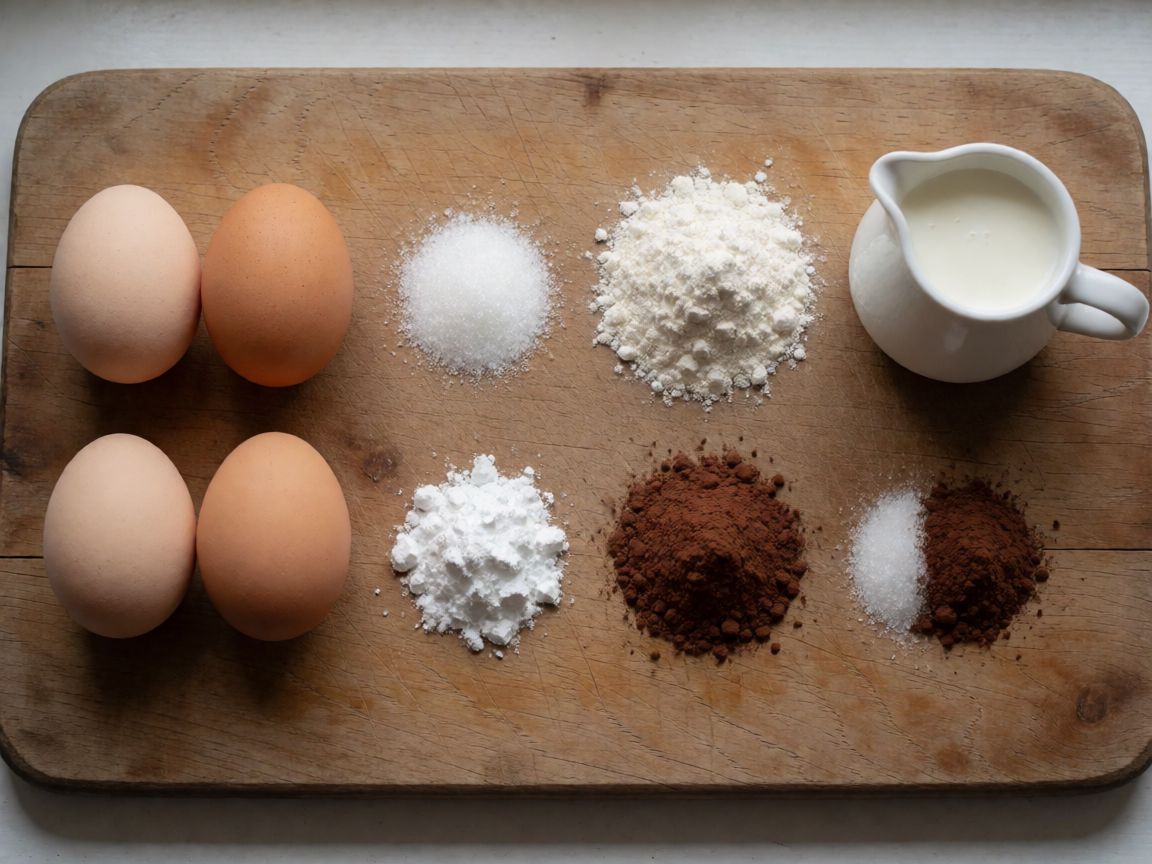
- 4 pcs Eggs
- 100 g Sugar
- 100 g Plain flour
- 30 g Potato starch
- 20 g Cocoa powder
- 1 l Double cream
- 130 g Sugar
- 60 g Cocoa powder





Steps
In a large bowl, combine the room-temperature eggs with the sugar and whisk with a mixer until the mixture is pale and creamy.
18 minIn a separate bowl, combine the flour, potato starch and cocoa powder, sieve them and gradually fold into the egg mixture.
Pour the batter into a 22 cm tin and bake in an oven preheated to 180°C.
20 minLeave the sponge to cool.
In a bowl, combine the sugar with the double cream and whip with a mixer until thick, then add the cocoa.
Cut the sponge into 3 layers with a sharp knife.
Place the first layer on a plate and brush it lightly with a little milk.
Spread a layer of cream and place the second layer on top, then the third, repeating the steps.
Cover the whole cake with the cream, smoothing the sides well.
Decorate the cake using a piping bag and place it in the fridge until serving.
This is a sponge cake built on air, not on raising agents — no baking powder anywhere in that list, and that's not an oversight. The lift comes entirely from eggs whipped with sugar for a genuinely long time, eighteen minutes, until the mixture turns pale and thick enough to hold a ribbon when it falls off the whisk. That's the whole engine of the cake: trapped air, stabilised by sugar, set by gentle heat. Skip the time and you get a flat, dense disc that tastes fine but sits in the stomach like a scone.
Some say you can rescue a tired whisking with a spoonful of baking powder. No — because the two textures are different animals. Chemical lift gives you big, coarse, uneven holes; a whipped-egg sponge gives you a tight, even crumb that can be sliced into three thin, even layers without falling apart. That's not a cosmetic choice. You need those three layers to hold cream without squeezing it out the sides when you cut a slice at the table.
The cream filling is the counterweight to the sponge: it's light but it's not sweet in the aggressive way shop cakes are, because 130g of sugar across a litre of cream is restrained — bitter cocoa is doing the flavour work, sugar is just there to round it off. Whip it until it holds its shape but stop before it looks grainy and separated; overwhipped cream turns to butter and weeping liquid, and once it's gone that far there's no bringing it back smooth.
The eggs want to be at room temperature — not a tradition, a mechanism. Cold egg whites resist the whisk and trap air more slowly and less stably; warm the eggs and the proteins unwind and stretch around air bubbles faster, which is why recipes always tell you to take eggs out ahead of time and people always ignore it and wonder why their sponge is sulking.
Flour, potato starch and cocoa are sieved together for the same reason you'd sieve flour alone: to break clumps before they meet a wet batter, where they'd otherwise survive as little dry pockets no amount of folding will dissolve. The potato starch itself is doing a specific job — it's there instead of more flour because starch has no gluten, and less gluten means a softer, more tender crumb that doesn't fight you when you try to slice it into three thin layers. If you don't have potato starch, cornflour behaves almost identically; just don't swap in more plain flour to make up the weight, or you'll toughen the whole sponge.
Cocoa powder here is doing double duty — colour and bitterness in the sponge, and the same bitterness again in the cream, where it's cutting against the sugar so the whole cake doesn't read as simply sweet. Use a cocoa with no added sugar and a reasonably dark, unsweetened character; a cheap "drinking chocolate" mix with sugar already in it will throw your sugar quantities off and you won't taste it the same way.
Double cream is the correct choice and not interchangeable with single cream or whipping cream without consequence — it needs that higher fat content to hold structure once whipped and mixed with cocoa, which adds weight without adding fat. Lower-fat creams will whip thinner and slump under the sponge's weight within a few hours, which matters if this cake is sitting out at a party rather than being eaten the moment it's made.
The milk brushed between the sponge and the first layer of cream isn't decoration — sponge dries out fast once cut into thin layers and exposed to air, and a light brushing of milk puts moisture back where the cut surface would otherwise pull moisture out of the cream sitting against it. Any plain milk does this; you're not adding flavour, you're managing moisture.
On a domestic hob there's no kazan-style trick here, just an ordinary oven and a 22cm tin, so the limiting factor is really your oven's honesty about its own temperature — if it runs hot or cool, watch the sponge rather than trusting the clock exactly, and judge done by a light spring-back to a finger press rather than colour alone, since a dark cocoa sponge won't show you browning the way a plain one does.