
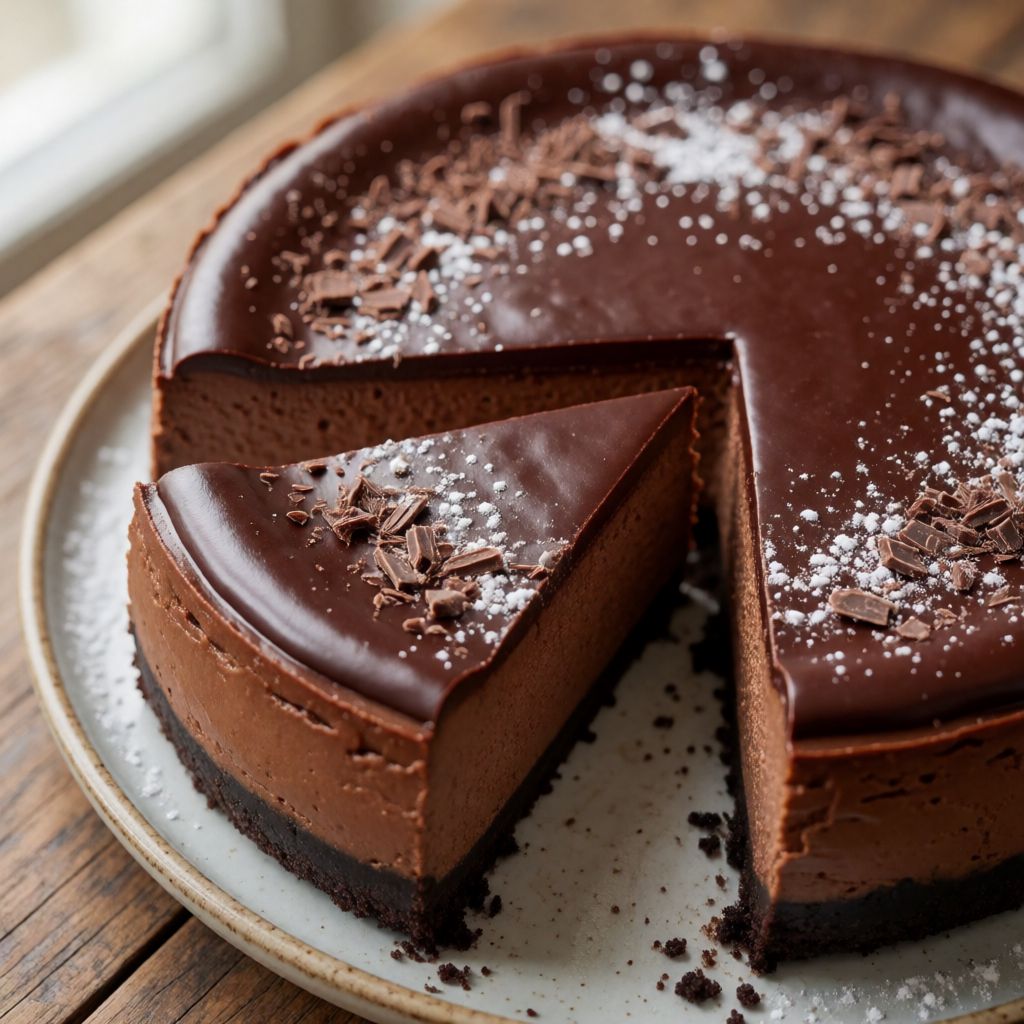
 AI photo
Chocolate Cheesecake without Gelatine
A rich no-bake chocolate cheesecake with a biscuit base, finished with cocoa powder and chocolate topping.
Labels are worked out automatically from the ingredients and can be wrong. Check the packaging if it matters to you.
Ingredients
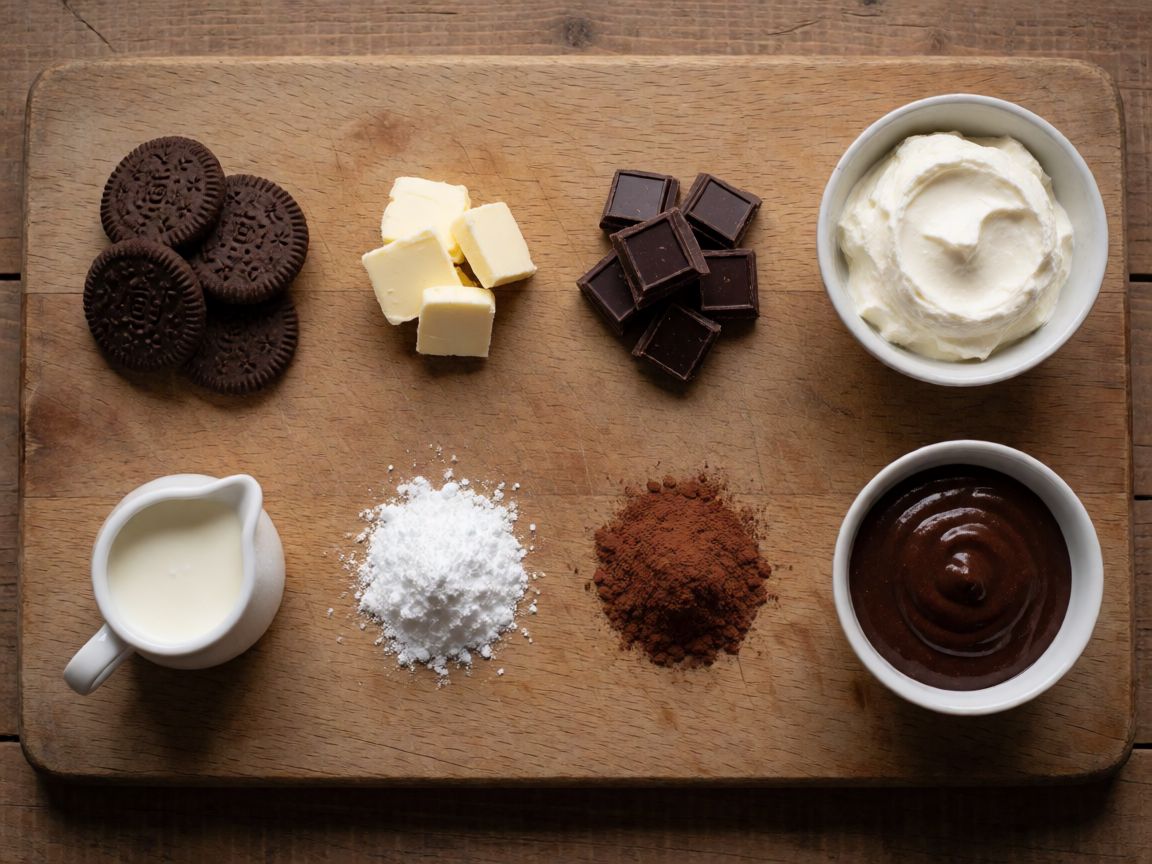
- 200 g Cocoa biscuits
- 100 g Butter
- 200 g Dark chocolate
- 500 g Cream cheese
- 200 ml Double cream
- 100 g Icing sugar
- Cocoa powder to taste
- Chocolate topping to taste







Steps
Blitz the biscuits in a food processor until fine and mix with the melted butter.
Press the mixture into a baking tin lined with baking paper, spreading and firmly packing the base. Put the tin in the fridge.
Melt the dark chocolate in a bain-marie or in the microwave, then let it cool.
Soften the cream cheese, add the cooled chocolate and mix well.
Whip the double cream with icing sugar and gently fold it into the chocolate cream.
Spread the cream over the chilled base and smooth with a spatula.
Put the cheesecake in the fridge for at least 4 hours.
240 minBefore serving, decorate with cocoa powder and chocolate topping to taste.
This is not a baked cheesecake wearing a disguise — it's a chocolate mousse sitting on a biscuit crust, and the whole thing sets from cold, not from heat and not from gelatine. Nothing here needs an oven. What holds it together is fat: the butter in the crumb base, the cocoa butter in the chocolate, the butterfat in the whipped cream. Chill them, and they go rigid. Warm them, and the cake slumps. That's the entire mechanism, and once you see it, the steps stop being a list and start being a sequence of temperature handoffs.
What decides whether it works is not skill with a whisk, it's patience at three handoffs. Melted chocolate has to cool before it meets the cream cheese — pour it in hot and it will loosen the cheese's structure instead of thickening it, and you'll fight a runny filling for the rest of the recipe. The cheese itself has to be properly soft before that meeting, or you'll be chasing little white lumps through dark cream forever. And the cream wants whipping to soft peaks, not stiff ones — stiff cream folds in unevenly and leaves streaks, soft cream disappears into the chocolate and carries air with it, which is the only lift this cake gets.
Some say a cheesecake needs gelatine to stand up when sliced — no, because dark chocolate already carries its own setting agent. Cocoa butter is soft at room warmth and firm in the fridge; that's the whole trick chocolate mousse has always used, long before anyone thought to put it on a biscuit base and call it cheesecake. Add gelatine here and you're solving a problem that doesn't exist, at the cost of a rubbery bite.
Start with the biscuits. Cocoa biscuits are just flavour and colour already baked in — you're not cooking the base, you're gluing crumbs together with butter and letting the fat set hard in the cold, the same way shortbread crumb bases work under any no-bake tart. Blitz them fine enough and the butter coats every piece; leave them coarse and you'll get a base that crumbles under the first slice because there isn't enough fat surface to bind the gaps. If you can't find cocoa biscuits, any dry, not-too-sweet biscuit works — digestives, even plain ones — just add a spoon of cocoa powder to the crumb so the base doesn't look pale next to a dark filling.
Butter in the base has one job: solidify cold and hold the crumb rigid. Any fat that does that will do — nothing with a smell of its own, so skip anything flavoured or salted heavily, since it'll fight the cocoa. Melted and cooled slightly before mixing is enough; you don't need it hot, you need it liquid enough to coat the crumbs evenly.
Dark chocolate is the setting agent for the whole cake, so its quality isn't a matter of taste alone — it's structural. Higher cocoa content means more cocoa butter, which means a firmer set; drop to milk chocolate and you'll get a softer, slouchier filling because there's less fat and more sugar doing nothing for structure. If you do use milk chocolate, cut back the cream slightly or the filling won't hold its shape when sliced. Melt it gently — bain-marie or microwave in short bursts, stirring between — because chocolate scorches and seizes long before it looks done, and a seized chocolate won't smooth into the cheese no matter how hard you beat it. Then let it cool to roughly room warmth before the next step; this is the single most common reason these cakes split or stay soft.
Cream cheese must be the firm block kind, not the lighter spreadable tubs cut with extra water for a diet market — those won't set at all, they'll just loosen the whole filling. Bring it to room temperature before mixing so it takes the chocolate smoothly; cold cheese straight from the fridge resists blending and leaves lumps no amount of stirring will fix.
Double cream is chosen for its fat percentage, nothing else — British double cream, around 48% fat, whips to soft peaks and holds air, which lighter creams simply can't do reliably. Icing sugar rather than caster sugar is for texture: it dissolves into the cream instead of sitting there gritty, since there's no heat here to melt caster sugar's crystals the way there would be in a hot pan.
A loose-based or springform tin isn't fussiness, it's necessity — without gelatine this filling is softer than a classic set cheesecake, and trying to turn it out of a solid tin will tear it. Line the base, chill it properly before you add the filling at all — that's what stops the warm crumb mixture softening before it's had a chance to firm — and keep the finished cake cold right up until you cut it, because once that chocolate warms past room temperature, it starts giving back everything the fridge did for it.