
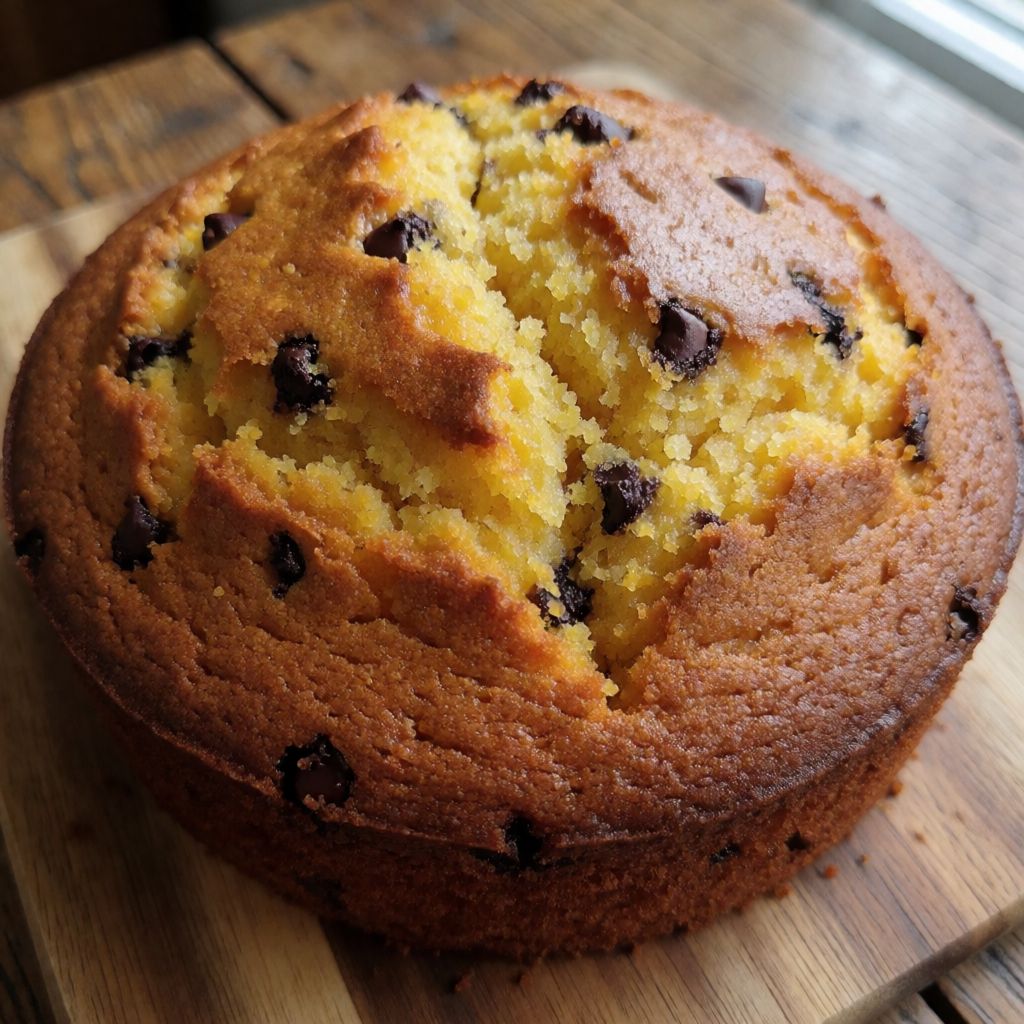
 AI photo
Cornmeal Cake with Chocolate Chips
A soft cornmeal cake studded with chocolate chips, finished with a dusting of icing sugar.
Labels are worked out automatically from the ingredients and can be wrong. Check the packaging if it matters to you.
Ingredients
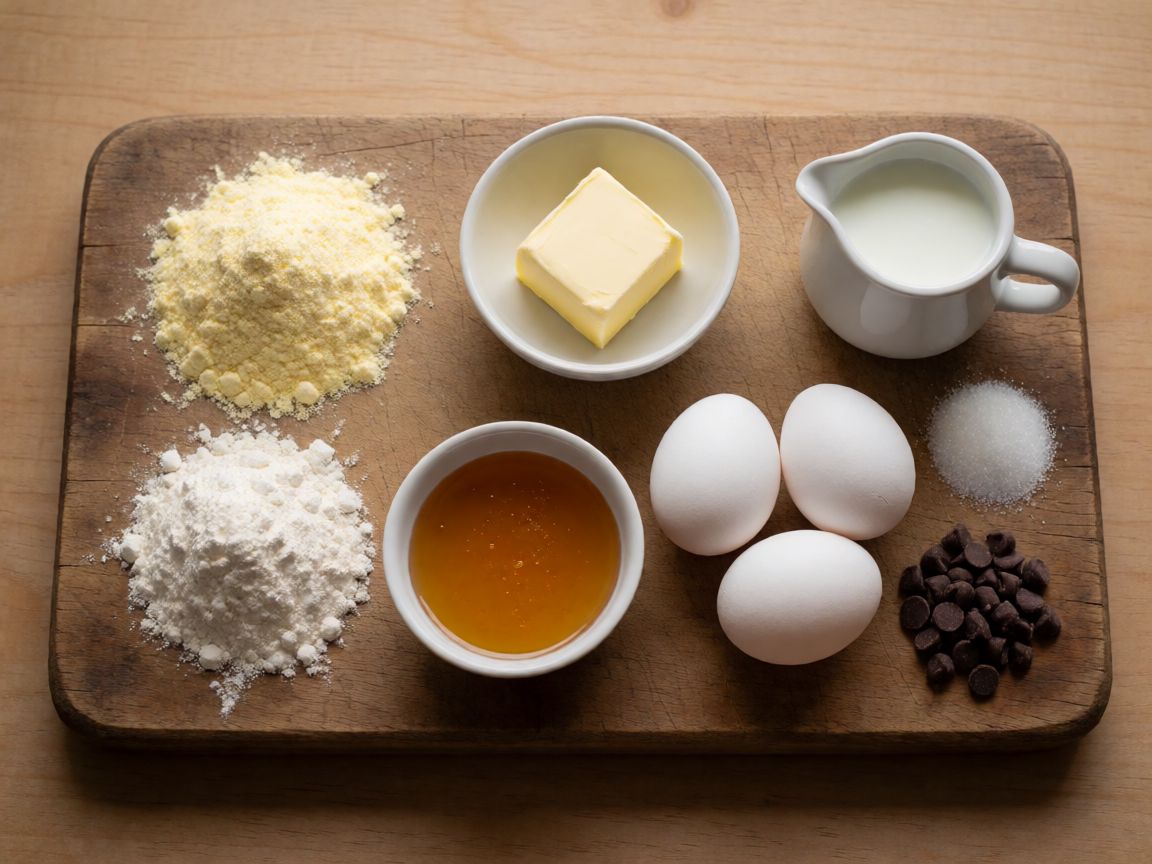
- 200 g Cornmeal
- 150 g Plain flour
- 120 g Butter
- 200 ml Milk
- 150 g Caster sugar
- 3 pcs Eggs
- 2 tbsp Honey
- 100 g Chocolate chips
- 1 pcs Baking powder
- 1 pinch Icing sugar for dusting









Steps
Take the butter out of the fridge a couple of hours ahead. Prepare all the ingredients. In a large bowl, whisk the caster sugar and butter together with a whisk or mixer.
Add the eggs and the cornmeal, continuing to beat until the mixture is smooth and fluffy.
Add the milk, plain flour and honey, continuing to beat with the mixer until smooth.
Fold in the chocolate chips, then sift in the baking powder. Mix on low speed.
Pour the batter into a round tin, greased with butter and dusted with flour. Bake in the oven at 180°C.
30 minCheck it's done by poking the cake with a wooden skewer — if it comes out dry, the cake is ready.
Take the cake out of the oven and let it cool for about 30 minutes.
30 minCarefully transfer the cake to a serving plate and decorate with icing sugar and chocolate shavings.
This isn't a sponge pretending to be rustic — it's a cake that's honest about having cornmeal in it. Cornmeal doesn't rise, doesn't stretch, doesn't do the elastic things wheat gluten does. So the texture here is deliberately short and a bit sandy, closer to a Northern Italian polenta cake than to a Victoria sponge. If you want fluffy and airy, you've picked the wrong flour already — that grit is the point, not a flaw to fix.
What decides whether it works is the butter-sugar stage at the start, not the oven. Butter two hours out of the fridge isn't a nicety — it's the whole mechanism. Cold butter won't hold air when you beat it with sugar; it just gets smeared and sugar sits in it like sand in mud. Soft butter, beaten with sugar, traps tiny air pockets that the eggs then stabilise and the baking powder later inflates. Skip the warming and no amount of extra baking powder will save you — you'll get a dense, tile-like disc, and you'll wrongly blame the raising agent.
Some say cornmeal cakes are automatically dry because "cornmeal soaks up moisture." No — they're dry when you overbake them, same as any cake. The milk and honey here exist precisely to keep crumb moisture up and to slow staling (honey holds water better than sugar alone), so if you've measured right and still get dryness, the oven's the culprit, not the corn.
The chocolate chips are folded in last, after the batter is already smooth, for a dull but real reason: beat them in with the mixer and they shred into streaks instead of staying as pockets of melted chocolate once baked.
On the heat: "180°C" here means a domestic fan or conventional oven set and genuinely at that mark — use an oven thermometer once if you've never checked yours, because most home ovens drift by 10-15°C and that's enough to turn "done at 30 minutes" into "dry at 30 minutes" or "wet in the middle." The skewer test matters more than the clock for exactly this reason: 30 minutes is a lower bound, not a deadline. Pull it when the skewer is dry, not when the timer beeps.
Cornmeal: buy the fine or medium grind, not polenta meant for porridge-thick dishes (coarse "bramata" style) — coarse grit in a cake gives you something closer to eating sand. Fine cornmeal (sometimes sold as "corn flour" in Italian delis, don't confuse with British cornflour/cornstarch, which is a different thing entirely and will not work here) gives the right texture — tender with a faint crunch, not a mouthful of grit.
Plain flour: this supplies the gluten cornmeal can't — enough structure to hold the cake together once the baking powder lifts it. Don't swap in self-raising unless you drop the separate baking powder, or you'll over-rise and then collapse, since the cake has no gluten network strong enough to support a double dose of lift.
Butter: any fat with a mild, milky flavour of its own works here if you're out of butter — but margarine behaves differently when creamed (it holds less air, melts faster), so expect a slightly denser result. The "take it out two hours ahead" point from the first paragraph is really a butter-temperature instruction, not a timing ritual: in a cool British kitchen in winter, two hours might not be enough — press your thumb into it; it should dent easily without being greasy or pooling.
Honey: besides moisture retention, it browns faster than sugar at the same oven temperature, so the top will colour a touch earlier — that's not it burning, that's the honey doing its job. If you have none, swap it for sugar directly but accept a paler top and a slightly less moist crumb a day or two on.
Chocolate chips: look for ones labelled for baking (they hold their shape at oven heat) rather than cheap melting buttons, which can bleed into the batter and streak rather than staying as distinct pockets.
On the tin and the cooling: grease and flour (or grease and a dusting of cornmeal, which suits the cake better and avoids a pale flour halo on the crust), because cornmeal cakes have less gluten to grip the tin's surface and are more prone to tearing on release than a wheat sponge. The 30-minute rest before moving it isn't fussiness either — straight from the oven the crumb is still setting around the air pockets; move it too soon and it can sink or crack where you've gripped it. Icing sugar on top is there to contrast with the yellow crumb visually, not to sweeten further — the cake's already sweet enough from sugar and honey together.