
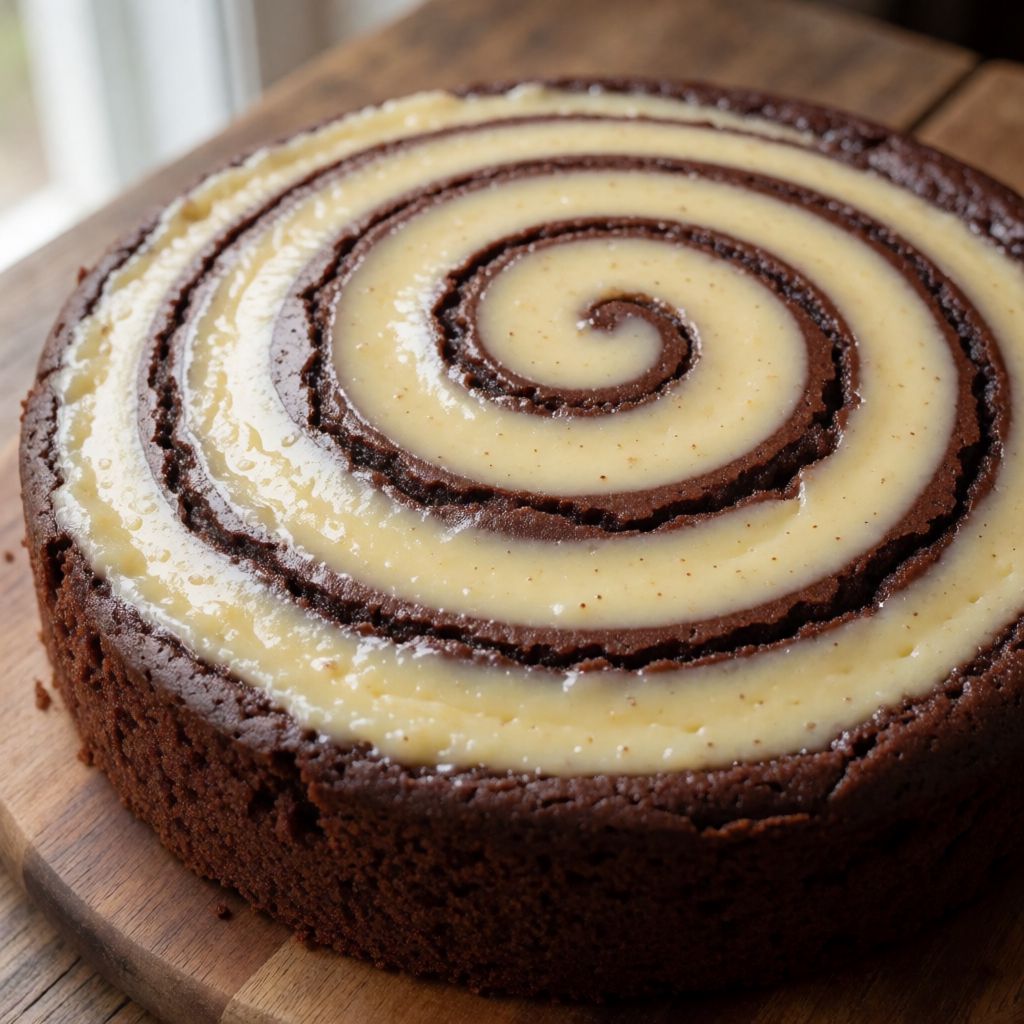
 AI photo
Chocolate Cake with a Custard Spiral
A soft chocolate cake topped with a swirl of vanilla custard piped across its surface.
Labels are worked out automatically from the ingredients and can be wrong. Check the packaging if it matters to you.
Ingredients
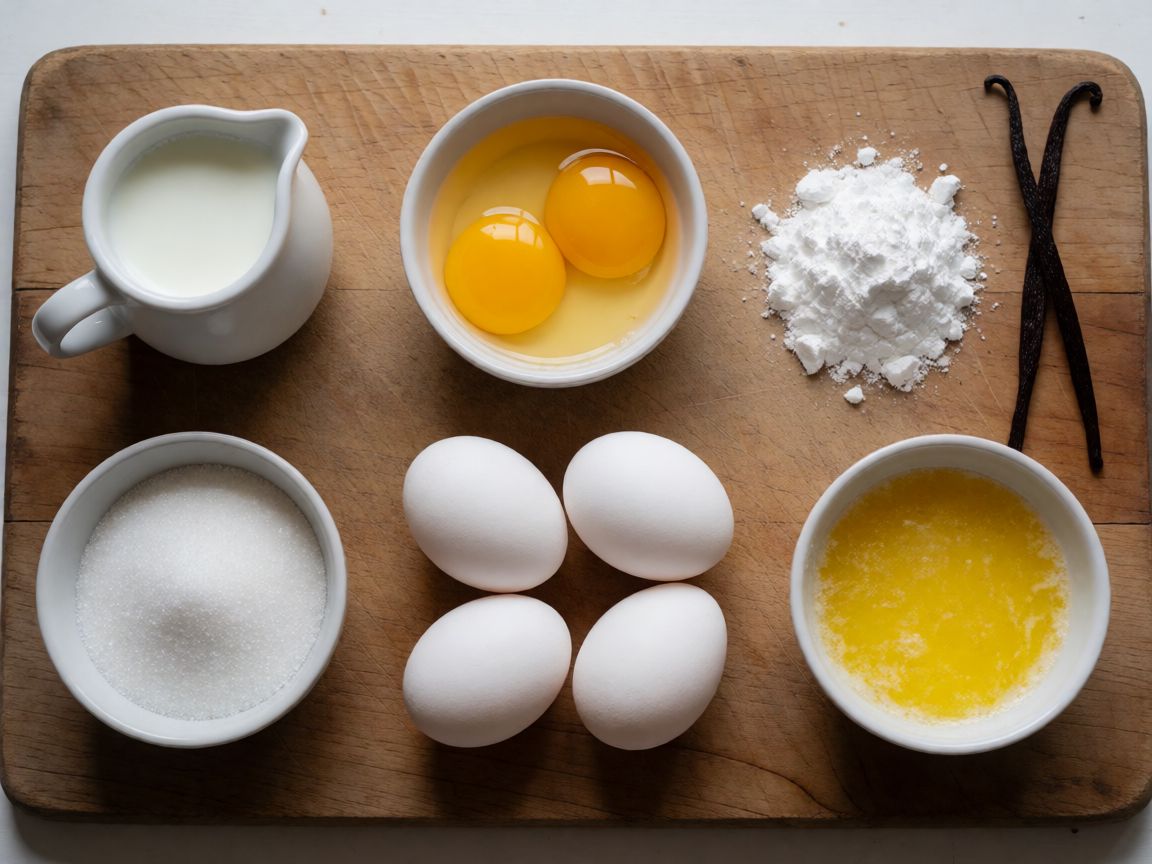
- 250 g Milk
- 2 pcs Egg yolk
- 50 g Caster sugar
- 30 g Potato starch
- 1/2 pcs Vanilla pod
- 4 pcs Eggs
- 180 g Caster sugar
- 130 g Butter melted
- 130 g Milk
- 300 g Plain flour
- 16 g Baking powder
- 20 g Cocoa powder









Steps
Bring the milk with the vanilla pod to the boil. Beat the egg yolks with the sugar, then add the sifted starch.
Pour the egg mixture into the hot milk and, stirring over low heat, cook the custard until thickened.
Leave the custard to cool.
Whisk the eggs with the sugar until pale and creamy.
Add the milk, melted butter, flour, baking powder and cocoa powder, and mix thoroughly.
Pour the batter into a greased 22 cm tin.
Put the cooled custard into a piping bag and pipe a spiral over the surface of the cake.
Bake in a preheated fan oven at 160°C for about 50 minutes (without fan, 170°C for 55 minutes).
50 minIf the custard starts to darken, cover the cake with a sheet of baking paper.
This is a chocolate sponge with a custard spiral baked into the top, not just piped on as decoration. You make a proper pastry cream first — egg yolks, sugar, starch, milk, vanilla — and let it go cold and thick enough to hold its shape through a nozzle. Then you pipe it onto raw chocolate batter and bake the whole thing together. The two mixtures don't merge; the starch in the custard sets it firm enough that it stays as a ribbon, sinking slightly, surrounded by rising cake. What you get isn't a cake with custard on it — it's a cake with a custard vein running through its crumb, visible every time you cut a slice.
What decides whether it works is almost entirely the custard's consistency before it goes anywhere near the batter. Pipe it warm or thin and it will simply dissolve into the chocolate mixture as it bakes, leaving streaks instead of a spiral. Pipe it properly cold and thick — the kind that holds a ribbon shape when it falls off a spoon — and it keeps its own identity in the oven, because the starch has already done its gelling while cold; heat from baking firms it further rather than melting it. So the custard isn't an afterthought you whip up while the cake's in the tin. It's step one, and it needs time to sit in the fridge before you can trust it.
The custard itself is standard pastry cream, and it's worth understanding why each part is there, because UK kitchens default to custard powder and that's a different animal. Potato starch (or cornflour if that's what's in the cupboard — same job, slightly less clean a set) thickens the milk once it's cooked past a certain point; without it you'd just have sweetened scrambled egg. The egg yolks give richness and colour, the sugar sweetens and also slows the eggs from curdling too fast, and the vanilla pod — split, not just a few drops of essence — infuses the milk while it heats, because vanilla's flavour compounds are fat-soluble and need warm milk to release properly. If you only have vanilla extract, add it after the custard is off the heat; boiling it away is wasted money.
The method matters more than the ingredient list for the custard: you boil the milk first, then temper the eggs by pouring the hot milk into them, not the reverse — that's what stops the yolks from turning into bits of boiled egg suspended in milk. Then it goes back on low heat to thicken, meaning low enough that you can still see individual bubbles rather than a furious boil; above that and the starch structure breaks down as fast as it forms. "Low heat" here means: stir constantly, watch it go from milk-thin to custard-thick over a couple of minutes, and pull it off the second it coats the back of a spoon rather than running off it. Then it needs real cooling time — not just to room temperature, properly cold — because at room temperature it's still soft enough to slump once piped, and a slumped spiral is just a stain by the time the cake rises around it.
For the sponge itself: eggs and sugar whisked to pale and thick is doing the job a mechanical mixer does in most modern cakes — trapping air that the baking powder alone won't give you, since this is a dense, buttery batter that needs help rising. Melted butter rather than softened and creamed is a shortcut that works fine here because the eggs are already carrying the aeration; butter's only job now is richness and moisture, so melted and cooled is actually easier to incorporate evenly. The milk loosens the batter so it's pourable rather than spooned — thick enough to hold a piped custard spiral on its surface without it sinking out of sight before baking starts, but not so thick the cake turns gluey.
Cocoa powder here is for flavour and colour, not structure, so use one you'd be happy drinking as hot chocolate — a Dutch-processed cocoa gives a darker, milder result; natural cocoa is more acidic and sharper. Either works with 16g of baking powder in 300g flour because that ratio is already generous and forgiving.
A 22cm tin and a domestic oven without a kazan or anything exotic involved — just be honest about your oven's quirks. Fan ovens run hotter and more evenly than they're told to; that's why the fan setting here is lower and shorter than conventional. If your oven runs hot at the top, as many do, that's exactly when the custard spiral starts to catch and darken before the sponge underneath is done — hence covering it with baking paper rather than foil, which would trap steam and make the top damp instead of just shielding it from direct heat.
Doneness isn't really about the clock, even though 50 minutes is the number you're given. The cake is done when a skewer through the chocolate part — not through the custard spiral, which stays soft by design — comes out clean, and the sponge springs back rather than leaving a dent. The custard on top will never test "clean" on a skewer; that's not a fault, that's the whole dish.
One more thing worth saying plainly: there's no shortcut to a custard that holds its line. You can't speed the chilling by rushing it in a warm fridge drawer, and you can't pipe it straight off the stove because it's "basically the same temperature it'll end up at anyway." It isn't. Patience here isn't a virtue tacked onto the recipe — it's the only thing standing between a spiral and a smear.