
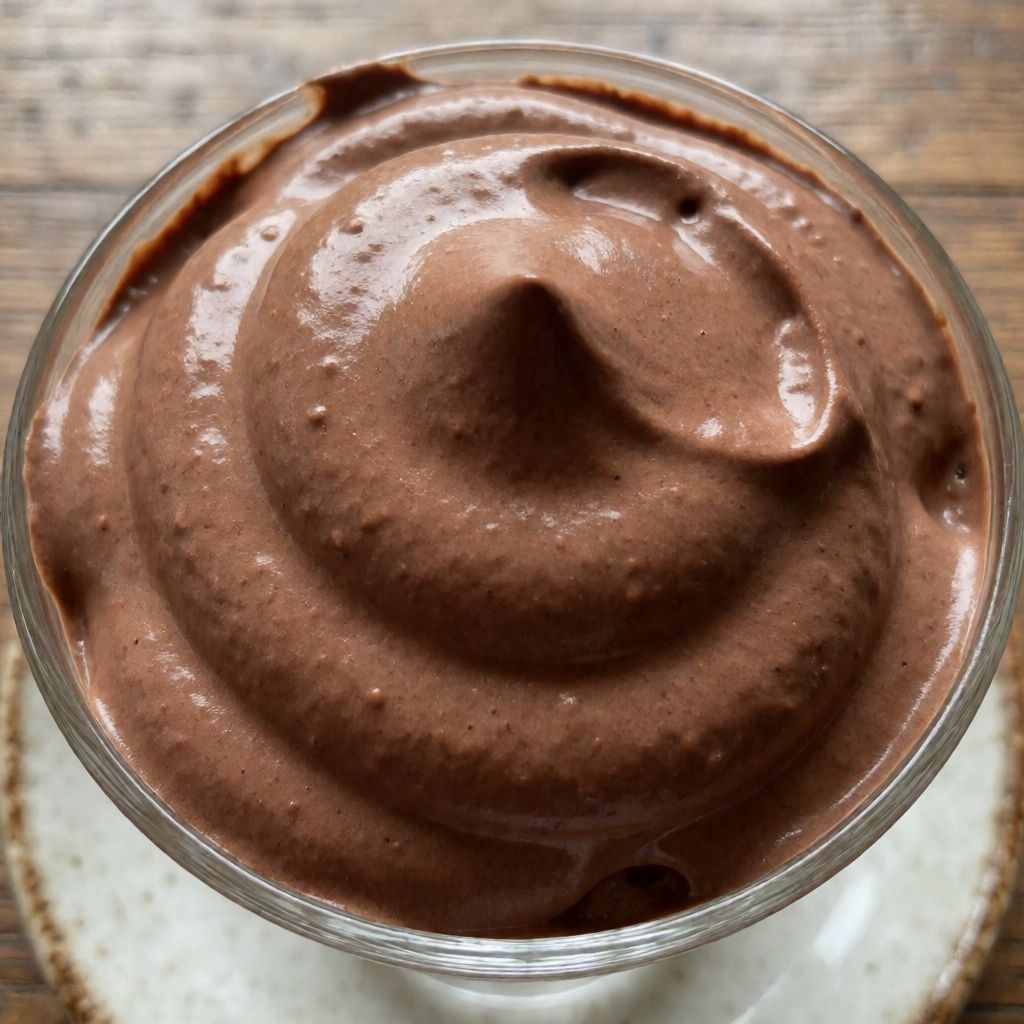
 AI photo
Chocolate Diplomat Cream
A chilled custard cream swirled with melted dark chocolate and lightened with whipped cream.
Labels are worked out automatically from the ingredients and can be wrong. Check the packaging if it matters to you.
Ingredients
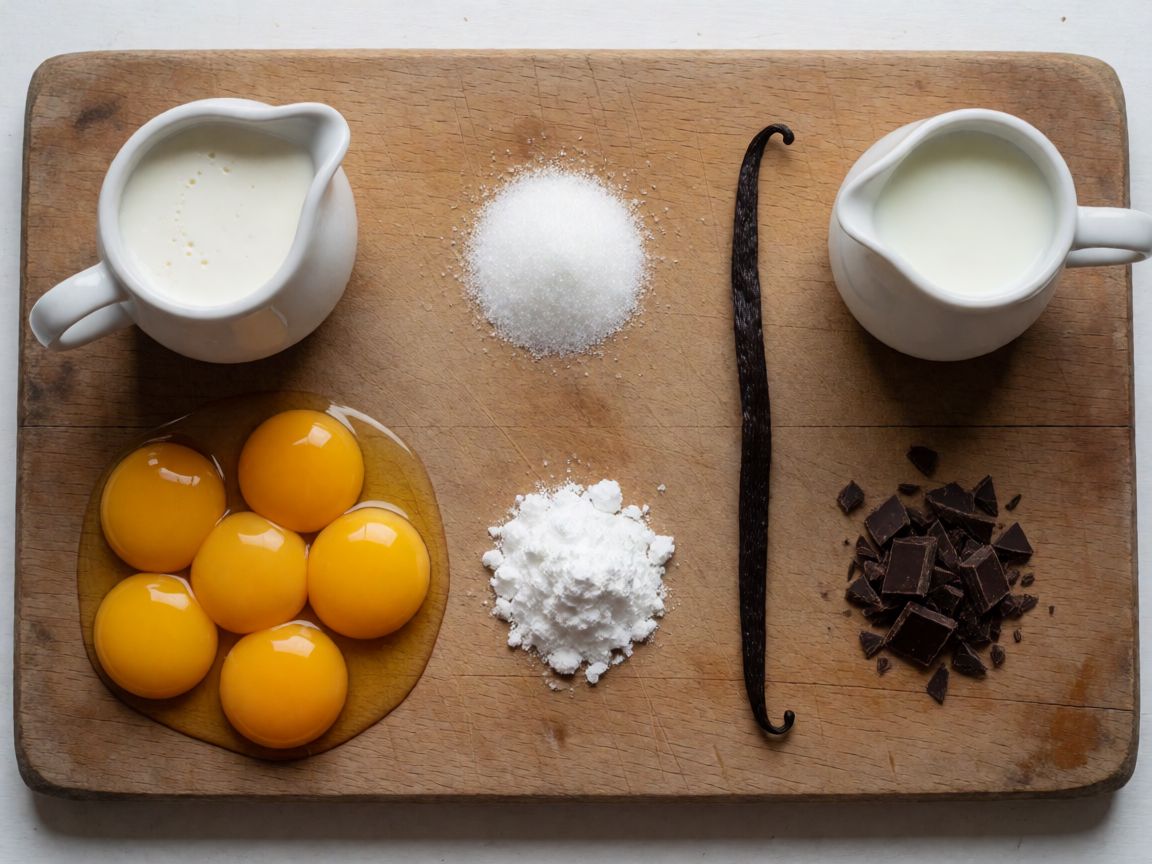
- 300 ml Double Cream
- 30 g Caster Sugar
- 5 pcs Egg Yolk
- 120 g Caster Sugar
- 45 g Cornflour
- 500 ml Milk
- 0.5 pcs Vanilla Pod
- 120 g Dark Chocolate







Steps
Whisk the egg yolks with the sugar, then sift in the cornflour and mix well.
Bring the milk to the boil, flavouring it with the vanilla pod.
Once the milk boils, remove the vanilla pod and pour in the egg yolk mixture.
Stir continuously until the cream thickens, then remove from the heat.
Add the chopped chocolate and let it melt completely.
Transfer the cream to a bowl, cover with cling film and chill.
Whip the double cream with the sugar, then fold in the cooled chocolate custard gently.
This is crème pâtissière that’s been given air. Underneath the chocolate it’s the same base as a custard tart filling: yolks, sugar, milk, a thickener. But instead of leaving it dense and spoonable, you fold in whipped cream at the end, so what lands in the bowl feels like a mousse that remembers being a custard. Six people, no baking, and the only real work is patience with temperature, not skill with a knife.
What decides whether this works is two moments, both easy to rush. First: the custard has to actually set when cold — firm enough to hold its shape on a spoon, not a runny chocolate milk. Second: when you fold the whipped cream in, it has to survive the folding — stay light, not collapse into a flat, weepy mush. Those two moments pull in opposite directions, which is the whole trick of a diplomat cream: build structure, then loosen it without destroying it.
Some say you can’t boil a custard with egg yolks in it — that it will scramble, go grainy, split. No. That’s true for a crème anglaise, which has nothing but egg protein to hold it together, and egg protein tightens and squeezes out liquid the moment it overheats. Here you’ve sifted cornflour in with the yolks. Starch coats the egg proteins and gets in the way of them bunching together into curds. That’s exactly why this custard is allowed — needs — to come back to a full boil on the stove: the starch only thickens properly once it gets hot enough to swell and burst, and at that same heat the eggs are protected. Boiling isn’t a risk here. It’s the point.
Egg yolks go in with sugar straight away, before anything else touches them, and you whisk, not just stir. Sugar dissolving into yolk does two things: it keeps the yolks from drying into a skin while you reach for the next ingredient, and it starts breaking down the yolk’s structure so it blends smoothly into hot milk instead of arriving as little cooked threads. Skip this step or do it slowly and you’ll see grains in the finished custard that have nothing to do with the chocolate — that’s uncooked yolk that seized on contact with heat because it went in unprotected.
Cornflour is sifted in after, not before, because lumps of raw starch dropped straight into liquid clump instead of dissolving — sifting breaks it up so it disperses into the yolk mixture evenly. Any pure starch does the same job: potato starch works the same way gram for gram, plain flour works too but needs roughly double the weight and leaves a slightly duller finish because wheat starch gelatinises less cleanly than corn or potato.
The milk is brought to a full boil with the vanilla pod in it because vanilla’s flavour sits mostly in fat-soluble compounds, and hot milk fat pulls them out far faster than cold milk ever could — this is extraction, not magic. If you’ve no pod, a good vanilla paste or extract does the job, but add extract off the heat, after the custard is made, because the fragrant volatile part of it boils away if you throw it into the pan.
The chocolate melts off the heat of the custard itself — no separate melting, no bowl over simmering water. That residual heat is enough because dark chocolate melts at body-ish temperature already; chop it small so it has more surface to give in to the heat quickly, and don’t use chocolate chips, which are often formulated with stabilisers so they hold their shape in cookies rather than melt smoothly into a sauce. Any plain dark eating chocolate works — 60–70% cocoa gives you something that reads as “chocolate” against the sweetness of the custard rather than disappearing into it.
Double cream is there for its fat, and the fat is there to trap air. Only cream around 35% fat and above whips into something that holds a shape instead of sliding back to liquid — that’s the whole criterion if you want to substitute, whipping cream at the UK’s usual spec will do, it just won’t sit quite as firm the next day. Whip it to soft peaks, not stiff — stiff cream has less give, and folding stiff cream into custard tears the structure rather than blending with it. Fold gently, cutting through rather than stirring in circles, because every circle you drag through the bowl knocks air back out, and that air is the only thing separating this from a plain pot of chocolate custard.
The chill in between is not decoration. Fold warm custard into whipped cream and the cream’s fat melts on contact, the air collapses, and you’re left with a loose, greasy mixture that never sets properly. Cover it against the air while it cools too — cling film pressed down, or in a flat so skin doesn’t form on top, because a custard left open to the air dries and toughens at the surface while staying soft underneath, which is a different defect with the same cause: moisture leaving where air meets the custard. On a domestic hob, use the heaviest-bottomed pan you own for the custard stage — a thin one develops hot spots that scorch the bottom while the rest is still loose, which is the usual reason home custards taste faintly burnt even when they look fine.