
 AI photo
Gluten-Free Chocolate and Walnut Cake
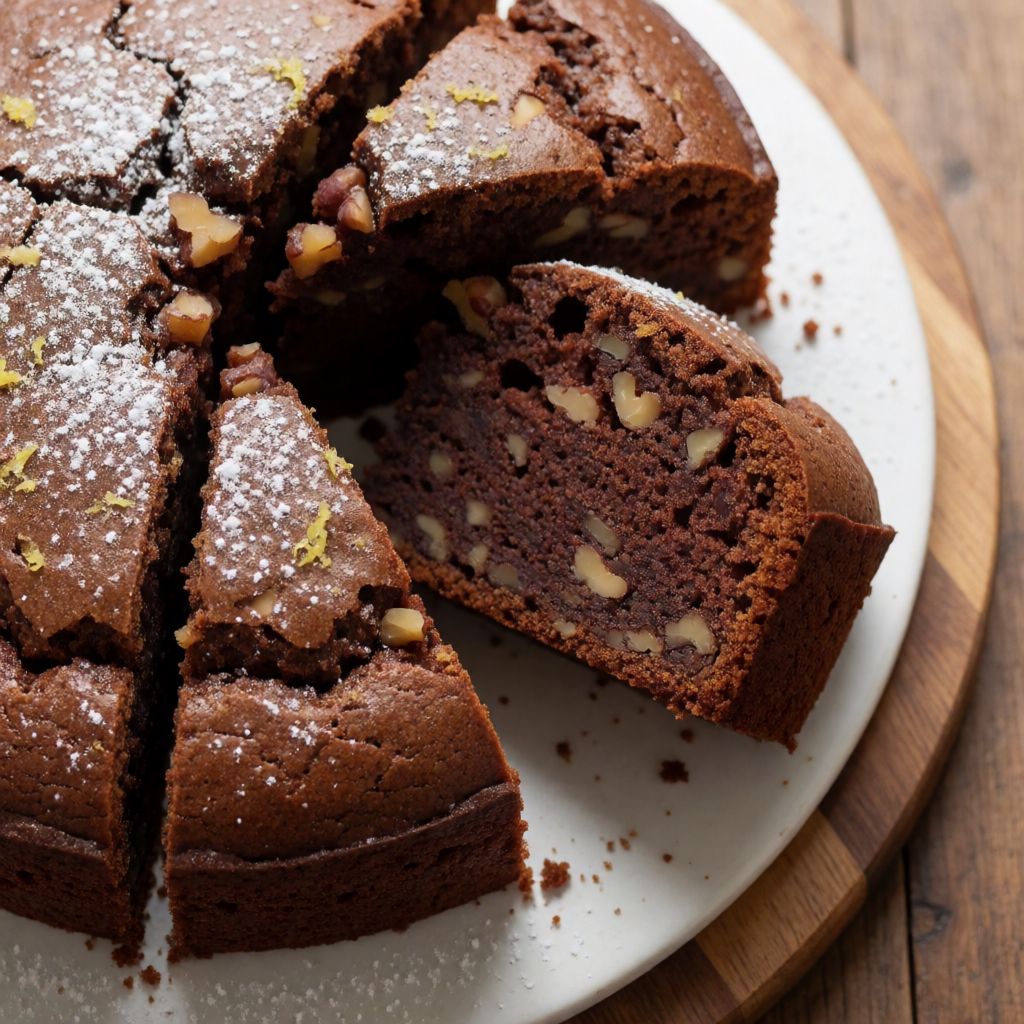
A gluten-free chocolate and walnut cake, light and rich – lovely for an afternoon treat.
Labels are worked out automatically from the ingredients and can be wrong. Check the packaging if it matters to you.
Ingredients
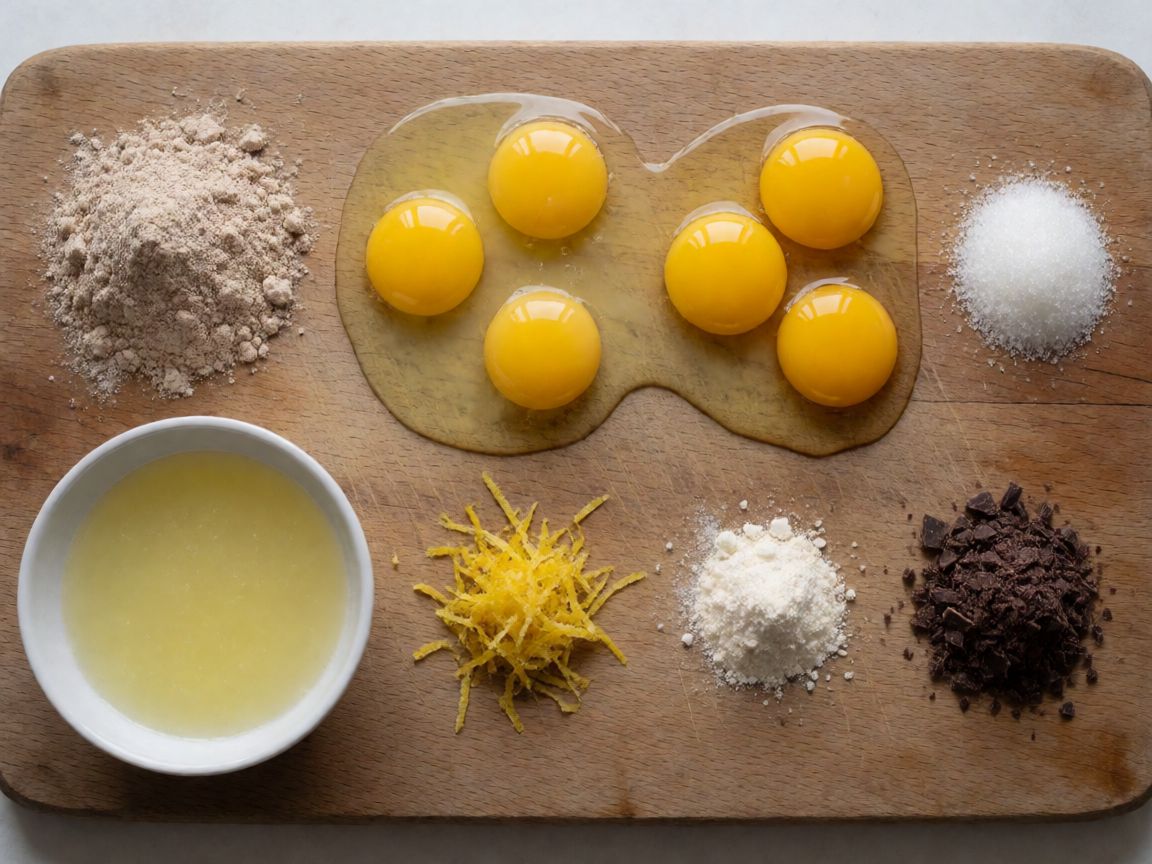
- 250 g Walnut flour
- 4 pcs Egg whites
- 4 pcs Egg yolks
- 250 g Caster sugar
- 1 pcs Lemon zest from one lemon
- 1 pcs Lemon juice juice of one lemon
- 1 package Baking powder a standard sachet, about 10g
- 100 g Dark chocolate dark, milk or hazelnut-filled, chopped, to taste
- 10 g Icing sugar for dusting









Steps
Whisk the egg yolks with the sugar until pale and fluffy.
In a separate bowl, whisk the egg whites to stiff peaks.
Fold the walnut flour, baking powder, lemon zest and lemon juice into the yolk mixture and stir until smooth.
Gently fold in the whisked egg whites with slow, upward strokes.
Add the chocolate to taste and mix until combined.
Pour the batter into a 24–26 cm tin, greased and dusted with flour.
Bake at 160°C.
45 minDust the finished cake with icing sugar.
This is a flourless cake — not because someone decided gluten-free was fashionable, but because walnuts, ground fine, do the job flour usually does: they give the crumb its body and soak up the fat from the egg yolks. There's no wheat anywhere in this recipe, which means there's no gluten network to trap air either. So the whole structure of the cake — whether it rises at all, whether it's a cake or a wet nutty brick — comes down to what you do with the eggs.
You separate them for a reason. Yolks whisked with sugar become pale and thick, a stable base that can carry ground nuts and lemon without curdling or going heavy. Whites whisked on their own, to stiff peaks, are the actual lift — millions of tiny bubbles held in place by egg protein, since there's no gluten to do it instead. Fold them in carelessly, beat the air out, and the cake won't rise so much as sit there looking offended.
Some say gluten-free baking needs special flour blends, xanthan gum, binders from a packet. No — people have been making cakes exactly like this one for a very long time, long before any of that existed, because ground nuts and whipped egg white were always available and wheat flour, at certain times and places, was not. The mechanism is older than the marketing.
Walnut flour is just walnuts ground fine enough to behave like flour — which it does, structurally, but it's also roughly half fat, so the cake behaves more like a dense, nutty custard that's been given backbone than like a classic wheat sponge. If you can't buy it ready-ground, pulse whole or shelled walnuts in a processor with a spoonful of the sugar from the recipe — the sugar keeps the oil in the nuts from turning them into paste before you've got flour. Any nut with enough body to grind dry works on the same logic: hazelnuts, almonds, pecans. Each brings its own flavour, so don't expect an almond version to taste like this one, just to behave the same way.
The eggs do two separate jobs and that's why they're treated separately. Yolks with sugar, whisked until pale and thick enough to leave a ribbon when you lift the whisk — that's the emulsion, and it's what stops the batter separating once the oily walnut flour goes in. Whites on their own, whisked to stiff peaks — not dry, dry peaks mean you've gone past the point where the protein can still hold water, and the foam starts collapsing on itself rather than holding air. Fold them in last, and fold upward and gently, lifting the heavier batter over the foam rather than stirring it through — stirring pops the bubbles you just spent five minutes building, and they're the only rise this cake has got, since the baking powder is there as insurance, not as the main engine.
Lemon zest and lemon juice aren't decoration. Walnuts and chocolate together are rich, slightly bitter, a bit heavy on the tongue by the second slice — the acid in the lemon juice cuts across that, and the zest's oil carries aroma without adding more sweetness. Leave it out and the cake still works, structurally, but it tastes flatter, one long note instead of two. If you've no lemon, a splash of any sharp citrus — orange with less sugar, or a spoon of vinegar diluted right down — does the same cutting job, just less gracefully.
The chocolate is the one ingredient here that's genuinely to taste, and the recipe says so honestly. Dark chocolate chopped and folded through gives pockets of melted bitterness rather than an even chocolate flavour throughout — that's deliberate, you want contrast with the nut, not a uniform brown cake. Milk chocolate softens that contrast, hazelnut-filled sweetens it further. Choose by how much sugar is already going into the batter — 250g is not a shy amount — and adjust the chocolate's sweetness against it rather than following a rule.
Greasing and flouring the tin matters more here than in an ordinary sponge, because there's no gluten to help the cake let go of the metal on its own — fat-heavy batters like this one cling. A light film of any neutral oil or soft butter, then a dusting of more walnut flour if you want to stay properly gluten-free, or ordinary flour if that's not a concern for you, breaks the contact just enough.
The icing sugar at the end is for looking at before you cut it, not for sweetness — this cake doesn't need more sugar, it needs a quarter-hour to cool and settle before you dust and serve. It's the kind of cake that improves slightly the next day, once the walnut oil has had time to finish moving through the crumb — worth remembering if you're tempted to cut it the moment it's out of the tin. Serves six generously, which in a British kitchen means six people with tea, or four with tea and second slices, which happens more often than anyone admits.