
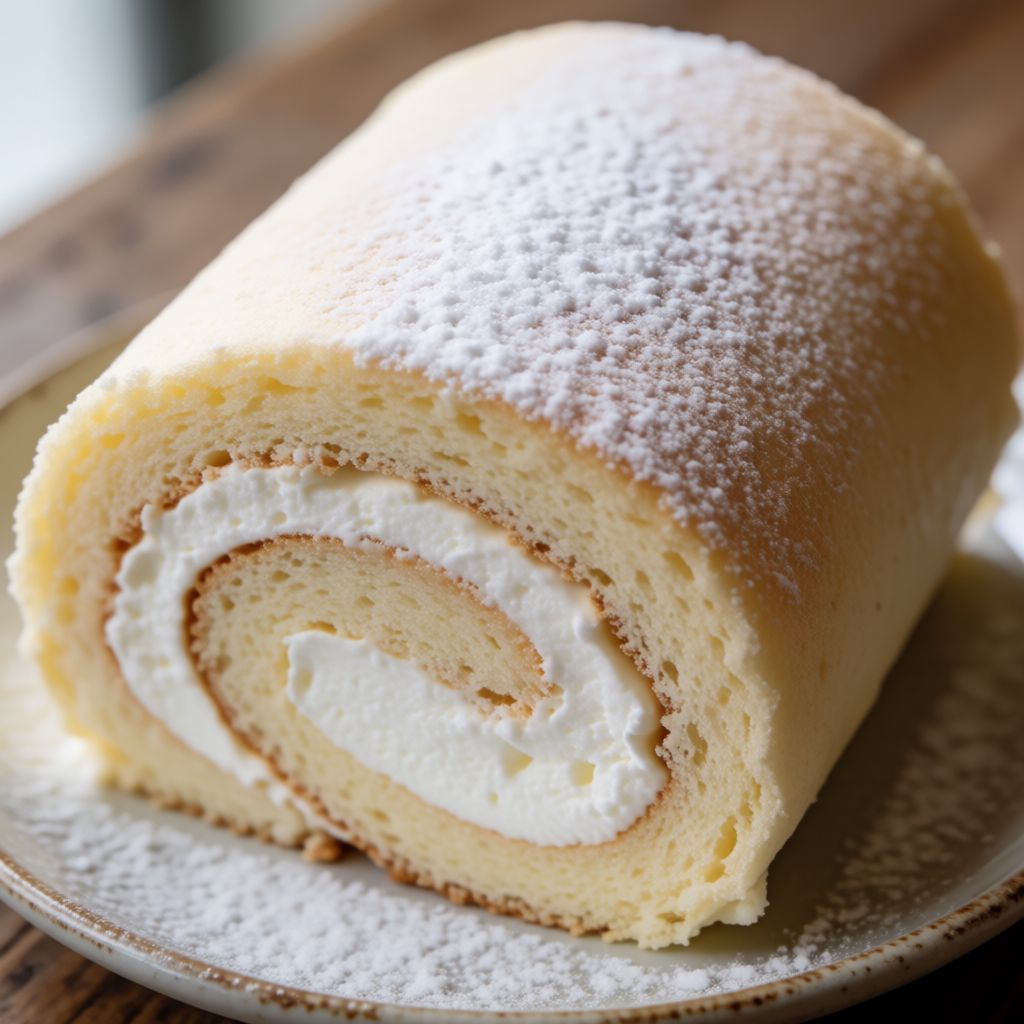
 AI photo
Paradiso Roll: A Delicate Dessert with a Soft Touch
A tender sponge roll filled with a delicate ricotta and condensed milk cream.
Labels are worked out automatically from the ingredients and can be wrong. Check the packaging if it matters to you.
Ingredients
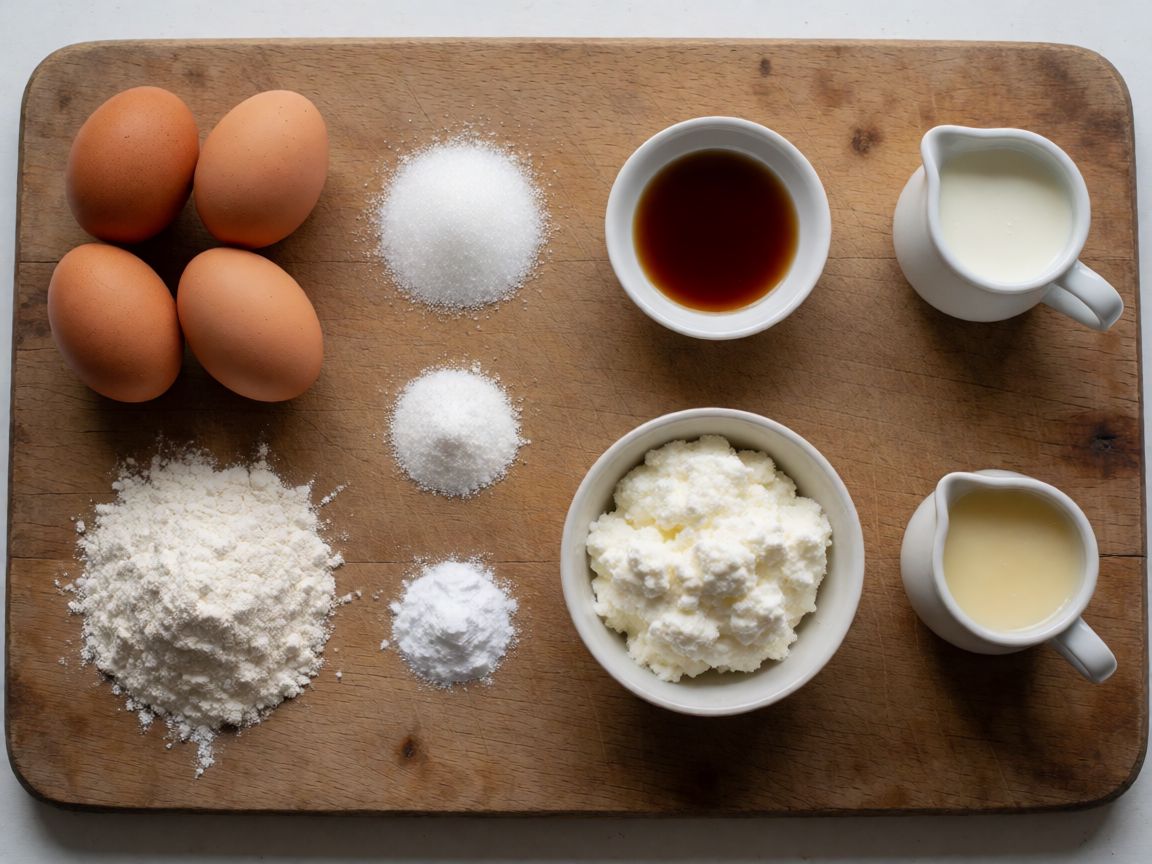
- 4 pcs Eggs
- 100 g Sugar
- 100 g Flour
- 8 g Baking Powder
- 1 tsp Vanilla Extract
- 200 ml Double Cream
- 100 g Ricotta
- 160 g Condensed Milk
- 1 pinch Icing Sugar for dusting









Steps
Whisk the eggs with the sugar using a mixer until pale, fluffy and creamy.
Add the vanilla extract to flavour the batter.
Sift the flour and baking powder directly into the batter and fold in gently.
Pour the batter into a rectangular tin lined with baking parchment and level it out.
Bake in a preheated oven at 170°C for 12 minutes.
12 minCover the sponge with baking parchment and leave to cool completely.
Mix the ricotta with the condensed milk.
Whip the double cream to stiff peaks and fold into the cheese mixture.
Turn the sponge over, remove the parchment and brush with milk.
Spread the cream over the surface, leaving 1.5-2 cm free at the edge.
Roll the sponge up from the short side and wrap it in paper or place it in a loaf tin.
Chill in the fridge for 4 hours.
240 minDust with icing sugar before serving.
A roll cake is really two separate tricks pretending to be one dish: a sponge that has to bend without cracking, and a cream that has to hold its shape without going runny. Get either one wrong and you don't have a Paradiso Roll, you have a flat omelette with jam-adjacent filling leaking out the sides.
The sponge works because of what whisking eggs and sugar actually does: you're beating air into the egg proteins until they trap thousands of tiny bubbles, and the sugar stabilises the foam so it doesn't collapse the second you stop mixing. That's why the mixture needs to go properly pale and thick — almost like a mousse — before you dare add flour. Fold the flour in too roughly, or whisk it in instead of folding, and you knock the air straight back out. No air, no elasticity, and a sponge with no elasticity splits the moment you try to roll it.
The bake is short and hot for the same reason: you want the structure to set before the cake dries out. A thin sheet in a wide tin cooks fast — this isn't a loaf that needs forty minutes to cook through the middle, it's a few millimetres of batter that only needs to go from liquid to spongy. Watch for it springing back when you touch it lightly, rather than counting to twelve and hoping. Twelve minutes is where to start looking, not where to stop.
Covering the hot sponge with parchment while it cools is not decoration, it's damage control: it keeps steam against the surface so the top doesn't form a dry skin. A dry skin cracks on the outside of the roll — exactly where everyone will see it.
The eggs are the actual leavening agent here, more than the baking powder. Four eggs properly whisked give you most of your lift; the baking powder is backup insurance, not the engine. That's also why there's no oil or butter in the batter — fat coats air bubbles and makes them pop, which is the last thing you want in a sponge you're about to bend in half.
Some say you must bake a roll sponge on a flat baking sheet, never in a tin, or it won't roll. No — the real requirement is thinness and evenness, which a rectangular tin lined with parchment gives you just fine on a domestic oven shelf. What actually stops a roll cracking is rolling it while it still has some give — not cold, not bone-dry — and not trying to roll it into a tight scroll if it's thicker than it should be. A thin, even layer bends; a thick, uneven one snaps, same as a stale wrap does when you try to fold a kebab in it.
Ricotta and condensed milk replace mascarpone and sugar syrup, and that's a reasonable swap, not a compromise. Ricotta brings the slight grain and lightness mascarpone would, condensed milk brings sweetness and body already dissolved in — no graininess from undissolved sugar crystals sitting in your cream. Whip the double cream to stiff peaks separately before folding it in, because whipping it after mixing with ricotta risks overworking it until it turns grainy and starts weeping liquid later in the fridge — which is the actual cause of a "soggy roll," not the cream being "too rich."
Brushing the turned-out sponge with milk before filling isn't for flavour, it's for moisture — the underside (now the top, since you've flipped it) has had no steam cover and can be drier than the rest. A light brush of milk puts back what the open air took out, so it doesn't tear when rolled.
Leaving a bare margin round the edge before you roll matters because cream has nowhere to go but out and down once the roll is under its own weight. Fill edge to edge and you'll get a tidy roll for about ten minutes, then a puddle.
The four hours in the fridge aren't a suggestion, they're the dish setting. Warm cream is still loose cream; cold cream holds a clean slice. Cut it straight from assembly and you get a collapsing wedge, not a roll. This is a cake that rewards you for leaving it alone — patience is the last ingredient, and it's the one people skip because the recipe card doesn't put it in grams.