
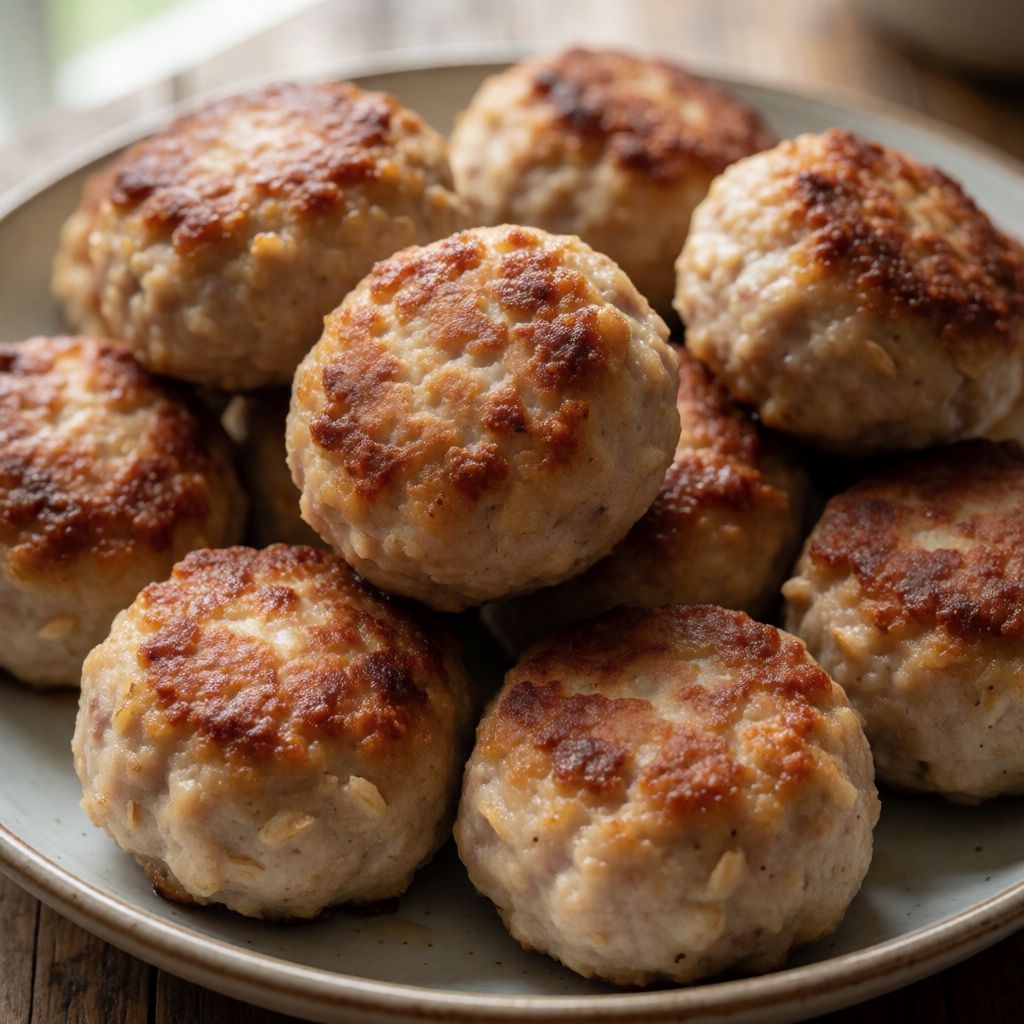
 AI photo
Christmas Meatballs
Juicy veal and pork meatballs spiced with cloves and allspice, a festive classic for a Christmas table.
Labels are worked out automatically from the ingredients and can be wrong. Check the packaging if it matters to you.
Ingredients
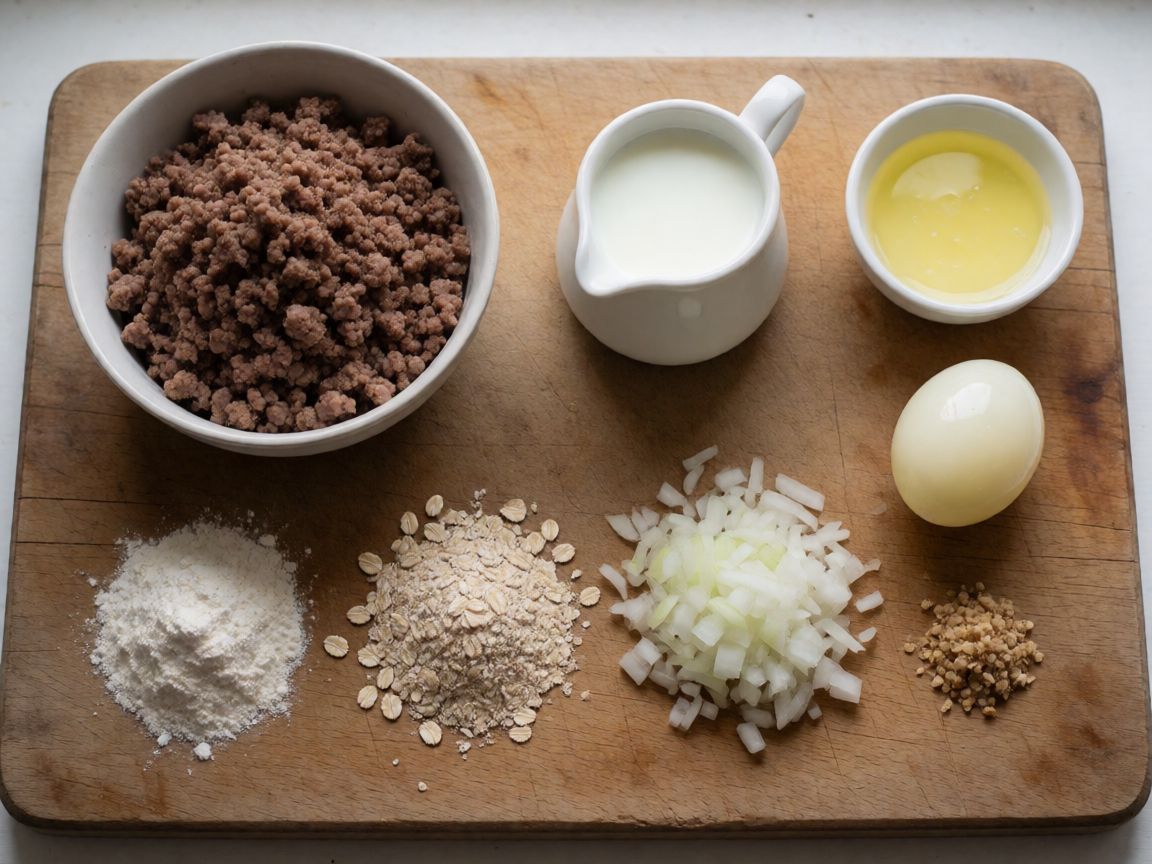
- 500 g Veal and pork mince
- 2 tbsp Plain flour
- 2 tbsp Finely ground oatmeal
- 100 ml Milk
- 1 pcs Egg white
- 1 pcs Egg
- 1 pcs Onion finely chopped
- 1 pinch Cloves
- 1 pinch Allspice
- 2 tsp Salt
- 2 tsp Black pepper freshly ground
- 1 tbsp Olive oil for frying
- 2 tbsp Butter for frying













Steps
Put all the ingredients in a bowl and beat with a mixer for 2 minutes.
2 minLet the mince rest in the fridge for at least 30 minutes.
30 minShape the meatballs and fry them for about 5 minutes on each side in a pan with butter and olive oil.
10 min
This is not köfte, not Swedish köttbullar with lingonberry — it is a British Christmas-table meatball, built to feed four as a starter or a side to the roast, spiced the way a house spices things only once or twice a year. What decides whether it holds together on the plate, rather than collapsing into a sort of spiced meat porridge, is almost entirely decided before it ever touches the pan.
The two minutes with the mixer are not there to "combine the ingredients" — you could combine them with a spoon in ten seconds. Beating meat mechanically works the protein, mainly the myosin, until it starts to bind mince, liquid and fat into one elastic mass instead of a loose crumble. That is the real glue here, not the egg. People say egg holds meatballs together — no, egg helps, but a meatball beaten properly would hold with no egg at all, and a meatball beaten badly will fall apart with three eggs in it. Skip the beating and your defect shows up later, in the pan: the meatball cracks and weeps fat and milk the moment it hits heat, because there was never a structure to hold either in.
On the mince itself: veal and pork is a working split, not a sentimental one. Veal alone is too lean and dries out into something you'd describe politely as "firm"; pork alone can be fattier than you want for something spiced this delicately, and can push the dish toward sausage rather than meatball. The criterion, if you want to substitute, isn't the animal, it's the fat — look for mince sitting somewhere around 15–20% fat, visible as flecks of white through the red, not a slick sheen on top of the pack. Beef and pork together will do the same job. All-lean mince of any kind will cook into something dry no matter how well you rest and beat it; that defect is in the shopping, not the cooking.
Flour and oatmeal are both there to do one job between them: hold the milk and egg white inside the meatball instead of letting it leach out as grey liquid while frying. Oatmeal, ground fine, drinks liquid slowly and keeps some bite, which is why it's there alongside the flour rather than instead of it. If you have neither to hand, the criterion is "a dry starch that swells without turning gluey" — fine breadcrumbs work, semolina works in a pinch, ordinary porridge oats blitzed in a coffee grinder work. What won't work well is self-raising flour; you don't want air pockets here, you want density.
Milk, egg white and whole egg are the liquid side of the same bind. The milk keeps things tender rather than compact; the egg white adds structure without the richness a second yolk would bring; the whole egg carries both fat and protein. If you're out of milk, any plain unsweetened liquid with some fat in it — single cream cut with water, or even stock — will do the softening job, though it won't set quite the same way milk's proteins do.
Cloves and allspice are the detail that actually makes these "Christmas" meatballs rather than just meatballs. There's no mystery in that pairing — cloves and allspice are both warm, resinous spices that travelled a long way and cost a lot for most of European history, which is exactly why they got saved for the one or two feasts a year a household could afford to be a bit extravagant on. Put plainly: the spice tells you less about flavour chemistry than about who could afford what, and when. Use them with a light hand — a pinch each, as the recipe says, not a spoonful — because both turn bitter and medicinal if you overdo them; that's a far easier mistake to make than to fix.
In a flat kitchen with a normal hob and a wide frying pan rather than anything built for deep-frying, don't crowd the pan — four or five meatballs with space between them, not a solid mat of them, or the ones in the middle steam instead of browning and you lose the crust that's doing most of the flavour work. Count on three or four meatballs a head if this is a starter before the roast; more if it's the main event with mash and gravy. And don't shortcut the rest in the fridge because you're hungry now — that half hour is doing work you can't get back once the mince is in the pan.
I haven't tried these with a fully plant-based mince, so I won't tell you it works — only that the binding mechanism here depends on animal protein and real fat, and anything that doesn't have both will need its own adjustments, not this recipe's.