
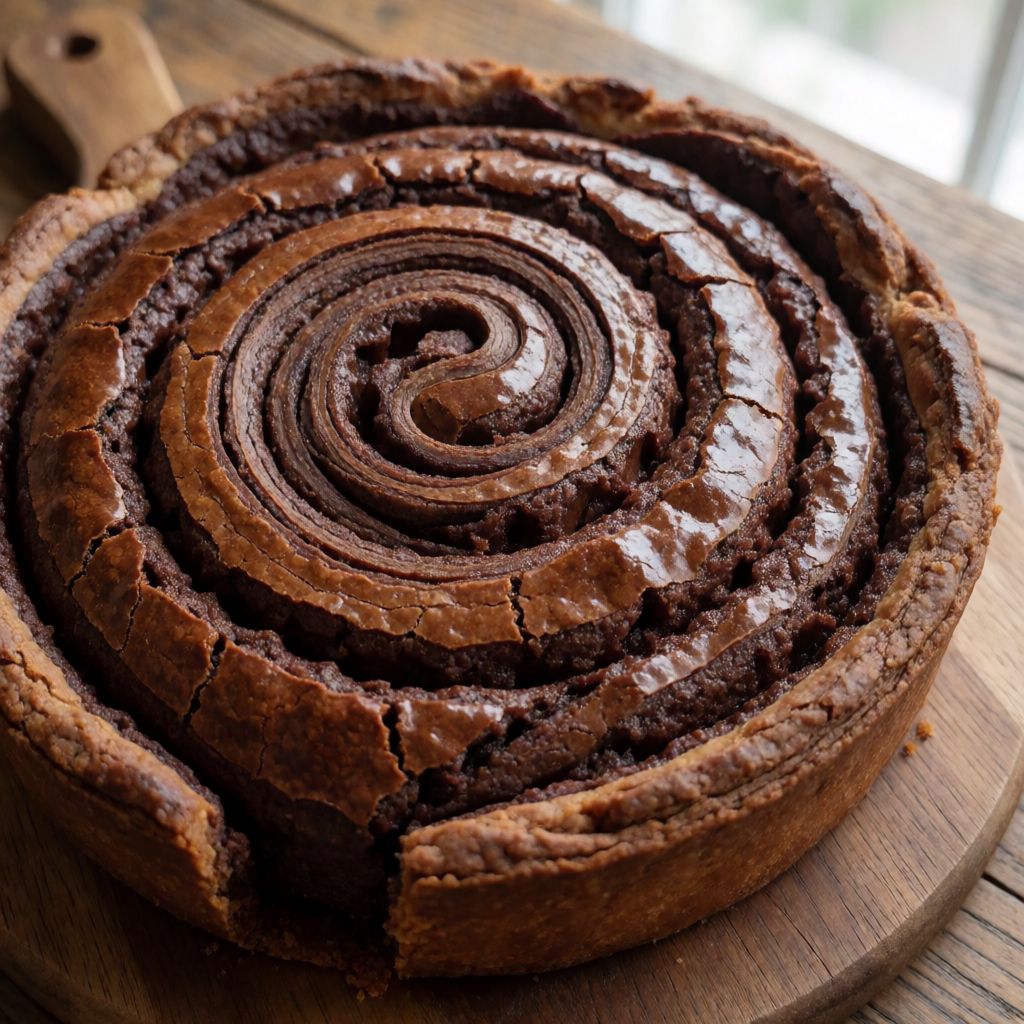
 AI photo
Cocoa Pastry Roll Tart
A rolled cocoa pastry tart with a vanilla custard filling, shaped into a spiral of pastry rolls.
Labels are worked out automatically from the ingredients and can be wrong. Check the packaging if it matters to you.
Ingredients
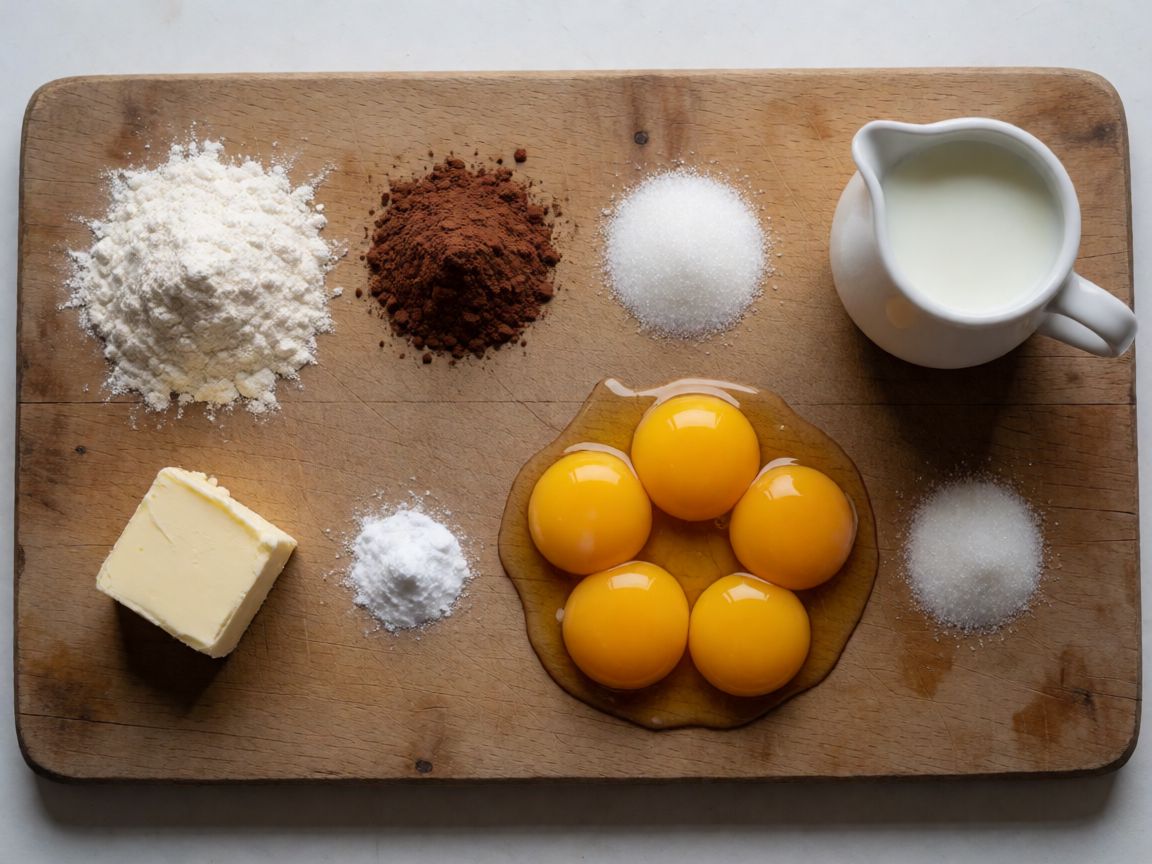
- 330 g Plain flour
- 40 g Cocoa powder
- 180 g Caster sugar
- 200 g Butter
- 5 pcs Egg yolk
- 8 g Baking powder
- 1 pinch Salt
- 500 ml Milk
- 100 g Caster sugar
- 20 g Cornflour
- 1 tsp Vanilla extract










Steps
Sift the flour onto the worktop and form a mound with a well in the centre. Into the well, tip the cocoa powder, caster sugar (180 g), baking powder and diced butter. Add the egg yolks and knead the dough by hand from the centre outwards, drawing in the flour from the edges.
Wrap the dough in cling film and chill in the fridge for 30-40 minutes.
35 minIn a saucepan, mix the caster sugar (100 g) with the cornflour, gradually pour in the milk, and bring to the boil over medium heat.
Flavour with the vanilla extract, remove from the heat, pour into a bowl and leave to cool.
Roll out the dough with a rolling pin on a lightly floured surface to 5 mm thickness, aiming for a rectangular shape.
Using a pastry wheel, cut strips 4-5 cm wide and spread the milk custard over them.
Roll up one strip into a small roll and place it in the centre of a 20 cm tin, greased with butter and dusted with flour.
Arrange the remaining strips of dough around it one by one, forming concentric circles.
Bake in a fan oven preheated to 170°C for 45-50 minutes (without fan — 180°C for about 50 minutes).
48 min
This is a pastry version of a cinnamon-roll trick, done without yeast and without the long proving. You make a cocoa shortcrust, roll it into strips, spread each with a thick custard, then coil the strips one into the next like a rope of fire hose until they fill a tin. Cut a slice and you see rings, not layers — that's the whole point of the dish, and it's what tells you whether you've done it right.
What decides success here isn't the baking, it's the dough before it ever sees heat. This is a pâte sablée made the French way, on the worktop in a well, not in a bowl — because the mound of flour holds its shape and lets the cold butter and egg yolks sit in the centre without drowning. You work from the middle out, picking up flour gradually. Do it the other way — dump everything into a bowl and beat it — and you drive air and warmth into the butter, and the dough turns elastic instead of short. Elastic dough shrinks back when you roll it, and a roll that fights you is a roll that cracks when you try to coil it into rings.
Some say chilling the dough is just "to make it easier to roll." No — it's to let the butter re-solidify after your hands have warmed it, so when it meets the oven it melts in place rather than sliding, leaving the tiny fissures that make shortcrust short instead of dense. Skip the chill and the rings blur into a solid cocoa biscuit with no distinction between coil and filling.
Flour and cocoa together need a careful hand with the cocoa's fat content — cocoa powder is nearly pure starch and a little fat, no gluten at all, so 40 g swapped in for flour is already weakening the dough's structure before you've touched the butter. That's deliberate: a cocoa shortcrust should break clean under a fork, not chew. If your cocoa is very dark and bitter (Dutch-processed, the kind sold for baking in most UK supermarkets), that's fine here — the custard's sugar balances it. Don't use drinking chocolate powder; it has added sugar and milk solids that throw off both the dough's texture and the final sweetness.
Butter: use it cold, straight from the fridge, diced small. The reason isn't tradition, it's physics — cold butter stays as separate solid pieces coated in flour until the oven melts them, which is what gives shortcrust its sandy crumb. Soft or melted butter blends into the flour and makes a cakey, not short, result. If you're out of butter, a firm block margarine works at a pinch, but anything that calls itself a "spread" is too wet and will make the dough sticky and impossible to roll into neat strips.
Egg yolks only, no whites — whites bring water and protein that toughen the dough on baking; yolks bring fat and a little protein that helps the pieces bind without adding chew. If you've only got whole eggs, you can use one whole egg in place of two yolks and accept a slightly firmer crumb; it won't ruin the tart, just change its character a touch.
The custard sugar and cornflour: cornflour is the quiet hero that lets you spread a loose paste on dough without it collapsing. If you've only got plain flour to hand, double the quantity — flour needs more of itself to thicken the same volume of milk, and it carries a faint raw taste if undercooked, so give it slightly longer at the boil. Vanilla extract here is seasoning, not flavour-forward — it rounds the custard's blandness against the bitterness of the cocoa dough; vanilla sugar or even a split pod simmered in the milk and fished out works just as well if that's what's in your cupboard.
On the UK kitchen itself: a "fan oven at 170°C" is a reasonable ask of a domestic oven, but ovens vary more than their dials admit, especially older British ones with hot back corners. Don't trust the clock alone — look for the top of the tart to go from wet-dark to matte, and press gently in the centre: it should spring back rather than dent. If it's browning hard at the edges before the middle sets, that's your oven running hot, not your error — drop it 10 degrees next time rather than pulling it early.
Patience shows up twice and both times it's unglamorous: the 30–40 minutes in the fridge, which you cannot shortcut by freezing it hard (frozen butter shatters the dough instead of softening predictably), and the full baking time, because a wet custard centre needs sustained heat to set all the way through its coiled rings, not just the outer ones. Cut it five minutes early and the centre ring will be a pale, unset smear instead of a clean cross-section — that's the tart telling you it needed the time, not that you did anything wrong.