
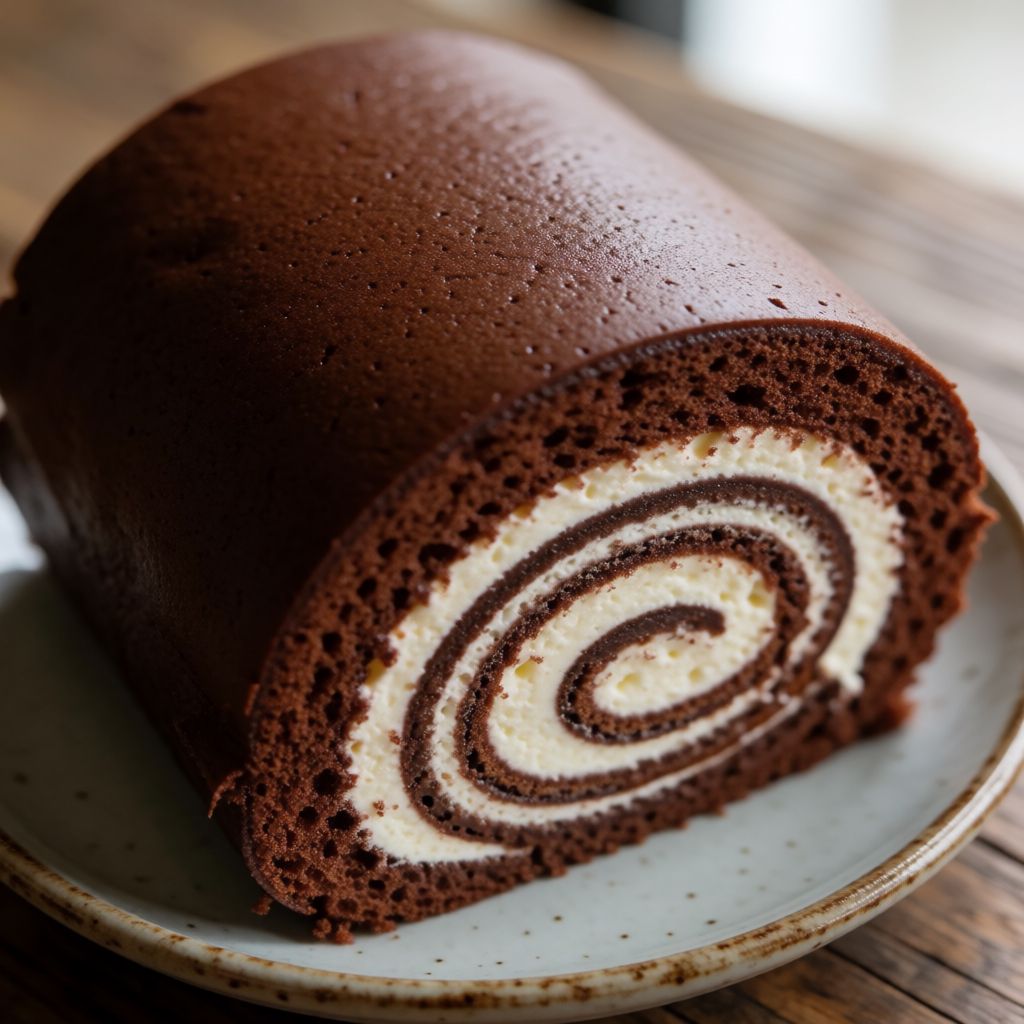
 AI photo
Rolled Coffee Cake
A light cocoa sponge rolled with a mascarpone and coffee cream filling.
Labels are worked out automatically from the ingredients and can be wrong. Check the packaging if it matters to you.
Ingredients
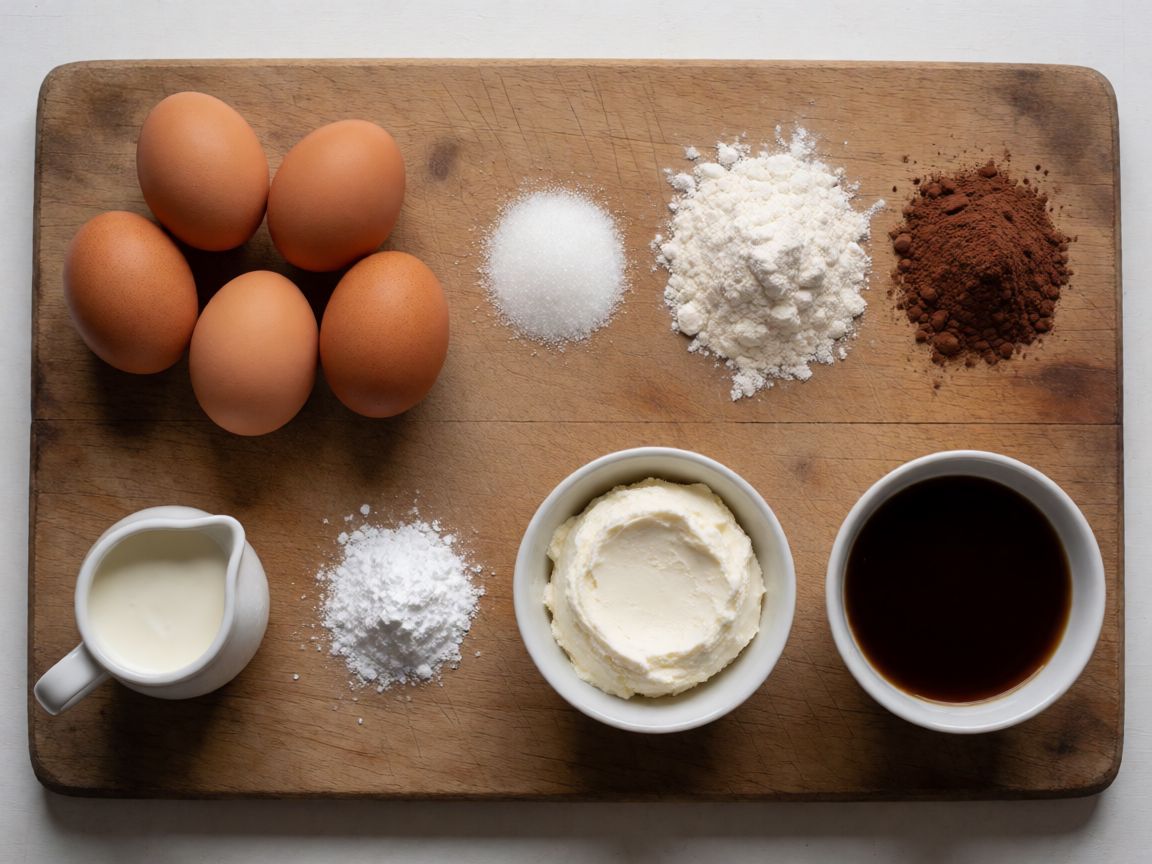
- 5 pcs Eggs
- 100 g Caster sugar
- 70 g Vegetable oil
- 40 g Plain flour
- 20 g Cocoa powder
- 600 ml Double cream
- 100 g Icing sugar
- 250 g Mascarpone
- 50 ml Coffee









Steps
Separate the yolks from the whites. Beat the yolks with the sugar until pale and creamy, then add the vegetable oil.
Sift the flour and cocoa powder and fold into the batter.
Separately whisk the egg whites to a stiff foam, then gently fold them into the batter.
Spread the batter evenly onto a baking tray lined with baking paper.
Bake in a fan oven preheated to 180°C for 10-12 minutes.
11 minLet the sponge cool completely.
Make the filling by mixing the mascarpone with the icing sugar and room-temperature coffee.
Separately whip the cream, then gently fold it into the mascarpone cream.
Turn the sponge out onto a second sheet of baking paper and carefully peel off the first sheet.
Trim the edges and cut the sponge into strips about 5 cm high.
Spread about half of the cream over the strips.
Roll up the first strip, place it on a plate, and gradually wrap the remaining strips around it.
Cover the surface of the cake with the remaining cream and decorate with a piping bag and coffee beans.
Place the cake in the fridge until ready to serve.
This is a sponge roll built the lazy-smart way: instead of rolling one long sheet around cream and fighting the crack that opens up on the outside curve, you cut the baked sponge into strips and coil them like a cinnamon bun — each strip wrapping the last. Same spiral you see when you slice it, none of the "will it crack" anxiety of the classic Swiss roll technique. If you've ever rolled a roulade warm, prayed, and watched it split anyway — this sidesteps that prayer entirely.
What decides whether it works is the sponge, and the sponge is decided by the eggs. Whites whisked stiff and folded in gently are what make this rise with no raising agent at all — there's no baking powder in the ingredient list, and there doesn't need to be. The air is beaten in by hand and held by egg protein; fold it too hard, knock that air out, and you get a flat, dense cocoa biscuit instead of a sponge that bends without tearing. Bake it on a tray, not in a tin — thin and flat, 180°C fan, watched rather than timed: it's done when the top springs back under a fingertip and stops looking wet, not at a buzzer. Eleven minutes is where to start checking, not where to stop.
On the eggs: five of them, separated, is non-negotiable here because the yolks carry richness and the whites carry lift — ask one egg to do both jobs and you get neither properly. Beat the yolks with the sugar until they go pale and thick enough to hold a ribbon when you lift the whisk; that's not decoration, that's dissolving the sugar fully so you don't get a gritty sponge. The whites want a bowl with no trace of grease in it — a smear of oil on the whisk and they simply won't stiffen, because fat collapses the protein structure that's meant to trap air. Fold them in with a spatula, cutting and turning, not stirring in circles — stirring deflates exactly what you just built.
Vegetable oil, not butter, and that's an economic choice as much as a textural one: oil stays liquid cold, so the sponge stays pliable enough to roll without cracking, where a butter sponge firms up in the fridge and snaps. Any flavourless oil does this job — sunflower, rapeseed, whatever's in the cupboard that doesn't smell of itself. Olive oil is the wrong tool here; it has an opinion, and a coffee cake doesn't need one.
Cocoa powder and a small amount of flour (40g flour to 20g cocoa) means this is closer to a flourless cake than a bread — cocoa has no gluten to speak of, so there's barely any structure beyond the egg foam itself, which is exactly why handling it gently matters more than in an ordinary cake. If your cocoa is unsweetened and bitter, that's correct — the icing sugar in the filling and the cream carry the sweetness instead.
Double cream, mascarpone, icing sugar and coffee make the filling, and the order matters: whip the cream separately to soft peaks, then fold it into the mascarpone-coffee mixture, not the other way round. Whip cream into a dense cheese base directly and you lose the air; fold a dense base into whipped cream gently and you keep it. Mascarpone is there for body and a slight tang that cuts the sweetness — cream cheese is the nearest stand-in if you can't get it, though it's sharper, so taste before you add all the icing sugar. The coffee should be room temperature, not hot, for the same reason the sponge must be cool — heat near whipped cream is how fillings turn to soup. Use what you'd actually drink: a strong filter coffee or an espresso shot, no sugar in it, since that's already accounted for separately.
On the cutting and rolling: strips about 5cm high, rolled one into the next, is what lets you build a long roll from a short tray — a domestic oven tray isn't a kazan or a professional sheet pan, it's limited in length, and this technique is the honest answer to that limit rather than a trick for its own sake. Trimming the edges first isn't fussiness — the edges bake slightly drier and crisper than the centre, and a dry edge is where a roll cracks.
Some say a roulade must be rolled while the sponge is still warm, that this is the only way it won't crack. No — that's true for a sponge rolled whole and unrolled again later, where warmth keeps it flexible for that one bend. Here you're not asking one sheet to bend around itself; you're coiling short strips, so a cool, firm sponge is stronger, not weaker, and firm is what holds the spiral cleanly when you slice it.