
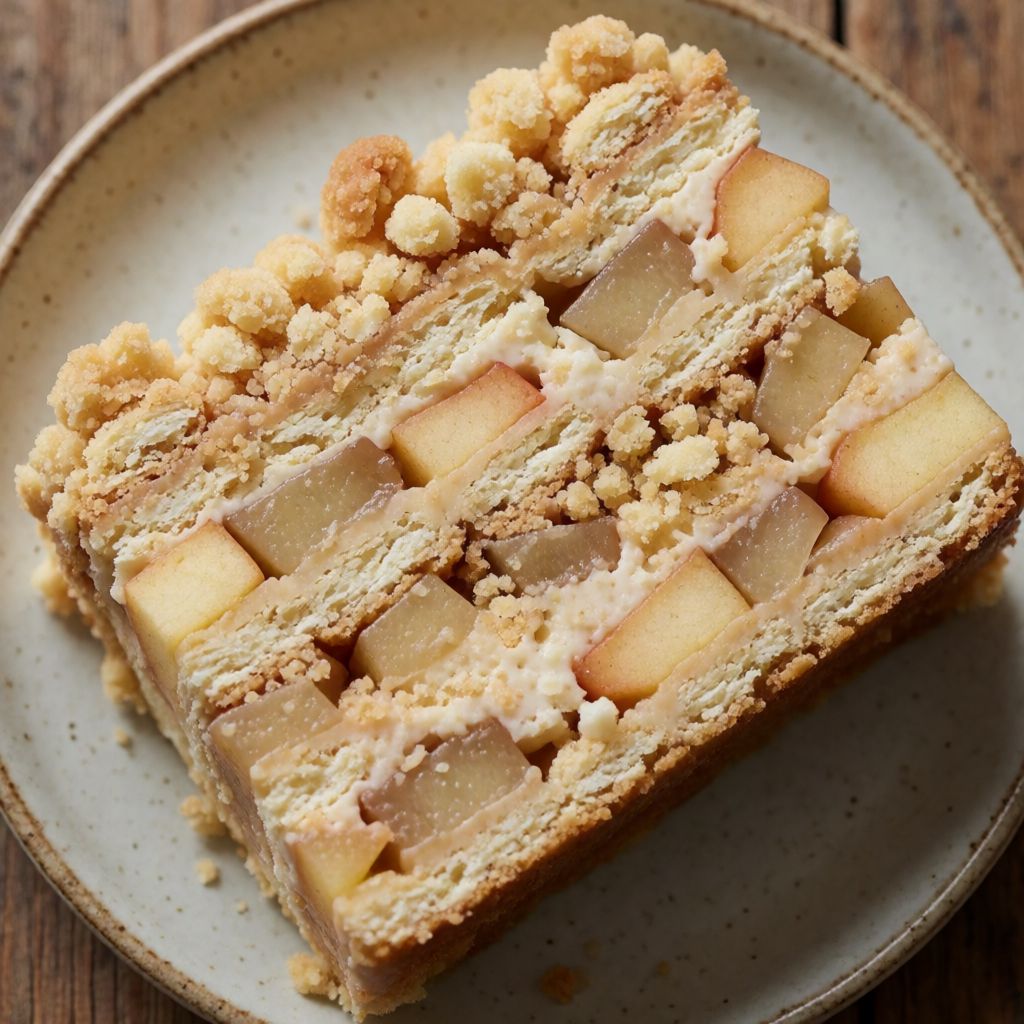
 AI photo
Cold Apple Cake
A no-bake apple cake with a biscuit base and a light apple-cream filling, chilled rather than baked.
Labels are worked out automatically from the ingredients and can be wrong. Check the packaging if it matters to you.
Ingredients
- 300 g Digestive biscuits
- 130 g Butter
- 3 pcs Apple
- 20 g Caster sugar
- 230 g Condensed milk
- 40 g White chocolate
- 450 g Double cream
- 0.5 pcs Lemon juice







Steps
Melt the butter over a bain-marie and crush the biscuits with a blender.
Pour the melted butter into the bowl with the crushed biscuits and mix until even.
Line a tin with baking paper, press in the biscuit base firmly with your hands.
Put the base in the fridge.
30 minWash the apples, peel them, and cut two apples into pieces.
Blend the apple pieces into a purée, adding lemon juice and sugar.
Whip the double cream to stiff peaks, then add the condensed milk and melted white chocolate.
Add the apple purée to the cream, mixing well.
Pour the cream over the biscuit base and smooth the surface.
Decorate with apple slices and put in the freezer.
240 min
This is a no-bake cheesecake in disguise — a biscuit base, a cold apple-and-cream filling, no oven involved anywhere. What decides whether it works isn't skill, it's patience: the fridge and the freezer are doing the actual cooking here, just slowly, with cold instead of heat.
The base is biscuit crumbs bound with melted butter — essentially a mortar. Crush the biscuits fine enough and the butter coats every crumb; too coarse, and you get a base that's more rubble than slab, crumbling the second you slice it. Pressing firmly isn't fussiness — it's what squeezes the butter into the gaps and makes the base hold together without any flour or egg to glue it. Thirty minutes in the fridge afterwards sets that butter solid again, so the base goes from paste to something you can actually stand a knife in.
The filling is a cream stabilised three ways at once: whipped to stiff peaks for air, condensed milk for sugar and body, melted white chocolate for fat that sets firm when cold. Some say whipped cream alone will hold a cake shape — no, because plain whipped cream collapses back to liquid within hours at room temperature and even in the fridge it softens. The chocolate is what gives this filling a genuine set, the same way it does in no-bake tarts; without it you'd have a nice mousse that slides off the plate.
Start with the biscuits. Digestives are a British habit for a reason — they're already slightly sweet, slightly salty, with enough structure to crush into fine crumb rather than dust. Any plain, not-too-sweet biscuit with a dry crumb does the same job — graham crackers, shortbread offcuts, even ginger biscuits if you want a spiced base. What you're avoiding is anything too soft or too sugary; it'll turn gluey under the butter instead of staying granular.
Butter here is pure glue and flavour, nothing more — melt it gently over a bain-marie rather than direct heat, because direct heat browns it unevenly and you lose control of how much liquid fat you're actually adding. Too little butter and the base won't hold when you cut it; too much and it turns greasy and heavy rather than crisp-cold. There's no substitute that does quite the same job — margarine works at a pinch but tastes of nothing, which in a base this simple matters more than you'd think.
The apples: two go into the purée, one is kept back for the decorative slices on top. Any apple that holds a clean flavour raw works — a tart eating apple like Granny Smith or Braeburn gives you brightness against all that cream and sugar; a mealy, bland apple just disappears. The lemon juice isn't decoration, it's doing real chemistry — ascorbic and citric acid slow the enzyme that browns cut apple, so your purée stays pale and your topping slices don't go grey-brown in the few hours before serving.
Double cream is the structural ingredient, and it has to be double — anything lower in fat (single cream, whipping cream below about 35% fat) won't hold stiff peaks reliably, and a filling that won't hold air won't hold a slice shape either. Whip it to stiff peaks before you add anything else; folding in condensed milk and melted chocolate too early flattens the air you've just beaten in.
Condensed milk does double duty — sugar and thickener in one, the same trick behind banoffee pie and plenty of other no-cook British puddings that predate reliable home refrigeration and relied on tins instead. White chocolate, melted gently, is what actually sets the filling firm once it's cold again — cocoa butter is solid at fridge and freezer temperature, and that's the backbone holding the whole filling together once the air from whipping inevitably settles a little over time.
The freezer, not the fridge, is what finishes this cake — four hours minimum, and that's a lower bound, not a target. Judge it by feel, not clock: run a finger on the surface, it should resist, not dent. Pull it too early and you've got a trifle with ambitions; give it the time and you've got something you can slice clean with a knife run under hot water between cuts. Decorate with the reserved apple slices just before serving, not hours ahead — lemon juice buys you time, not immunity.