
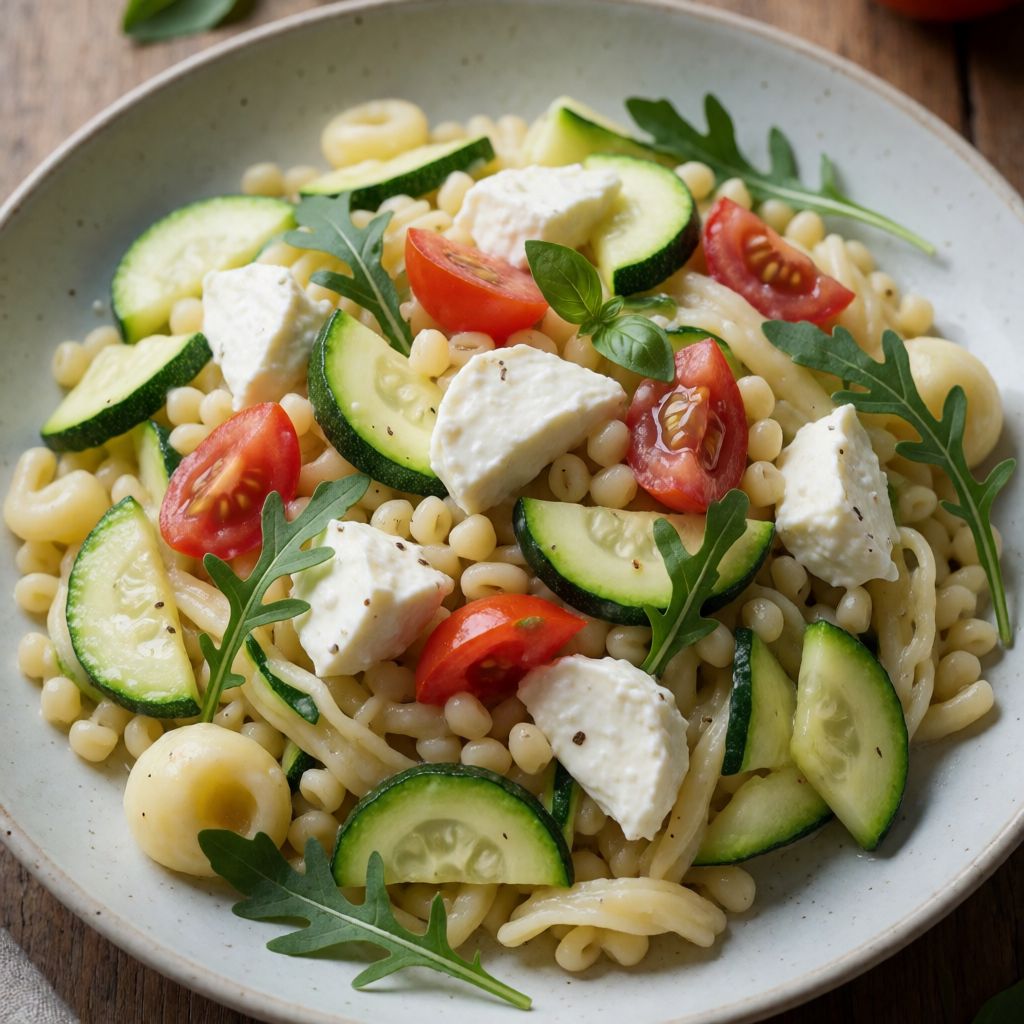
 AI photo
Cold Pasta with Courgette and Mozzarella
A refreshing cold pasta salad with courgette, mozzarella, tomato and rocket, perfect for a light summer meal.
Labels are worked out automatically from the ingredients and can be wrong. Check the packaging if it matters to you.
Ingredients
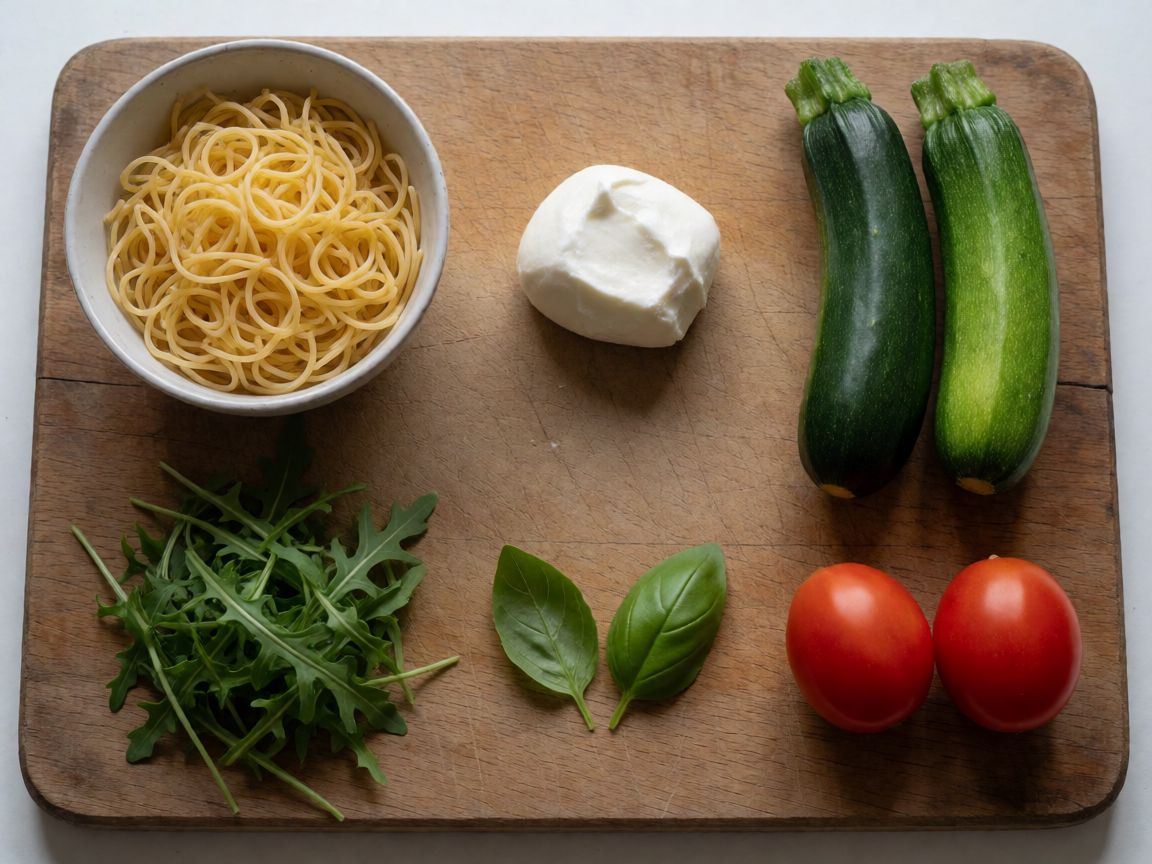







Steps
Cook the penne in a large pot of salted boiling water, then drain and rinse under cold water.
Dice the courgettes into small cubes.
Sauté the courgettes in a pan with a little olive oil and a pinch of salt.
5 minSlice the tomatoes.
Dice the mozzarella and roughly chop the rocket.
Toss the pasta: add the courgettes, mozzarella, tomatoes, and finally the rocket.
Mix well and chill in the refrigerator until the pasta is cold.
Garnish the cold pasta with basil leaves before serving.
This is not a sauce poured over hot pasta — it is a salad built from parts that have each already decided their own temperature and texture before they ever meet in the bowl. Pasta fredda works on a different logic than a plate of penne arrabbiata eaten standing at the stove: here the cooking is finished long before you eat, and what you are managing is not heat but moisture and fat. Get those two wrong and you get a sticky brick from the fridge instead of something you'd actually choose to eat cold.
Three things decide whether it works. First, the pasta must be rinsed under cold water straight after draining — and no, this isn't a sin against the sauce, as some will tell you with pasta served hot. That rule exists because surface starch grips a warm sauce and carries it on the fork. Here you want the opposite: that same starch, left on, turns into glue once the pasta sits cold for an hour, and you'll be eating one solid lump instead of loose pieces. Rinsing strips it off on purpose.
Second, the courgette is sautéed, not thrown in raw. Raw courgette in a cold salad is wet and says nothing — it's mostly water held in a thin skin of flavour. A short hot pan drives that water off as steam and lets what's left caramelise at the cut edges, which is where the actual taste lives. You're not cooking it through, you're concentrating it.
Pasta, first: penne is chosen for its ridges and its tube, both of which exist to hold oil and small diced bits in their grooves rather than let everything slide off the smooth sides the way it would on, say, tagliatelle. Any short, ridged shape does the same job — fusilli, rigatoni, farfalle at a push. Cook it until it bends under a bite but still resists in the middle; a cold salad punishes overcooked pasta more than a hot dish does, because there's no sauce heat left to disguise the mush, so if anything err a minute under rather than over.
Courgette: buy it firm, with no give when you press it, skin glossy not dull — a soft courgette has already started turning to water inside, which defeats the whole point of sautéing it to drive moisture out. Dice it small enough that each piece cooks through in the time it takes the edges to colour, because that colour is the flavour you're after — look for the cut faces going from pale green to golden, not for a clock. If they go translucent and slump, you've gone past doneness into soup.
Mozzarella, the fresh kind in its own whey, not the dry block sold for grating onto pizza — the block won't soften into the dish the same way and tastes of very little once it's cold. The catch with fresh mozzarella is the water it carries: dice it and let it sit a few minutes on a paper towel, or your pasta ends up swimming in milky liquid by the time it's chilled. No fresh mozzarella to hand, a firm feta or bocconcini covers the job, though feta brings its own salt, so go lighter with the seasoning elsewhere.
Tomato: slice, don't dice, and salt it only at the table, never while it sits in the bowl — salted tomato bleeds water on its own timetable, and that water has nowhere to go but into your pasta, thinning the oil's grip on everything else. Use whatever's actually ripe; a tomato picked hard and pink for the supermarket shelf gives you crunch and acid with no sweetness, which this dish can't hide.
Rocket for its bitterness against the sweetness of the courgette and the blandness of the mozzarella — watercress or baby spinach stand in if rocket isn't in the shop, though you lose some of that pepper. Basil goes on at the very end, as garnish, not folded through early: basil's aroma lives in oils that bruise and flatten once chilled or mixed in too soon, so tear the leaves over the top just before serving and you still smell it.
Olive oil does two different jobs here and doesn't need to be the same bottle for both. For sautéing the courgette, any olive oil with no particular ambition does fine — heat flattens delicate flavour anyway, so save the good one. For dressing the finished cold pasta, use something with actual character, because this is the only fat carrying flavour through a dish with no hot sauce to lean on.
One honest note on the fridge: a home fridge is not a blast chiller, it's a box that cools slowly from the outside in. Pile the pasta deep in a narrow pot and the middle stays lukewarm long after the top feels cold, which is exactly when tomato and mozzarella start weeping into each other. Spread it in a wide, shallow dish instead — a roasting tin, a big platter — so it chills evenly and fast. And give it the time it actually needs: an hour, not twenty minutes, because the flavours need that sitting time to find each other as much as the pasta needs it to actually go cold. Patience here isn't optional, it's the last ingredient on the list even though nobody writes it down.