
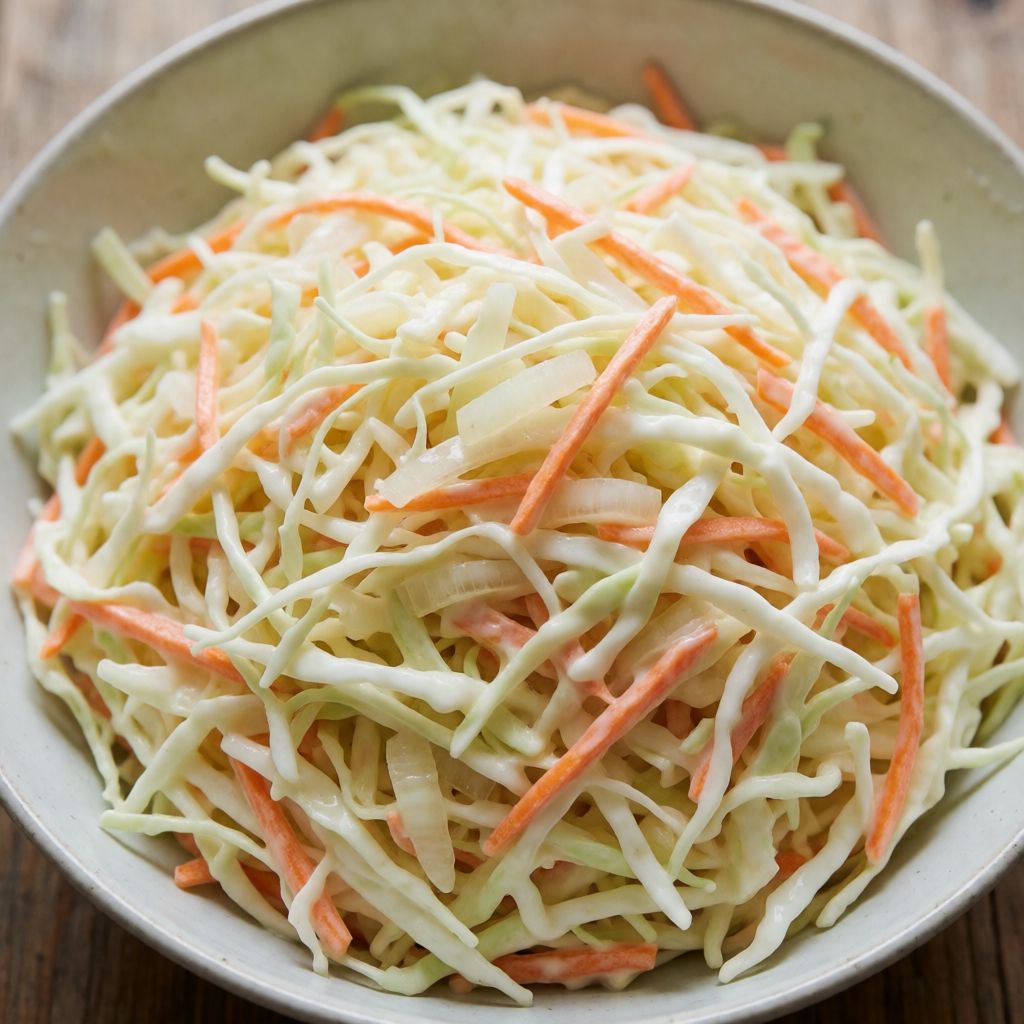
 AI photo
Coleslaw
A crunchy coleslaw of cabbage and carrot in a creamy mustard dressing.
Labels are worked out automatically from the ingredients and can be wrong. Check the packaging if it matters to you.
Ingredients
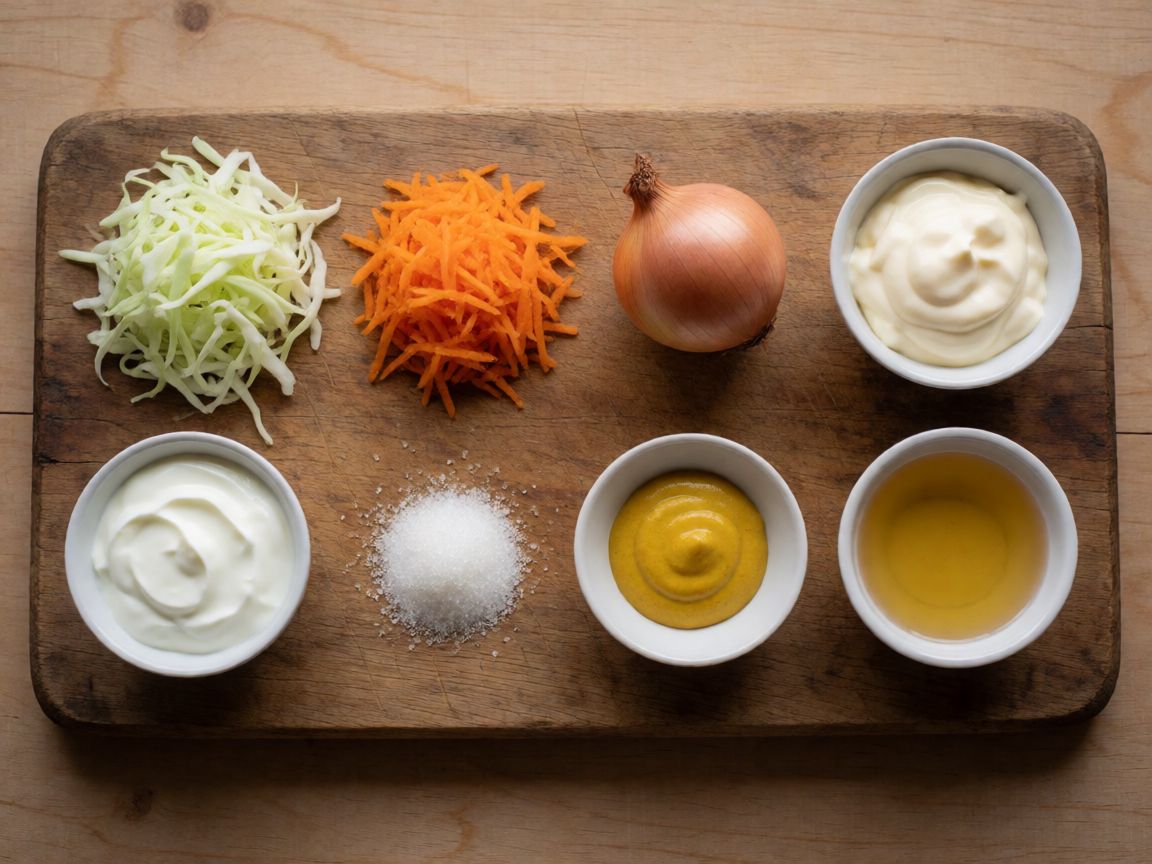
- 450 g Cabbage
- 150 g Carrot
- 1 pcs Onion or spring onion
- 30 g Sugar
- 100 ml Mayonnaise
- 75 ml Yogurt
- 1 tsp Mustard
- 2 tsp White wine vinegar
- Salt to taste
- Black pepper to taste








Steps
Wash and prepare the vegetables: peel the carrot and cut into thin strips; remove the tough outer leaves from the cabbage, then shred the rest into thin strips too; slice the onion into thin half-moons.
Combine the prepared vegetables in a large bowl.
Make the dressing: mix the yogurt and mayonnaise together well, then stir in the mustard, white wine vinegar and sugar.
Season with salt and black pepper to taste, and mix the dressing thoroughly.
Pour the dressing over the vegetables and toss until everything is evenly coated.
Serve the coleslaw straight away, or chill in the fridge until ready to serve.
Coleslaw is not a cooked dish, it is a cutting exercise with a sauce poured over it afterward, so almost everything that can go wrong or right happens with the knife, not the heat. There is no heat here at all — the whole dish stands on raw cabbage and raw carrot kept crisp by being cut thin and even, so your teeth meet the same resistance in every strip. Cut it thick and uneven and you get a salad that is cabbage in some bites and gristle in others.
What decides the dish is timing of two kinds. First, how thin and even the cut is — carrot and cabbage sliced to roughly the same width so they chew together, not as two separate textures fighting each other. Second, when you dress it. Salt, sugar and vinegar all pull water out of cabbage by osmosis — cell walls give it up the moment they meet something saltier or sweeter than themselves. Dress early and walk away, and by the time you serve it you have a bowl with a shallow pond at the bottom and limp cabbage floating in it. That is not the dressing's fault, it is water the cabbage owned all along, now set free.
Some say coleslaw improves if you make it the night before and let it "marinate". No — that is true for things that need the acid to soften fibre, like a pickle. Cabbage cut this thin is already soft enough; all that extra time does is keep pulling water out of it. If you want make-ahead convenience, keep vegetables and dressing separate until the last twenty minutes, not longer.
Cabbage: pick a head that feels heavy for its size and sounds a dull thud, not hollow, when you knock on it — that means the leaves are packed tight, not papery. The recipe tells you to strip the tough outer leaves; those are the ones with the most fibre, built to protect the inner leaves from weather, and they stay stringy no matter how thin you cut them. White cabbage is the standard because it holds its crunch longest once dressed; Savoy or red work too, red will bleed its colour into the mayonnaise within the hour, which is only a problem if you mind pink coleslaw.
Carrot does two jobs: a little sweetness against the vinegar, and colour, since plain white cabbage in a white dressing is a bowl you cannot read. Cut it to match the cabbage's thickness — not grated to dust, which collapses into mush and bleeds its own sugar water into the bowl faster than the cabbage does.
Onion gives raw bite. If that bite is too aggressive for you, that is sulphur compounds doing their job of defending the plant, and it is also why the recipe offers spring onion as the mild option — less of that compound, more green freshness. If raw onion of any kind upsets you, a few minutes in cold water pulls some of the sharpness out before it goes in the bowl.
Mayonnaise and yogurt are doing two different jobs, not one job twice. Mayonnaise is emulsified fat, it clings to the shredded vegetables and carries flavour across every strip. Yogurt is cultured and sour, it lightens that fat and gives the sourness vinegar alone can't — a rounder, less sharp acidity. Some recipes use mayonnaise only; that works, but it sits heavier, more like a sauce than a dressing, and next to a roast dinner already rich with gravy, that heaviness stacks up rather than cutting through. Soured cream or crème fraîche can stand in for the yogurt on the same logic — anything cultured and tangy.
Mustard is there as much for structure as for taste: it is a natural emulsifier, it helps the fat in the mayonnaise and the water in the yogurt hold together instead of splitting into a thin layer and a thick one under the vinegar's acid. English mustard bites harder, Dijon rounds it off — choose on heat tolerance, not correctness. The vinegar itself only needs to be a mild acid with no strong flavour of its own fighting the cabbage — lemon juice does the same work if that's what's in the cupboard.
Sugar's role is easy to underrate: it is not there to make the dish sweet, it is there to balance the vinegar so the acid doesn't sit on the tongue alone, and it joins the salt in quietly pulling moisture from the cabbage. In an ordinary kitchen without a salad spinner, pat the cut vegetables dry with a tea towel or kitchen paper before dressing — less starting water means a longer window before the bowl turns into soup, and more patience bought for you at the table.