
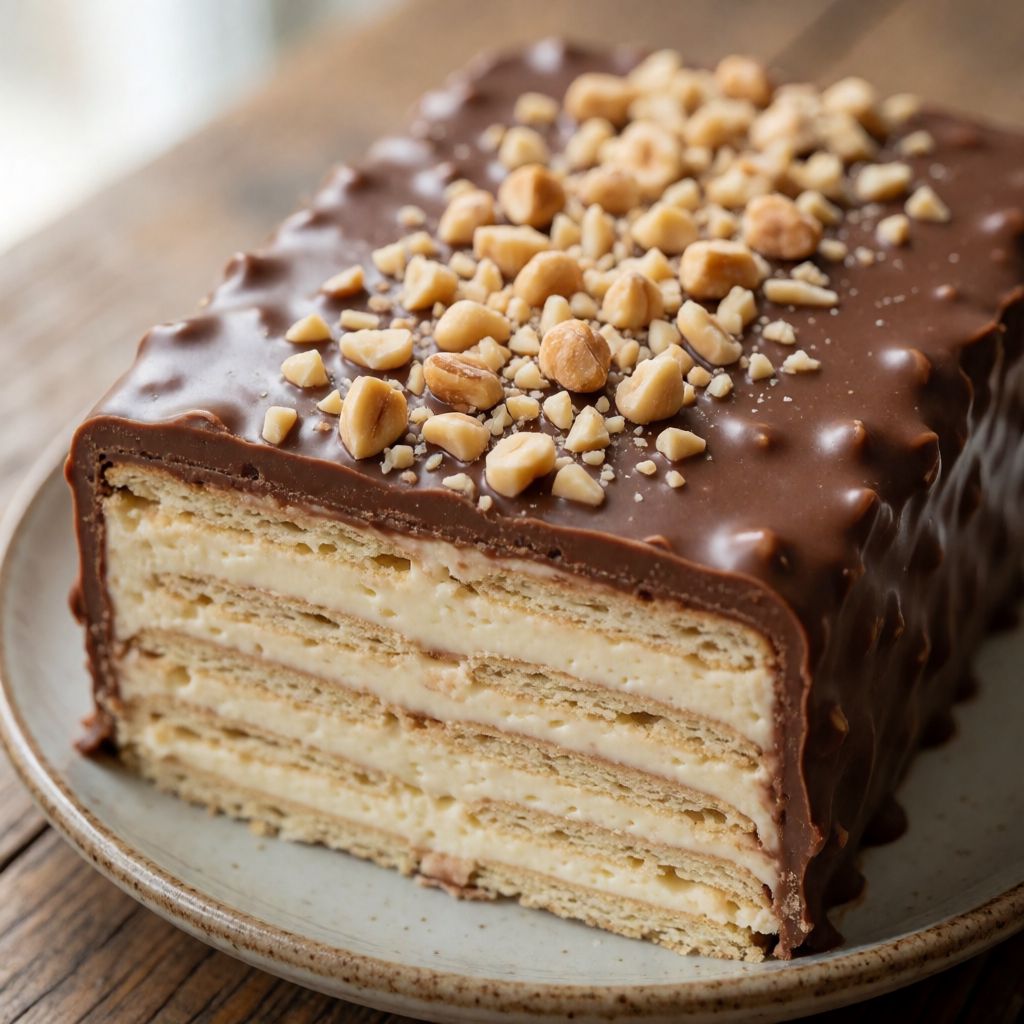
 AI photo
Ice-box Cornetto Cream Cake
A no-bake cake layering a biscuit base, Nutella, whipped cream and a chocolate glaze, finished with hazelnuts.
Labels are worked out automatically from the ingredients and can be wrong. Check the packaging if it matters to you.
Ingredients
- 180 g Digestive biscuits or similar
- 90 g Butter melted
- 250 g Condensed milk
- 500 ml Double cream
- 80 g Nutella softened
- 1 pcs Hazelnuts to taste
- 50 g Butter
- 100 g Dark chocolate




Steps
Blitz the biscuits to fine crumbs in a food processor, add the melted butter and mix until evenly combined.
Press the mixture into a 22 cm springform tin lined with baking paper, firming it down with the back of a spoon.
Put the tin in the fridge.
30 minSpread a thin layer of softened Nutella over the base.
Put it back in the fridge.
15 minWhip the cream with a mixer, add the condensed milk and mix until smooth.
Spread the cream over the biscuit and Nutella layer and smooth with a spatula.
Put the cake in the freezer.
240 minMelt the dark chocolate and butter in a saucepan, whisking until smooth.
Leave to cool, then transfer to a piping bag.
Decorate the cake with the chocolate and chopped and whole hazelnuts.
This is a no-bake cheesecake in disguise — the construction logic of a cheesecake, but the filling is really just an ice-cream base that you let the freezer set instead of custard and gelatine. Biscuit crumb base, a cheeky layer of Nutella, a cream-and-condensed-milk filling, frozen hard, then a chocolate shell on top. No oven, no eggs, no setting agent except cold. That's the whole trick, and it's why the recipe can promise zero cook time and still deliver something that slices clean.
What decides whether it works is fat and air. Double cream whipped properly traps air and sets up stiff on its own; condensed milk brings sugar and a small amount of milk solids, and because it's already thick and sweet, it doesn't need to be cooked into the cream — it just has to be folded through evenly so the whole mass sets to the same softness. Freeze it, and the fat crystallises enough to hold a slice shape, the way a parfait does. This is not custard science; it's closer to no-churn ice cream poured into a biscuit shell.
Some say you need gelatine or eggs to get a cheesecake that holds its shape when cut. No — because you're not making a fridge-set cheesecake here, you're making a frozen one. The freezer is doing the job gelatine would do in a fridge version. That's also why the proportions matter more than technique: get the cream-to-condensed-milk ratio right and it sets by itself; get it wrong — too much condensed milk — and it stays soft even at freezer temperature, because sugar lowers the freezing point and keeps things softer than you'd expect.
Start with the biscuits. Digestive biscuits are mild, slightly wheaty, not too sweet — that's the whole point, because the Nutella and condensed milk are doing plenty of sweetening already. Any biscuit with no strong flavour of its own and a dry, crumbly texture will do the same job: shortbread works, a ginger biscuit works if you want that note, even a plain tea biscuit. What you're choosing for is crumb structure, not taste — something that turns to sand in a food processor and then glues back together with fat.
The melted butter is the glue. It's not there for flavour, it's there because biscuit crumbs on their own won't hold together — butter coats every crumb and sets hard again once chilled, locking the base into a solid disc instead of loose rubble. Too little butter and the base crumbles when you cut it; too much and it turns greasy and slides apart as it softens on the plate. If you're out of butter, any solid fat that's firm at fridge temperature and liquid when melted — a neutral margarine, for instance — will substitute, though you lose a little of that dairy taste.
Double cream is non-negotiable in character, if not in brand: you need cream with enough fat (ideally 48% or higher, the kind sold in the UK specifically as "double") to whip to stiff peaks and then hold that structure once frozen. Lower-fat creams won't trap enough air and will separate out watery once thawed slightly on the plate — that's the defect you're avoiding, not just a worse texture but a cake that weeps. Condensed milk is sweetened and thick by design — it's cream's partner here precisely because it adds sugar and body without adding the wateriness a splash of fresh milk would bring, which would stop the mixture setting properly in the freezer.
Nutella softened before spreading isn't fussiness — cold Nutella straight from the jar tears the biscuit base and won't spread thin. A few seconds in a warm bowl or a short stint at room temperature loosens it enough to go on in a smooth, thin film. If you don't want hazelnut spread, any thick chocolate spread with a similar oil content will behave the same way; thin chocolate sauce won't, because it has no body to sit as a layer rather than sink in.
For the topping, melting dark chocolate with butter together — rather than chocolate alone — is an old trick for keeping a chocolate coating glossy and a little flexible once it's cold, instead of setting brittle and cracking the moment you cut through it with a knife. The butter interrupts the cocoa butter's crystal structure just enough. Use a chocolate you'd eat on its own; cheap chocolate with a lot of vegetable fat substitute won't melt as smoothly or set as nicely. Hazelnuts on top are there for crunch against all that cold softness underneath — any toasted nut does the same contrasting job if hazelnuts aren't to hand.
On equipment: you don't need a kazan or anything exotic here, just a 22 cm springform tin and a freezer that actually holds a steady cold — if yours is a frost-free domestic freezer stuffed with frozen peas and leftover roast potatoes, give the cake the full four hours and then some; freezers that open and shut all day lose their cold faster than the recipe assumes. Patience is the real ingredient in every stage of this cake — each chill is short on paper but it's doing structural work, and rushing it is how you end up with a cake that slumps the moment it's out of the tin.