
 AI photo
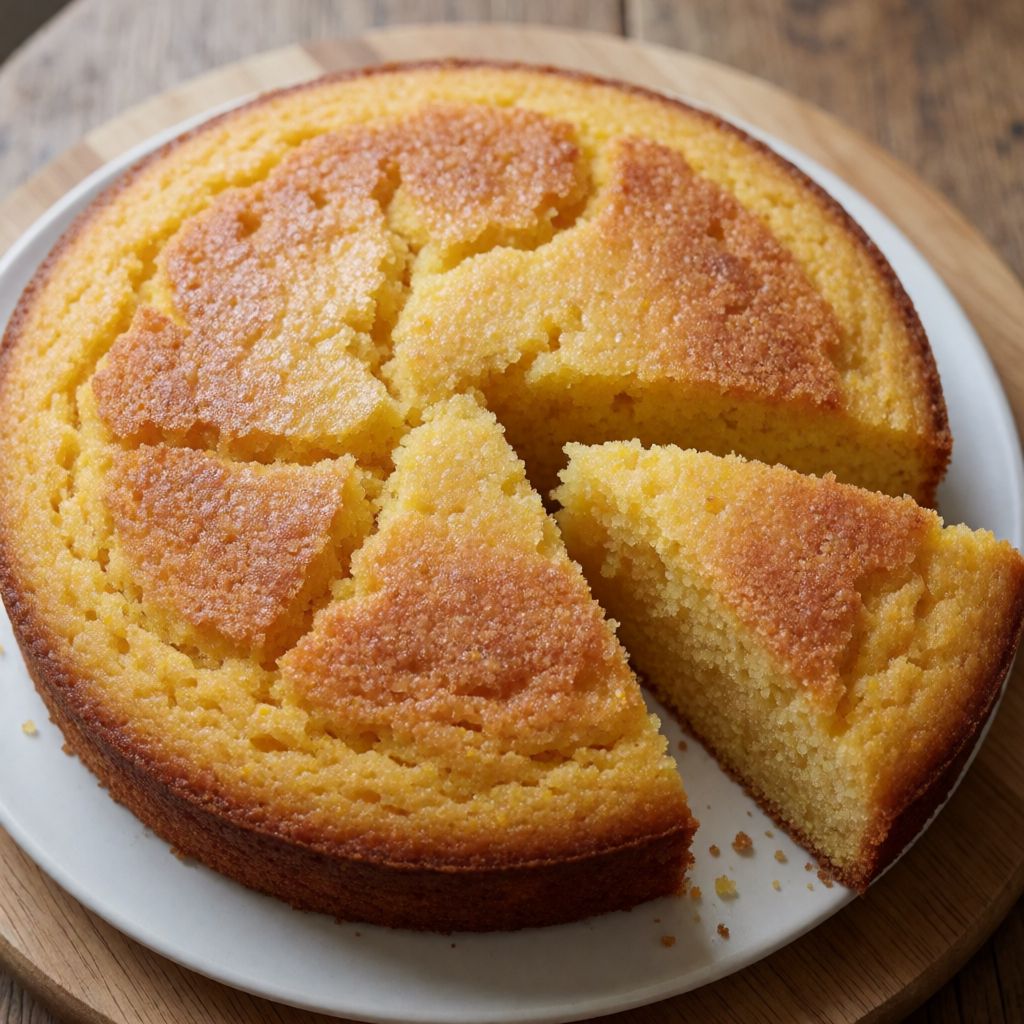
Berthold's Cornmeal Cake
A soft, lemon-scented cake made with fine cornmeal, baked in a round tin.
Labels are worked out automatically from the ingredients and can be wrong. Check the packaging if it matters to you.
Ingredients
- 200 g Fine Cornmeal
- 100 g Plain Flour sifted
- 15 g Baking Powder
- 2 pcs Eggs
- 100 g Butter softened
- 130 g Caster Sugar
- 200 ml Milk
- 1 pcs Lemon Zest grated, from 1 lemon








Steps
In a bowl, mix the dry ingredients: fine cornmeal, sifted plain flour, baking powder and grated lemon zest.
In another bowl, whisk the eggs with the softened butter and caster sugar, then stir in the milk.
Gradually fold the dry mixture into the wet ingredients and mix until smooth.
Pour the batter into a 22cm tin, greased and dusted with flour.
Bake at 160°C for about 40 minutes.
40 minCheck with a wooden skewer: if it comes out dry, the cake is ready.
What was changed
Replaced with Fine Cornmeal, since in British shops 'corn flour' means cornstarch, not ground maize flour.
This is a plain, short-crumbed cake, not a sponge wearing a corn disguise. Cornmeal makes up two thirds of the dry mix and it carries no gluten with it, so the structure can never go airy — it will always be a bit sandy, closer to a dense teacake than a Victoria sponge. What decides whether it stands up at all is the baking powder and whether the grain gets enough time to soften, not air whipped into butter.
The oven sits low for a cake — 160°C — and that's not caution, that's necessity. Cornmeal, even the fine kind, needs time to drink up the milk and soften right through the middle. Push the heat and you get a cake with a set, pale top and a gritty, raw-tasting core underneath — the crust finishes before the centre has started.
Some say a cornmeal cake will always taste of grit, like eating sweetened polenta. No — because fine cornmeal, given 40 minutes at a heat that doesn't rush it, swells and softens the same way rice does in a pudding. Coarse polenta grind stays gritty no matter how long you bake it; that's a different cake, and reaching for it here will leave you blaming the recipe for a problem you built in at the shop.
Doneness isn't a clean skewer here, it's a dry one. Cornmeal holds a touch of natural moisture in the crumb even when fully baked, so if you wait for bone-dry like you would with a wheat sponge, you've baked straight past the cake and into a brick.
Start with the main ingredient and clear up a British shelf confusion first: fine cornmeal is ground dried corn, yellow, with a faint grit still between your fingers. It is not what UK packets call "cornflour" — that's cornstarch, flavourless, used for thickening gravy, and it will do nothing here but ruin the cake. What you want is the same grain that makes a fine polenta. Historically this kind of cake comes from places where corn was the cheap flour and wheat was the dear one — a little plain flour stretched a long way by a lot of corn, because that's what was in the larder, not because anyone was chasing a flavour trend.
The plain flour gets sifted for a practical reason, not ceremony: drop a lump of unsifted flour into a batter already full of small, ungluable cornmeal grains, and nothing in that mix has the gluten strength to work the lump smooth afterwards — it just bakes in as a pale knot. The baking powder, at 15g against 300g of dry ingredients, is a generous dose for a reason: this cake has almost no other source of lift. The eggs are whisked with the butter, not beaten to a pale ribbon the way you'd cream for a sponge, and the cornmeal itself weighs the crumb down. The powder is doing structural work that trapped air would do in a lighter cake.
That's also why the method whisks eggs, soft butter and sugar together rather than creaming butter and sugar first — creaming traps air for lightness, and lightness isn't the point of a cake that's going to be a bit short and sandy regardless. The butter has to be soft, never melted: melted butter holds no air and sits apart from the eggs instead of binding with them, so the batter can separate slightly when the milk goes in. Any fat that's solid enough to whisk and has real flavour of its own will do the job — butter specifically because cornmeal is a flat-tasting grain and needs fat to carry its character; a neutral oil would leave you with a cake that tastes mostly of sugar and corn dust.
The milk's job is to hydrate the cornmeal and the flour enough that the grain can soften in the oven without making the batter so loose it spreads thin in the tin before the baking powder sets it. Whole milk is the safe choice for its fat. Any milk with some body does the same work — the criterion is fat and no strong flavour of its own, so an unsweetened oat or almond milk will pass almost unnoticed, while a thin skimmed milk or a plant milk that tastes strongly of itself will leave you with a drier cake and an odd aftertaste. The lemon zest is zest only, never juice — it carries the aromatic oil without adding acid, and there's already a full dose of baking powder doing the lifting without any help needed from acidity. Scrub the lemon first if you can't find an unwaxed one; most supermarket lemons here are waxed for the shelf, and that wax goes straight into your zest otherwise.
On the practical end: a domestic oven dial is often out by ten or fifteen degrees against what it actually does inside, so treat 160°C as a target, not a guarantee, and put the tin on the middle shelf rather than near the top element, which will set a crust before the middle's had its 40 minutes. And don't open the door in the first twenty-five minutes to check on it — this batter is slow to set because of the baking powder's heavy lifting, and a draft of cold air at the wrong moment collapses what little rise you've got, giving you a sunken middle no skewer check afterwards will undo. Patience here isn't a virtue, it's an ingredient with its own line in the recipe, even if nobody wrote it down. Baked and cooled, it wants nothing more than a cup of tea with milk — it's already got its fat and sugar built in, no cream needed on the side.