
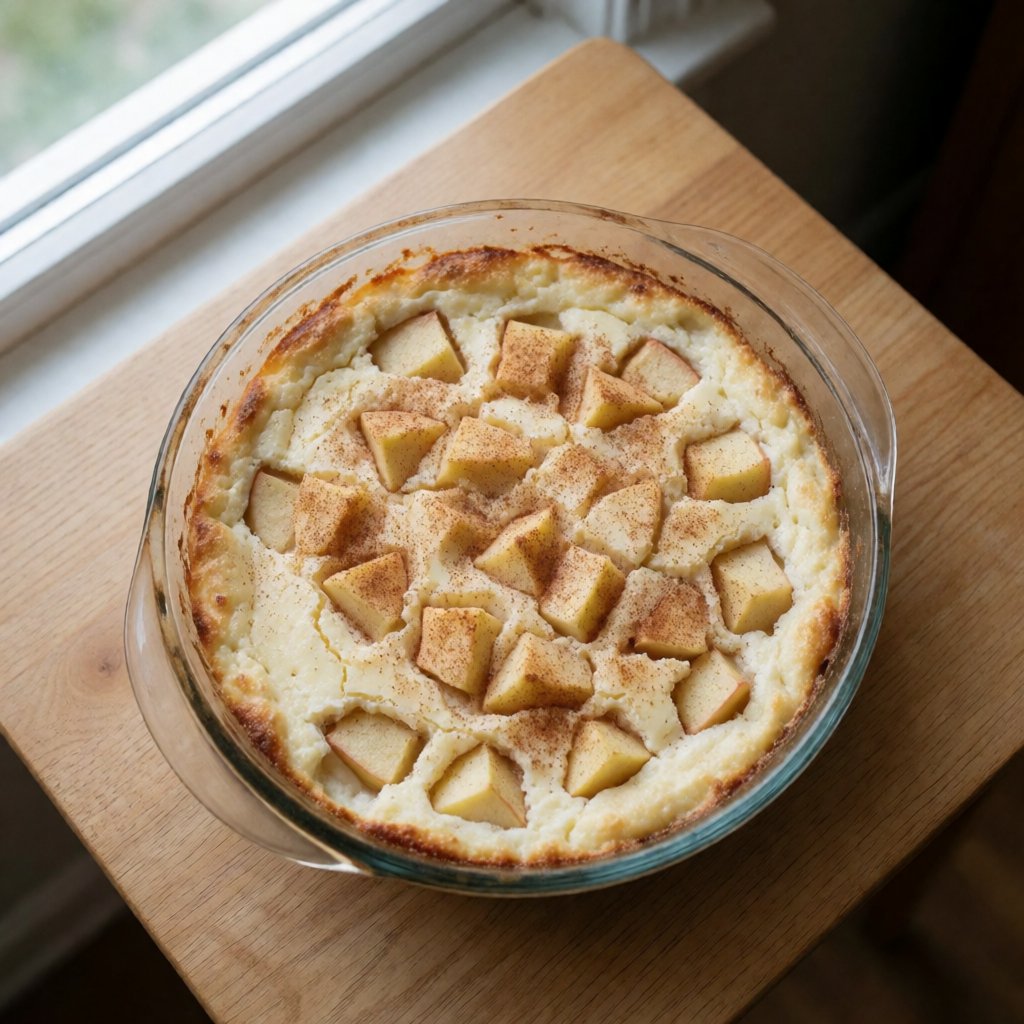
 AI photo
Cottage Cheese and Apple Bake
A soft baked cottage cheese pudding with apple and cinnamon.
Labels are worked out automatically from the ingredients and can be wrong. Check the packaging if it matters to you.
Ingredients
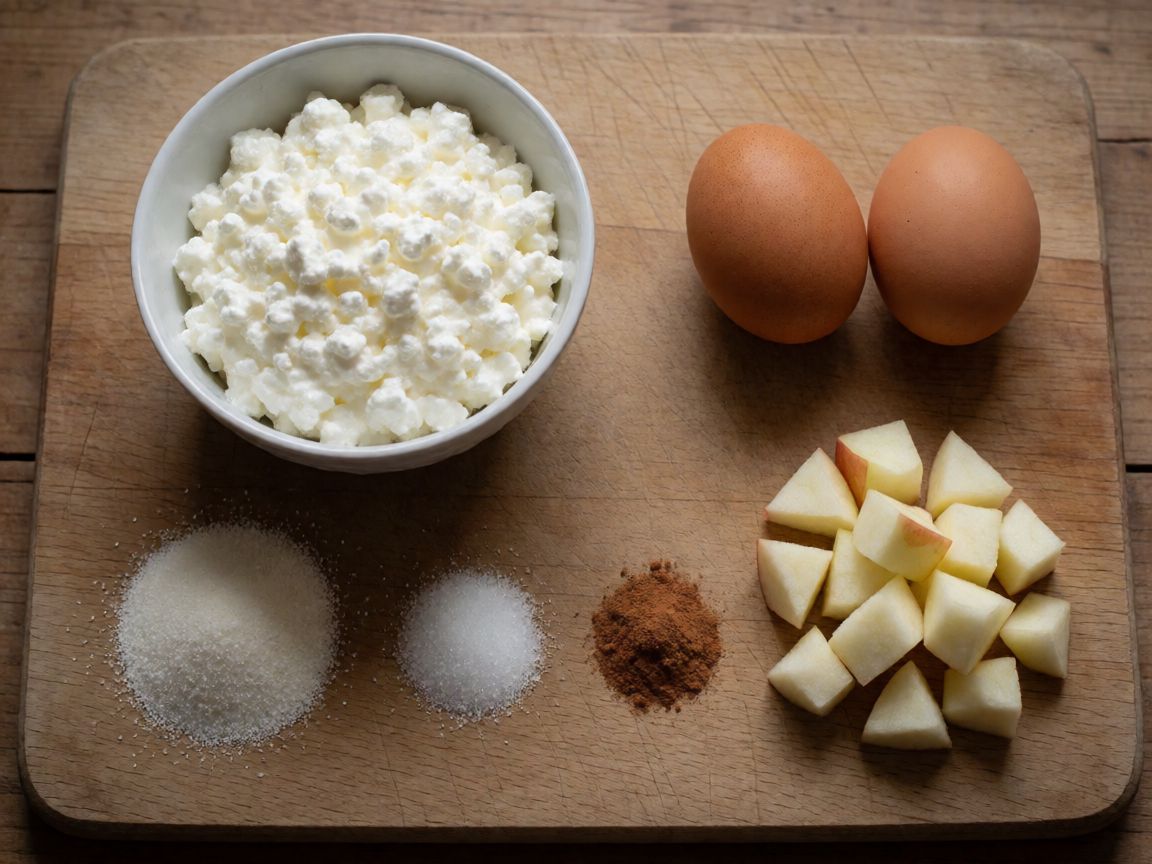
- 350 g cottage cheese
- 2 pcs eggs
- 2 tbsp semolina
- 1 tbsp caster sugar
- 1 pcs apple cubed
- 0.5 tsp cinnamon
- 1 tbsp sunflower oil for greasing the tin







Steps
Mix the cottage cheese, eggs, semolina and sugar, then add the apple.
Spoon into a greased baking dish and sprinkle with cinnamon.
Put the dish into the oven at 200°C and bake for 30–35 minutes.
35 minRemove the dish from the oven.
This is a curd bake, what Russians call a zapekanka — cottage cheese bound with egg and semolina, lifted by a raw apple folded straight in. It's school-canteen food elevated by nothing more than attention: cheap, protein-heavy, built to use up dairy that wouldn't keep. The whole thing hangs on one question — can the egg and semolina set the moisture in the cheese before the oven dries it out from the top down.
And that question has a British twist nobody warns you about. What you buy as "cottage cheese" in a UK supermarket — those small wet lumps swimming in liquid — is not what this dish was built around. The continental curd cheese (tvorog, quark, farmer's cheese) is dry, pressed, crumbly, almost sliceable. Pour UK cottage cheese straight into the bowl and you're adding extra water the recipe never asked for — the semolina has to mop that up too, and if it can't, the middle stays loose no matter how long you bake it. Some say cottage cheese bakes are just forgiving and any version works — no, because the water content of the cheese is the whole mechanism here, and ignoring it is how people end up with a soggy middle and a dry top.
Cottage cheese is the whole dish, so sort it before anything else. You want something closer to a dry curd — if yours sits in liquid, tip it into a sieve lined with a tea towel for twenty minutes first and let gravity do the draining; you're not changing the recipe, you're correcting for a different product than the one it was written for. Fat content barely matters here — 5% or 9%, it still sets — moisture content is what decides the texture.
Eggs are the glue, not the flavour. Two eggs for 350g of cheese is enough protein to hold the mass together without turning it into a sweet omelette with lumps in it — overdo the egg and you get rubber, underdo it and the bake never fully sets no matter how long it's in. There's no substitute here that behaves the same; egg is doing real chemical work.
Semolina is there for the water, not the texture you think. It's a grain that swells as it absorbs liquid — it's soaking up the whey the cheese releases as it heats, so the bake sets as a solid mass instead of weeping liquid around a grainy curd. Flour would do something similar but makes it gluey and dense, more cake than curd. If you've got none, fine semolina-adjacent options are polenta/cornmeal ground fine, or even ground oats in a pinch — anything starchy and absorbent, used sparingly.
Sugar is a tablespoon, not a dessert quantity — this was never meant to be sweet, it's a savoury-leaning bake that happens to taste good with fruit in it. The apple is doing double duty: cubed, not grated, so it keeps its shape and doesn't flood the mixture with extra juice the semolina then has to deal with on top of the cheese's own moisture. Tart apples (Bramley, Granny Smith) earn their keep here — they cut the richness of the fat; a sweet eating apple just makes the whole thing cloying. Pear works as a stand-in, but it's sweeter and softer, so pull the bake out a touch sooner and taste before you add extra sugar.
Cinnamon goes on top, dry, not stirred through — it toasts gently in the oven's dry heat instead of getting buried and muted inside the mixture. Some worry it'll burn at 200°C — no, that's confusing toasting with burning sugar; spice just needs the surface exposed to hot air to release its oil, nothing more dramatic than that.
The oil on the tin is just a release agent — a thin film so the setting protein doesn't bond to the dish itself, which is how you end up scraping instead of serving. Any neutral oil with no smell of its own works — sunflower, rapeseed, a light vegetable oil; butter works too and adds flavour at the edges, but it browns faster, so watch the rim of the dish a little more closely if you use it. For two people, a small dish — something around 18–20cm — gives you a shallow enough depth that the center catches up to the edges in the time you've got, which matters more on a domestic fan oven that runs hotter at the back than most kazans ever did.
·