
 AI photo
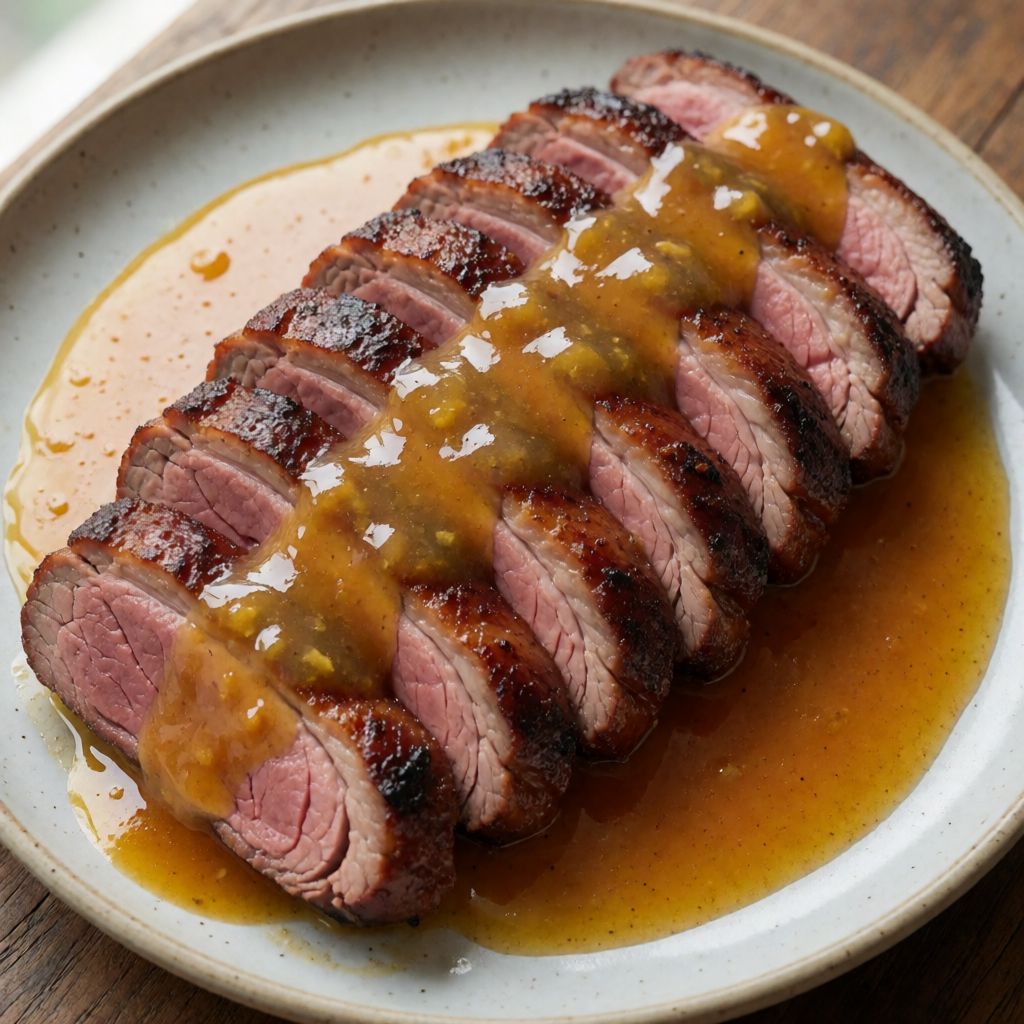
Duck Breast in Orange Sauce
Duck breast served in a sweet orange sauce, pan-seared skin-side down until crisp.
Ingredients
- 2 pcs Duck breast
- Salt
- Black pepper freshly ground
- 200 ml Orange juice
- ½ pcs Lemon juice of
- 2 tbsp Grand Marnier
- 1 tbsp Honey
- 1 tbsp Sugar
- 1 pcs Thyme fresh sprig
- 1 pcs Cinnamon stick
- 1 pinch Cardamom










Steps
Orange sauce: put all the sauce ingredients in a saucepan and reduce to about 100 ml of sauce.
This takes roughly as long as frying the duck breasts.
Strain the sauce and pour it into the pan with the fat left from frying the duck.
Stir, taste and spoon over the duck breasts.
Duck breast: with a sharp knife, score the skin of the duck fillets — carefully, without cutting into the fat or the meat.
Rub the duck breasts all over with salt and pepper.
Place them skin-side down in a cold, dry pan and turn the heat to low-medium so the pan warms up slowly.
Fry the duck breasts skin-side down over low heat until the skin is crisp, about 20 minutes.
20 minTurn the breasts over and fry the other side for a further 5 minutes.
5 minTurn off the heat, remove the duck breasts from the pan and leave the fat in the pan for the sauce.
Slice the duck thinly, arrange on plates or a platter and spoon over the orange sauce.
What was changed
Cointreau has been swapped for Grand Marnier, as the orange liqueur used isn't in the catalogue and Grand Marnier is the nearest match UK shoppers can buy.
Duck breast in orange sauce is really two separate jobs that meet at the end: rendering a thick cap of fat into crisp skin, and boiling down orange juice until it stops being juice and starts being sauce. Get those two things right and the dish is done — there's no third trick hiding anywhere.
What decides it is the cold pan at the start. Duck skin carries a layer of fat that's easily a centimetre thick. Put that into a hot pan and the outside seizes and scorches before the fat underneath has had any chance to melt — you get rubbery, chewy skin with a layer of unrendered white fat still sitting under it, which is the single most common complaint about home-cooked duck breast. Starting it cold and bringing the heat up slowly gives that fat time to liquefy and drain away, so what's left is thin, dry skin that shatters. Some say duck skin should be seared hard like a steak crust — no, because a steak has no fat layer to render, duck does, and that's the whole difference.
On ingredients: the duck breast itself is the one thing you can't really substitute — chicken skin doesn't carry the fat layer that makes this technique work, so if you only have chicken, you're cooking a different dish, not a variant of this one. Buy duck breast with the skin on and the fat layer visibly intact; if a butcher has trimmed it down thin "to be helpful," it will render fast and give you less crackle, so ask for it untrimmed.
Orange juice should be freshly squeezed or at least not-from-concentrate — concentrate juice is often already sweetened and thinned with water for shelf life, which throws off how much you need to reduce it and how sweet the final sauce ends up. If fresh oranges aren't to hand, a good shop juice works, just taste before adding the tablespoon of sugar — you may need less.
Grand Marnier is an orange liqueur, and its job here is bitterness and depth from the orange peel it's made with, not just alcohol — Cointreau does the same job. If you keep no liqueur in the house, a splash of brandy with a strip of orange zest simmered in gets you close enough; don't skip it entirely, the sauce turns one-dimensionally sweet without that bitter edge.
The honey and sugar together aren't fussiness — honey browns and thickens slightly differently from sugar and carries its own aroma, sugar is just raw sweetness to balance the sharp lemon. If you only have one of the two, use double the amount of whichever you have and taste as you go, since you're aiming for a balance between sharp and sweet, not a fixed quantity.
Thyme, cinnamon stick and cardamom are the quiet workers — none of them should taste identifiable on their own in the finished sauce. They're there so the sauce smells like more than "orange juice that's been boiled," the way a stock cube smells thinner than a proper stock. Leave cardamom out if you don't have it rather than buying a whole jar for one pinch; cinnamon and thyme matter more to the overall shape of the smell.
A word on patience, since the recipe's own timing proves the point: twenty minutes on the skin side is the lower bound, not the target. Skins vary in thickness, pans vary in how they hold heat, and a thin domestic pan loses heat faster than a heavy one the moment you turn the gas down — so the real test is the skin itself: when it's gone from pale and slightly wobbly-looking to a deep, even gold-brown and feels crisp rather than soft when you press it with the back of a spoon, it's ready, whether that's eighteen minutes or twenty-five. Rushing it to hit a number is how you end up back at rubbery skin, the exact fault the cold start was meant to prevent.