
Meat & fish
Duck
Duck is poultry meat with fatty skin and a rich flavor. It's most often roasted whole with apples or braised, frequently with cabbage.
404 kcal per 100 g
Nutrition per 100 g
404 kcal
| Protein | 11.5 g |
|---|---|
| Fat | 39.3 g |
| Carbs | 0 g |
| Fiber | 0 g |
Source: USDA FoodData Central, 2026-09-21. Per 100 g raw (per USDA FDC).
Good to know: Duck
Duck is not chicken with better marketing. Look at it properly and you see a thick layer of fat sitting right under the skin, separate from the meat, almost like a coat the bird wears. That fat renders slowly and deliberately when you cook it, which is why duck skin can go crackling-crisp while the meat underneath stays dark and dense. Raw, one hundred grams gives you 404 kilocalories, 39.34 grams of fat and 11.49 of protein — numbers that tell you plainly this is a fat-driven meat, not a lean one.
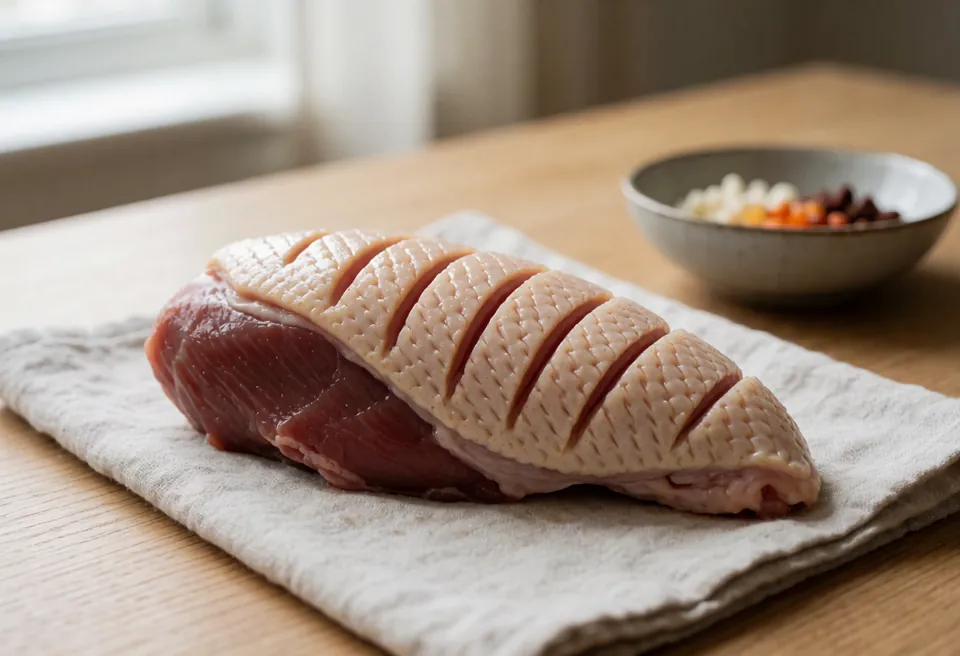
Choose duck by the skin: it should be pale, dry to the touch, no sliminess, no sour smell. Press the breast — it should give a little and spring back.
Now, the misconception. Some people say duck is "too fatty" and trim the fat off before cooking. No! That fat is the whole point. Leave it on, score the skin, and let the heat do its slow work — you get that savory smell, a golden, glassy skin, the crackle when you cut into it, the roasted aroma filling the kitchen. Trim it away in a hurry and you trade all of that for a plain, ordinary piece of meat with none of the drama duck is supposed to bring to the table.