
 AI photo
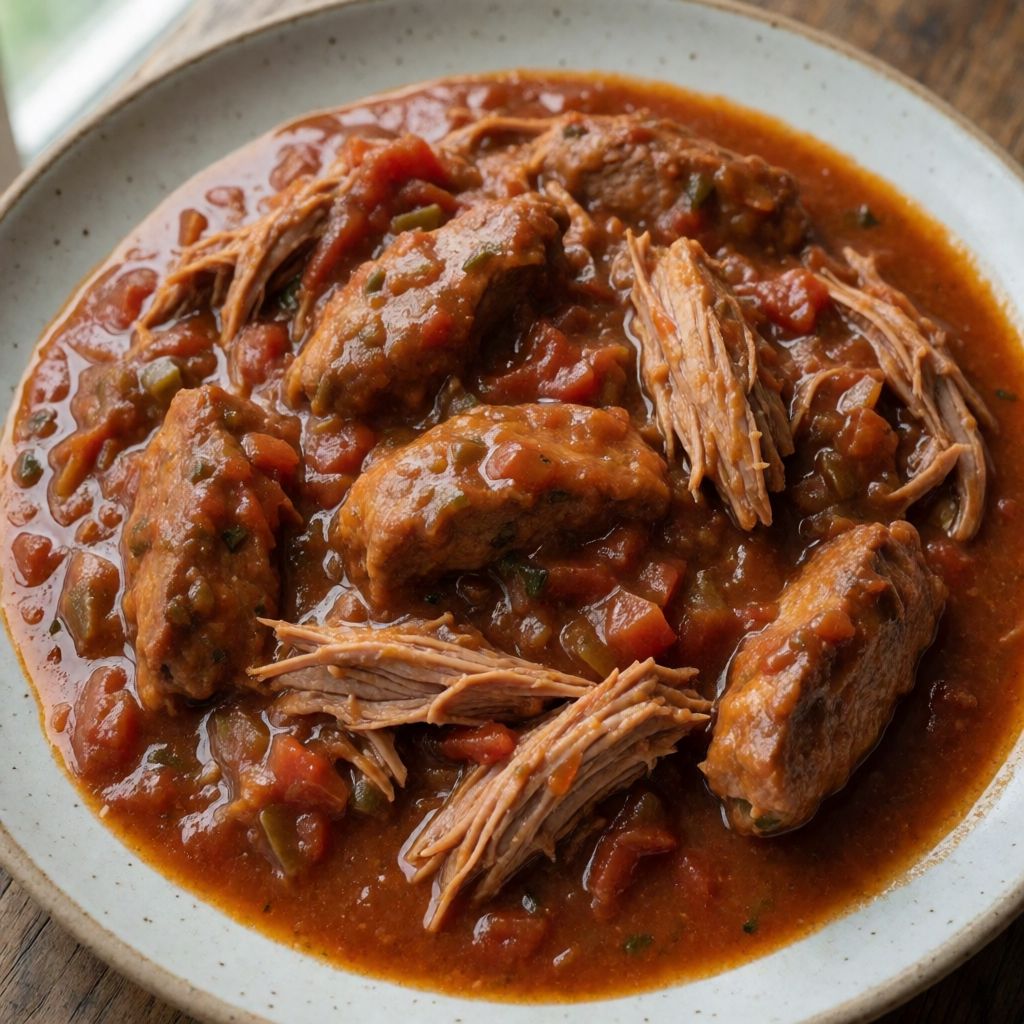
Duck Breast Ragù
A hearty duck breast ragù simmered with tomato passata, wine and vegetables, perfect served over pasta.
Ingredients
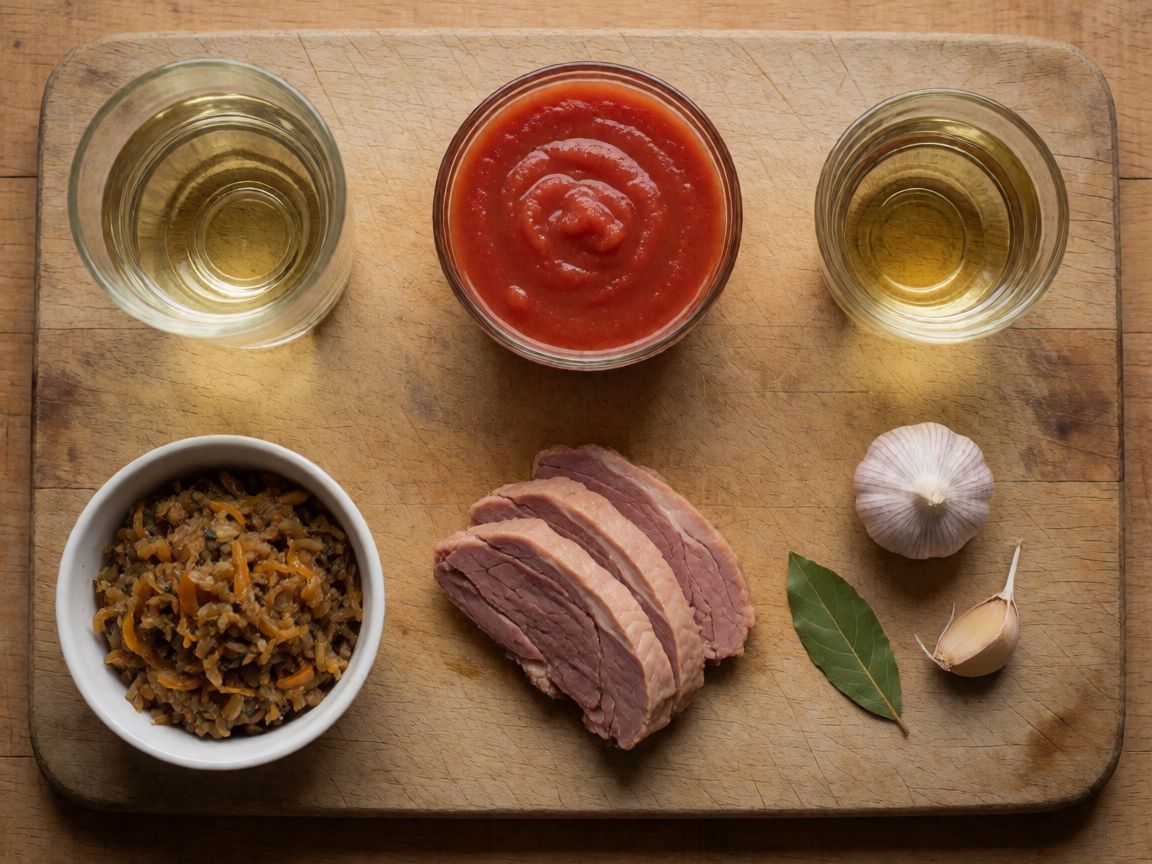
- 1 pcs Duck breast
- 220 g Tomato passata
- 8 tbsp White wine
- 100 g Soffritto mix onion, celery and carrot
- 1 clove Garlic
- 1 pcs Brandy a small glass
- 1 pcs Bay leaf
- Salt to taste
- Black pepper to taste
- Olive oil for frying









Steps
Marinate the duck breast in white wine with the bay leaf.
120 minDrain off the liquid, pat the breast dry, then finely chop it with a knife or pass it through a mincer.
Heat the olive oil and sauté the garlic and the soffritto mix with the bay leaf.
Add the minced duck breast, sauté it, then pour in the brandy.
10 minPour in the tomato passata, season with salt, add the black pepper, cover with a lid and simmer.
20 minCook the pasta until al dente and toss it with the finished ragù.
Forget the bolognese picture in your head. This is a ragù built from one single duck breast, not a mix of minced beef and pork — the cheap-meat trick of Italian kitchens turned onto something richer. The whole point of a ragù, going back to lean times, was to make a little meat go a long way for a family at the table; here that logic survives, just with duck standing in for the usual mince, and four people getting fed off one breast because it's cut fine and carried by vegetables and tomato.
What decides whether it works is the knife, not the mincer. Some say ragù needs minced meat — no, because a mincer squeezes the fibres into a paste and presses the juice out before the pan ever sees it. What you want is meat still in little separate threads, something with a bit of resistance when you bite, not a sludge that melts invisibly into the sauce. Chop it yourself, roughly, and leave it looking like meat.
The wine marinade gets misread too. People assume two hours in wine tenderises duck breast right through — no, because acid barely gets past the surface in that time. What it actually does is carry the bay leaf's oils into the meat and knock out the slightly bloody, gamey smell raw duck can have. That's also why the recipe insists on patting it dry afterwards: any wine left clinging to the surface boils the moment it hits the hot pan instead of browning, and you get grey, stewed-looking meat instead of meat with a little colour and some flavour built on it.
Duck breast itself: buy it with the skin on if you can, because that skin is a fat reserve you've already paid for. Render it off in the pan before you do anything else and fry your soffritto and meat in that instead of, or alongside, the olive oil — it's not a flourish, it's using what's already sitting on the meat rather than buying more oil to do the same job. If your breast is skinless, no drama, just lean harder on the olive oil the recipe calls for; the dish still works, it's just a little less self-sufficient.
Soffritto — onion, celery, carrot, diced small — is the economic backbone of this whole style of cooking. Vegetables were always cheaper than meat, so Italian kitchens learned to build most of the flavour there before the meat ever turns up, letting a small amount of duck taste like more than it is. The cue for doneness is colour, not minutes: the onion should go from raw-white to soft and faintly gold, translucent, not browned. Some cooks push it further, thinking caramelised soffritto means deeper flavour — no, because here its job is to dissolve into the background and support the duck, not compete with it; push it to brown and you add a bitterness that fights the meat instead of carrying it. If you're not up for dicing three vegetables by hand on a weeknight, the frozen diced soffritto mix from the supermarket is exactly this cut already made — same criterion, same job.
Garlic is one clove, bruised or roughly chopped, there to perfume the oil before the vegetables go in, not to announce itself later. No real substitute needed at this quantity; if you dislike garlic outright, you can drop it and lose almost nothing.
Brandy goes in after the meat has had a little time in the heat, and its job is to deglaze and add depth, not to put on a show. You don't need to flambé it — that's restaurant theatre, and a domestic hob with an extractor fan overhead isn't the place for a leaping flame anyway. Let it bubble hard for a minute or two instead; the sharp, raw-spirit smell burns off and what's left behind is warmth without the bite. Any spirit with some backbone and no strong herbal flavour of its own will do the same job — cognac, armagnac, even a dry sherry at a push.
Tomato passata is already smooth, strained tomato with the skin and seeds taken out, which is why the sauce doesn't need extra time breaking anything down — it just needs to simmer long enough to lose its tinned sharpness and round out. If all you have is tinned chopped tomatoes, blitz them and push through a sieve and you've made your own passata on the spot. The bay leaf works twice — once steeping in the wine marinade, once in the soffritto — carrying the same aromatic thread through both stages of the dish rather than it being two separate decisions.
On equipment: nobody's asking for a kazan here, a decent wide pan with a lid does the whole job, and if the lid's missing, an upturned plate over the pan holds the steam in well enough for a simmer like this. The two hours of marinating and the twenty minutes of simmering aren't dead time to fill with tea and the Sunday roast on your mind for next week — they're part of the recipe. Rushing either one is how you end up with tough meat and a sauce that tastes of raw tomato instead of a finished one.