Meat & fish
Giblets
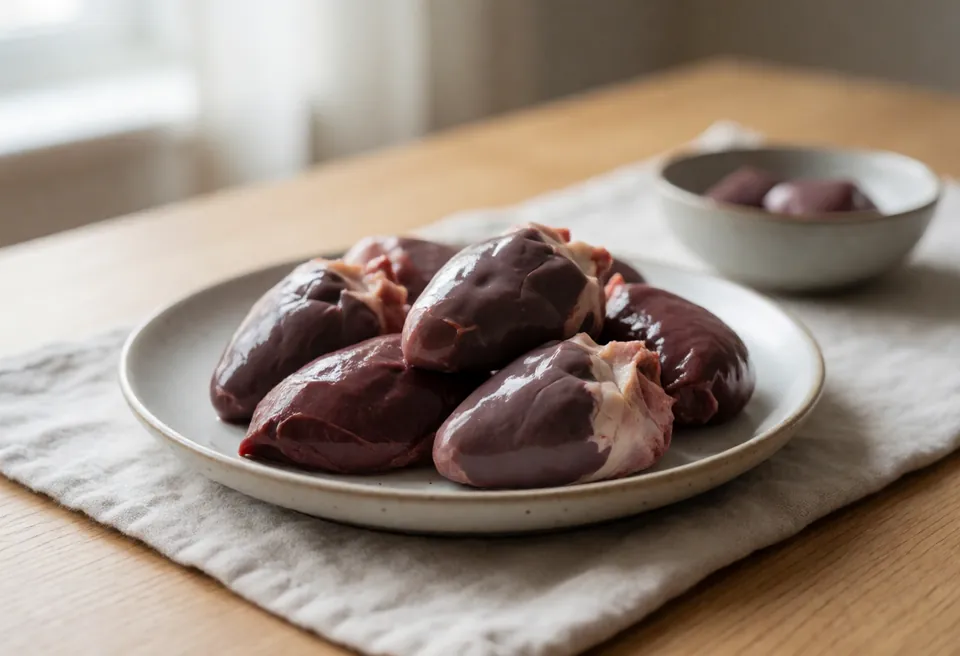
Edible poultry organs — liver, heart and gizzard (here from a goose). They are used for soups, gravies, poultry stuffing, or simply pan-fried.
124 kcal per 100 g
Nutrition per 100 g
124 kcal
| Protein | 17.9 g |
|---|---|
| Fat | 4.5 g |
| Carbs | 1.8 g |
| Fiber | 0 g |
Source: USDA FoodData Central (approximate, based on a similar product), 2026-10-02. Per 100 g raw (per USDA FDC).
Good to know: Giblets
Giblets scare people before they even taste them, and that's a shame. Here you've got goose liver, heart and gizzard together, three organs, three textures, three jobs in the pot. The liver is soft and breaks down fast, so it gives body to a sauce. The heart is a muscle that never stops working in the bird's life, so it's dense and needs long, slow cooking to become tender. The gizzard grinds grain, so it's the toughest of the three and needs the most time in the pot — but that same toughness is why it holds its shape in a stew instead of turning to mush.
Choose giblets by smell first — clean, faintly sweet, never sour. Liver should look smooth and dark, not dull or patchy. Heart should feel firm, gizzard dense in your hand.
Some people say giblets are only good for stock, not worth eating on their own. No! Cooked right — liver seared quickly, heart and gizzard simmered slowly — each one stands on its own plate. That misconception leads to one mistake: throwing everything into the pot at the same time, so the liver turns to dust while the gizzard stays chewy.