
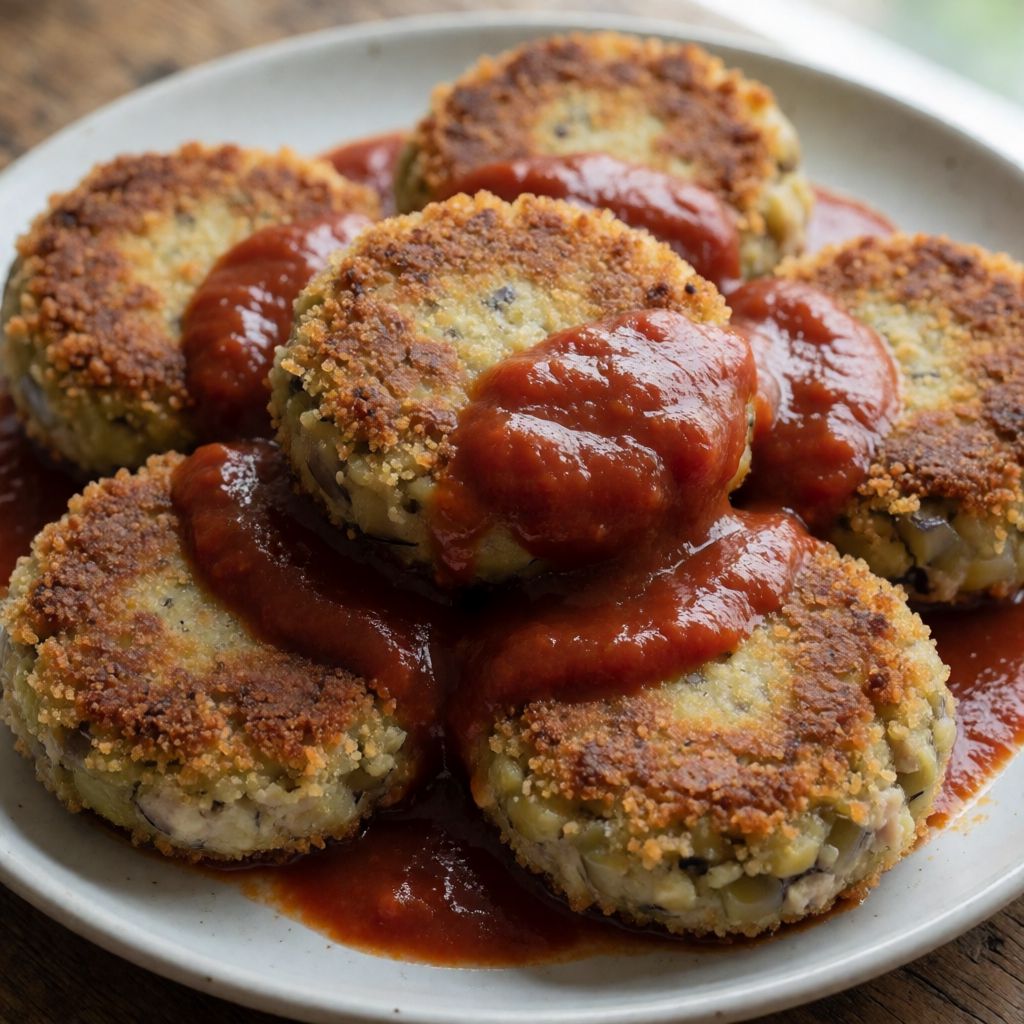
 AI photo
Aubergine and Bread Patties
Pan-fried aubergine cubes are mixed with bread, parmesan and tomato sauce into patties, which are then baked until golden.
Labels are worked out automatically from the ingredients and can be wrong. Check the packaging if it matters to you.
Ingredients
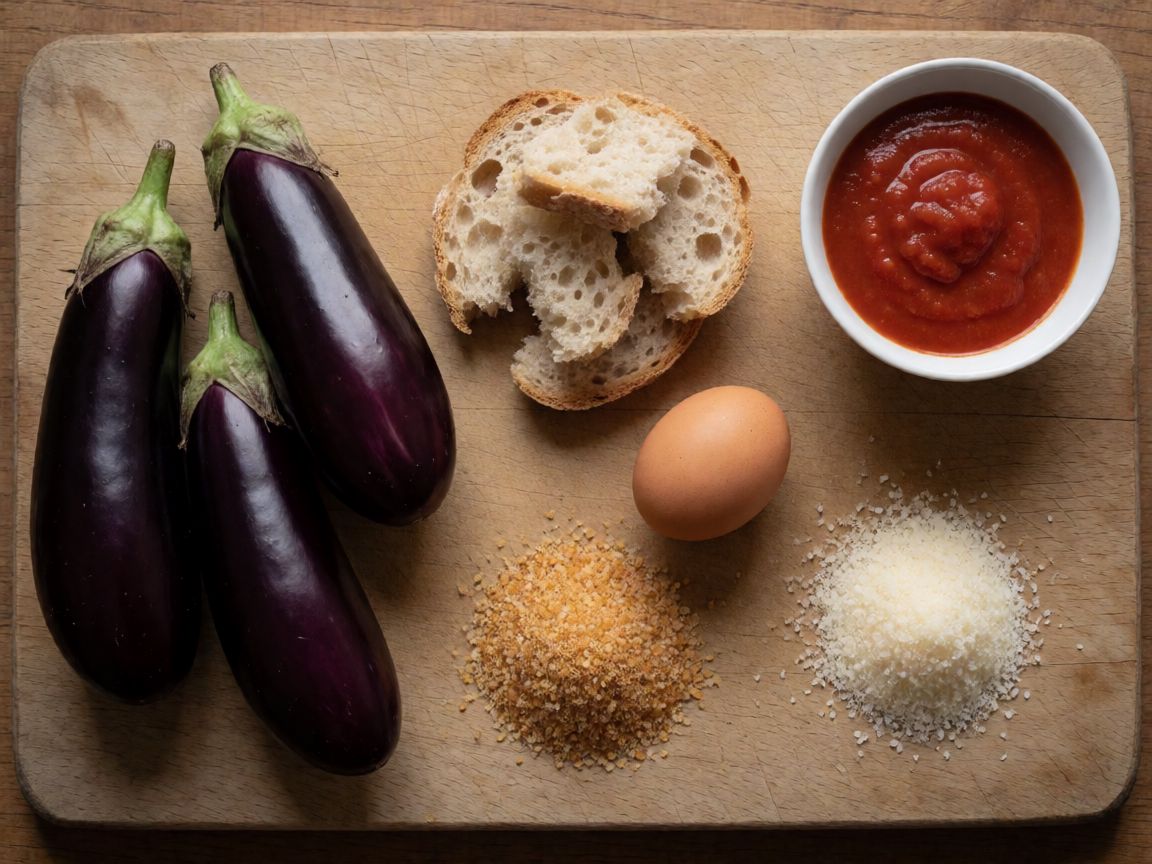
- 3 pcs Aubergine
- 450 g Bread stale
- 1 pcs Egg
- 1 tbsp Breadcrumbs dried
- 2-3 tbsp Parmesan
- 2 tbsp Tomato Sauce
- Salt to taste
- Black Pepper to taste
- Olive Oil to taste







Steps
Wash the aubergines under running water and peel them. Cut into small cubes, place in a bowl, sprinkle with coarse salt, cover with a plate and weigh it down.
30 minFry the aubergine cubes in a little olive oil until golden, then add the tomato sauce and stir.
In a large bowl, combine the bread (soaked in water and well squeezed), the fried aubergines, parmesan, breadcrumbs, egg, salt and black pepper. Mix until you have a smooth, firm mixture.
Shape small portions into round patties with your hands and place them on a baking tray lined with parchment paper.
Bake in an oven preheated to 180°C.
18 minRemove the patties once golden, place on a plate and serve hot.
This is a patty built out of two leftovers: bread that's gone past its best and aubergines you fried too many of. It isn't trying to be a vegetable burger — it's older than that idea, closer to the cucina povera habit of turning stale loaf and odd vegetables into something you can hold in your hand and eat hot. Parmesan and tomato sauce are the only two things in it that cost real money; everything else is thrift.
What decides whether it holds together or falls apart on the tray is moisture, and you control it twice: once when you salt and weigh down the aubergine, once when you squeeze the soaked bread. Salt pulls water out of the aubergine cells by osmosis — some say this is to kill bitterness, and in the aubergines on sale in a British supermarket today, bred mild on purpose, that's mostly not the problem anymore. The real reason is texture: a cube still full of water steams instead of frying, stays slack, and brings all that liquid into your mixing bowl where you don't want it. The plate and the weight on top aren't decoration — they're doing the job a press would do in a proper kitchen; at home a full tin of beans on a plate works just as well.
The second moisture control is the bread. Soak it to soften, then squeeze it like you're wringing a cloth — properly, until your hands ache a little. Bread that's still wet turns the mix to paste; bread squeezed dry gives you crumb, something with structure to hold the egg and cheese together. Skip either drying step and you'll know it in the oven: the patties spread flat and weep instead of browning.
Aubergine: buy the ones that feel heavy for their size and give slightly under a thumb, with skin that's glossy, not dull — dull skin means it's been sitting and losing water on its own, which only makes your salting job less effective. Peel because the skin won't soften in the short fry-and-bake time here and would sit chewy in the finished patty. Cube small, because small cubes give up their water faster under salt and fry through in the same minute the surface goes golden — a big chunk browns outside while the middle stays raw and wet, and that defect follows you straight into the mixing bowl.
Bread: this wants to be genuinely stale, not fresh and not mouldy — a loaf a few days old, dried out, is exactly right. Fresh bread has too much structure of its own; soaked, it turns gluey rather than giving in to the egg and cheese. If what you've got is fresh, you can dry slices in a low oven for ten minutes first and then soak them — you're just doing on purpose what the staleness does for free. Any firm white or brown loaf works; very seeded or very sweet breads will fight the tomato and parmesan, so leave those for breakfast.
Egg: this is the binder that actually sets. Everything else in the bowl — bread, cheese, breadcrumbs — holds shape by friction and stickiness; the egg is the one ingredient that changes state in the oven, its proteins firming up to lock the patty together. Leave it out and you can still make the shape, but you're relying on the oven drying the surface fast enough to crust before the patty slumps — riskier, and only worth trying if you're avoiding egg on purpose, in which case an extra spoon of breadcrumbs and firmer squeezing of the bread helps.
Breadcrumbs, dried: a small amount, there to soak up surface moisture as you shape the patties by hand, so they don't stick to your palms and so the outside has something fine to crisp against in the oven. Any dry, neutral crumb does the job — even oats ground fine in a blender.
Parmesan: salt, savour, and — because it's a hard, aged, low-moisture cheese — another small contribution to drying the mixture out rather than wetting it further, unlike a soft cheese would. Any hard grating cheese aged the same way, pecorino or a strong mature cheddar at a push, does the same work; a soft cheese won't, and will undo some of what the salting and squeezing achieved.
Tomato sauce: use a plain, thick, unsweetened one — passata or a reduced tin of tomatoes. Ketchup brings sugar and vinegar that throw off the balance; this sauce is here to season the aubergine while it's still in the pan, not to make the patty taste of ketchup. Olive oil for frying the aubergine because its own flavour is part of the dish, not incidental — if you only have a neutral oil, use it, the patties will still work, you'll just lose that particular backnote. Salt and pepper, to taste, remembering the parmesan already brings salt, so season the mix with that in mind rather than by habit.
Last thing: the thirty minutes the aubergine spends under its weight is not dead time you can skip to get to the fun part. It's the step doing the most structural work in the whole recipe, and it asks nothing of you except to leave it alone. That's patience, and here it's doing the job an ingredient does.