
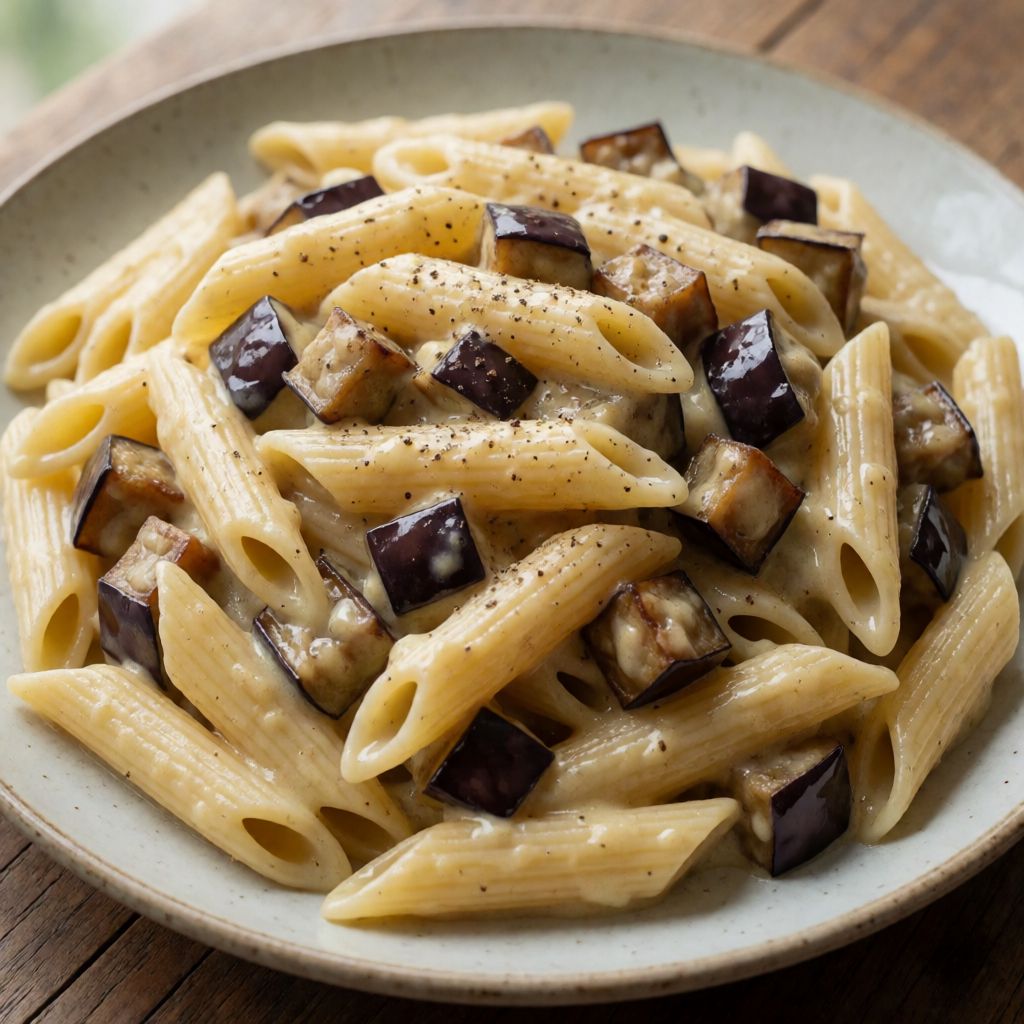
 AI photo
Aubergine Carbonara
A creamy carbonara made with fried aubergine, eggs, cheese and fresh herbs instead of the classic guanciale.
Labels are worked out automatically from the ingredients and can be wrong. Check the packaging if it matters to you.
Ingredients
- 400 g Penne
- 1 pcs Aubergine
- 2 tbsp Olive Oil
- Salt to taste
- Black Pepper to taste
- 3 pcs Eggs
- 2 tbsp Cream Cheese
- 2 tbsp Pecorino
- 15 g Mint finely chopped
- Basil finely chopped
- Marjoram finely chopped










Steps
Cut the aubergine into cubes and fry in olive oil, then set aside.
10 minCook the penne in salted water until al dente.
10 minIn a separate bowl, whisk the eggs with the chopped herb mix, pecorino, cream cheese and black pepper.
5 minDrain the al dente pasta and tip it into the bowl with the egg mixture and the fried aubergine.
2 minMix well, sprinkle with pecorino and serve.
2 min
What was changed
Cream Cheese replaced because it is hard to find in British supermarkets; cream cheese gives the same creamy result.
Call it carbonara if you like, but only the method survives the journey — the pork is gone, replaced by aubergine fried until it holds oil the way guanciare holds its own fat. Real carbonara is egg, cured pork, pecorino, pepper, nothing else; here cream cheese does the job that egg yolks alone would have done, giving the sauce body without the extra richness pork would have brought. What's kept, and what actually matters, is the trick underneath it all: the egg sauce is never cooked on the stove. It's cooked by the heat sitting inside the pasta itself, the moment you tip it hot and dripping into the bowl.
That's the whole hinge of the dish. Egg white sets somewhere around 80°C into rubbery curds — that's scrambled egg, a failure here, not a style. Below that, closer to 65–70°C, egg and fat turn into something closer to custard: smooth, clinging, silky over the pasta. Your pasta water is boiling at 100°C, but by the time it's drained and resting a few seconds in the bowl, it's already cooling through that window. Off the heat, no flame under the pan, mixing fast — that's not fussiness, that's the only way to land the egg in the right temperature band instead of overshooting it into curds.
Penne is chosen for the obvious mechanical reason: the tube and the ridges catch and hold a loose egg sauce that would slide straight off a flat noodle. Any short pasta with a hollow or a rough surface — fusilli, rigatoni, even orecchiette — will do the same job; a smooth flat ribbon won't, the sauce will just pool in the bowl.
The aubergine wants to be heavy for its size and tight-skinned, no give when you press it — a soft, light one has already started drying out inside and will fry patchy. If you have none, courgette will stand in, but it carries more water again, so cut it thicker and fry it a little longer to drive that water off, or it turns watery rather than soft. Mushrooms work too, for the same reason: they take on oil and go savoury rather than falling apart.
The olive oil here isn't neutral background — you want its own taste in the fry, because there's no pork fat to carry that job. If you only have a flavourless oil in the cupboard, use it, but add a spoon of better olive oil at the end, off the heat, to put the smell back in. Sunflower or any other odourless oil is a fair swap for the frying itself, since by the time the aubergine is browned, most of a raw oil's character is cooked off anyway.
Cream cheese here is a stabiliser as much as a flavour — it buffers the egg, slowing how fast it can seize when it meets heat, and adds the fat that three whole eggs alone don't quite have enough of to coat pasta properly. Mascarpone does the same job, a touch richer; crème fraîche a touch sharper. What you're looking for, if you're substituting, is a soft, high-fat, mildly acidic cheese — not a hard one, it won't melt into the sauce the same way.
Pecorino brings the salt and the sharp animal tang that, in real carbonara, comes partly from the cured pork itself — here it's doing double duty. Parmesan is the obvious stand-in, slightly less sharp, still fine. Any aged, hard, salty cheese will get you there; a soft young cheese won't, it melts into blandness instead of cutting through.
The herb mix — mint, basil, marjoram — only works fresh. Dried herbs have already lost the aromatic oils that make this trio smell like itself; a pinch of dried mint in a carbonara-style sauce just tastes of hay. If you're missing one of the three, lean harder on whichever two you have rather than reaching for the dried jar — the balance shifts, but the dish still has a point. And give yourself the two minutes the recipe asks for in mixing: rushed, the egg sauce sits unevenly, some pasta slick, some dry. Patience here isn't virtue, it's the difference between sauce and a few spoonfuls of scrambled egg scattered through plain pasta.