
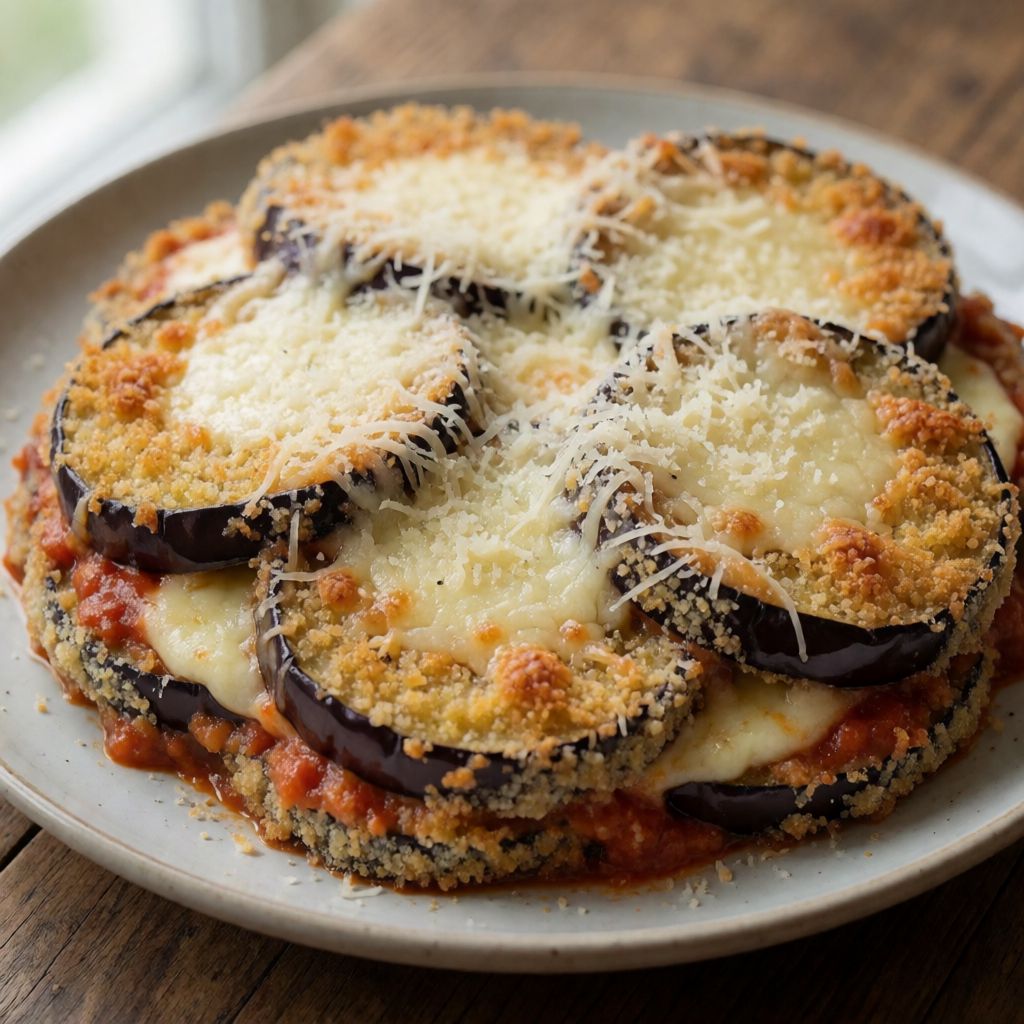
 AI photo
Aubergine Parmigiana
A classic baked aubergine dish layered with tomato sauce, parmesan and mozzarella.
Labels are worked out automatically from the ingredients and can be wrong. Check the packaging if it matters to you.
Ingredients
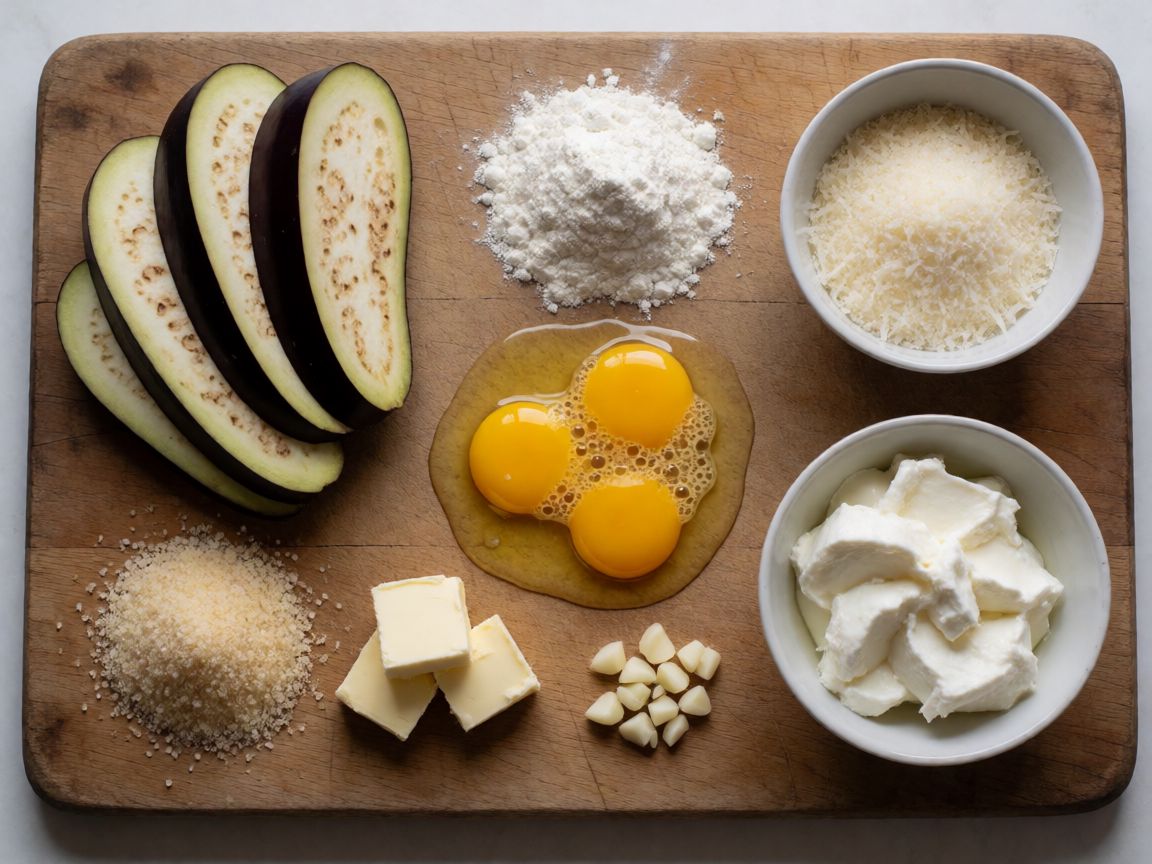
- 3 pcs Aubergine sliced into 1 cm rounds
- 100 g Plain flour
- 3 pcs Eggs beaten
- 250 g Parmesan finely grated
- 3 tbsp Breadcrumbs
- 125 g Mozzarella fresh
- 1 tbsp Olive oil for frying
- 1 tbsp Butter for greasing the dish
- 3 clove Garlic finely chopped
- 1 pcs Onion finely chopped
- 800 g Tomato passata
- 1 bunch Basil fresh
- Salt
- Black pepper freshly ground










Steps
Brush the aubergine slices with olive oil and coat them in plain flour mixed with salt and pepper. Set the slices aside on a plate while the tomato sauce cooks.
Heat the oil in a saucepan and fry the garlic and onion until the onion is soft. Add the tomato passata and basil.
Let the sauce simmer uncovered for 30 minutes so it thickens slightly, making sure it doesn't become too dry. Season with salt and pepper.
30 minDip the flour-coated aubergine slices in the beaten egg and fry in oil in a pan on both sides until golden, this will take a few minutes.
Grease a heatproof baking dish with butter and spread a few spoonfuls of tomato sauce over the bottom. Layer the aubergines, sauce and parmesan, repeating until the aubergines and sauce are used up. Finish with a layer of sauce, and generously sprinkle with parmesan and breadcrumbs.
Scatter the grated mozzarella over the top.
Bake in a preheated fan oven at 175°C for 20–25 minutes.
22 minRemove the dish from the oven and let it rest for a few minutes before serving. Garnish with fresh basil leaves.
This is not lasagne with vegetables instead of pasta, though half the people who cook it treat it that way. Parmigiana is built on one mechanical fact: aubergine holds enormous amounts of water and air inside a spongy flesh, and everything you do to it before the oven is about getting rid of both, so what goes into the dish is flavour, not liquid.
The three-stage armour — flour, egg, fry — is not decoration. Flour gives the egg something to grip. Egg sets into a seal the moment it hits hot fat. That seal is what stops the slice weeping into the sauce underneath it and turning your layers into soup. Some say you can skip the egg and just oil-brush and grill the slices — you can, and it's lighter, but you lose the seal, and the dish will be wetter and sadder for it. Decide which trade-off you want before you start, not halfway through.
What decides whether this works isn't the oven at all — it's the frying and the sauce, both of which happen on the hob, in an ordinary pan, before the oven ever gets involved. The oven's job at the end is small: melt cheese, marry layers, nothing structural. If your base is wet or your slices are raw-tasting and oily, twenty minutes at 175°C fixes none of that.
Patience is the actual ingredient here, more than any item on the list. The sauce needs thirty minutes uncovered to lose water and gain depth — rush it and you get a thin, sharp sauce sitting under cheese, not with it. Frying in batches, not all at once, because a crowded pan steams instead of browns, and a steamed aubergine slice is a wet one waiting to ruin your layers.
Aubergine itself: you want slices that feel dense for their size, skin taut, no give when you press — that's the sign the inside hasn't gone spongy and bitter with age. Older aubergines carry more air pockets and more bitterness, which is why some older recipes salt and rest the slices for half an hour before cooking — drawing water out osmotically so less bitterness and less liquid ends up in your dish. With young, firm aubergine and a proper egg seal, you can skip that step; it's insurance, not law. 1 cm rounds matter because thinner burns before it softens, thicker stays raw-centred under the coating — you're aiming for a slice that bends, not snaps, when you nudge it with a fork after frying.
The flour-egg-fry sequence again, because it's the part people shortcut and regret: plain flour is just a dry surface for egg to cling to, nothing fancy needed — any flour with no strong taste of its own does the job. The egg must be properly beaten, not just cracked and swirled, so it coats evenly and seals the whole surface, not patches of it. Fry hot enough that the egg sets almost on contact — you'll hear it, a near-immediate sizzle, not a slow simmer in oil. If it sizzles gently and takes an age to colour, your oil's too cool and the slice will drink oil instead of frying in it.
Garlic and onion go in before the tomato because raw tomato acid stops onion from softening properly — cook the alliums to translucent-and-sweet first, you're building a backbone the tomato then sits on. Passata rather than whole tinned tomatoes saves you the blending and the seed-skin texture — if you only have tinned plum tomatoes, crush them by hand or pass them through a sieve; you're after a smooth, pourable sauce, not chunks competing with the aubergine for texture. Basil added early, simmered in, gives a background sweetness; basil added at the end, raw, on top, gives a hit of fresh aniseed brightness — the recipe wants both, which is why it appears twice.
Parmesan here is doing two jobs, and that's why it's used generously, inside the layers and on top. Inside, it seasons and binds. On top with breadcrumbs, it's there to brown and crust — the breadcrumbs give the crust actual texture, something for your fork to catch on, where cheese alone would just melt flat. Mozzarella goes on last, scattered rather than mixed through, because its job is purely the stretch and the pull on top — fresh mozzarella (the kind sitting in its own whey, not a vacuum-pack brick) melts softer and more generously; the harder block style will melt but won't give you the long pull.
Butter for greasing the dish, not oil, because butter's milk solids catch and brown slightly against the hot dish, which helps the bottom layer release rather than stick and tear when you serve it — a small thing, but it's the difference between a clean slice on the plate and a dish that collapses into itself.
On a domestic hob and a fan oven, be honest about scale: fry in batches that don't crowd the pan, because a crowded pan can't keep its oil hot enough between slices, and that's the single most common reason home parmigiana turns out oily and limp rather than crisp-edged. And the rest at the end — a few minutes out of the oven before cutting — isn't optional either. Straight from the oven, the layers are still loose with heat; resting lets the sauce settle and the cheese firm just enough that your serving spoon lifts a slice instead of a landslide.