
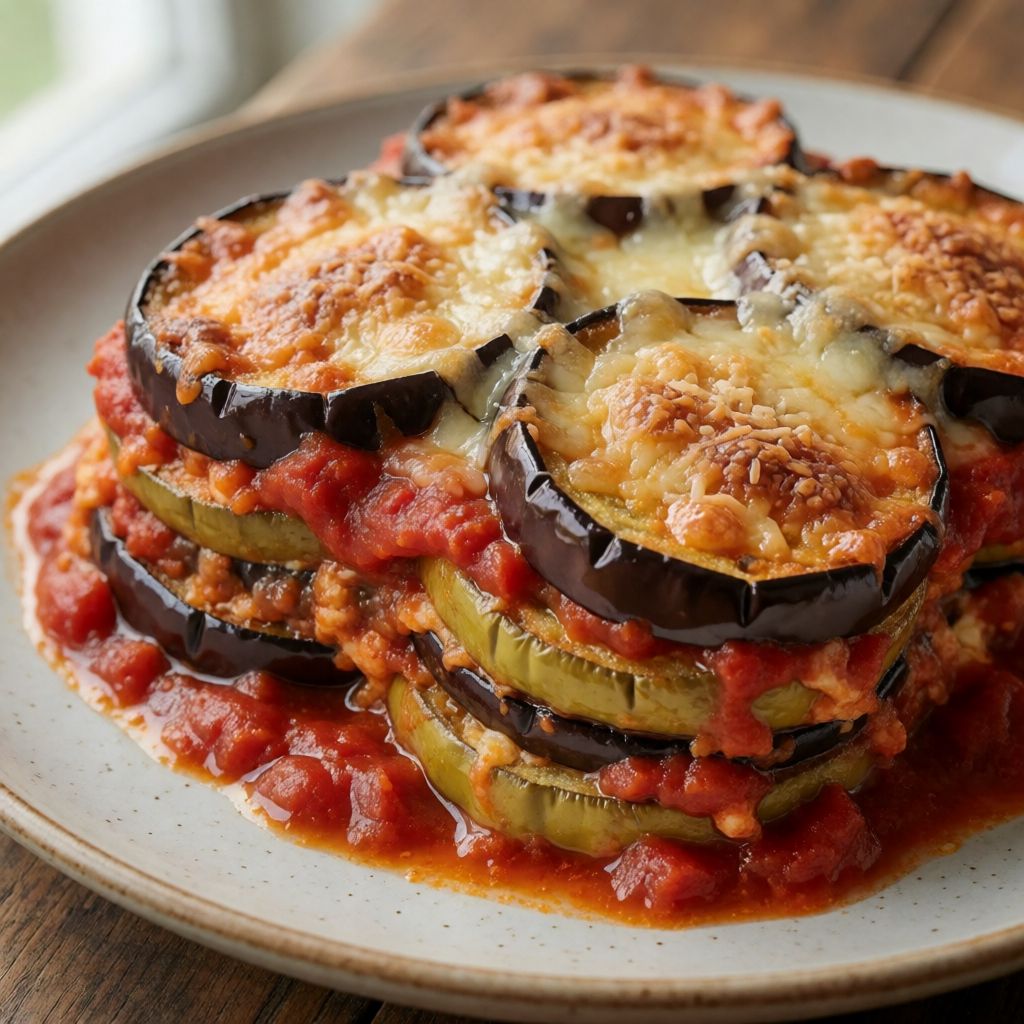
 AI photo
Neapolitan Aubergine Parmigiana
A Neapolitan-style baked aubergine dish, layered with tomato sauce, smoked provolone and parmesan.
Labels are worked out automatically from the ingredients and can be wrong. Check the packaging if it matters to you.
Ingredients
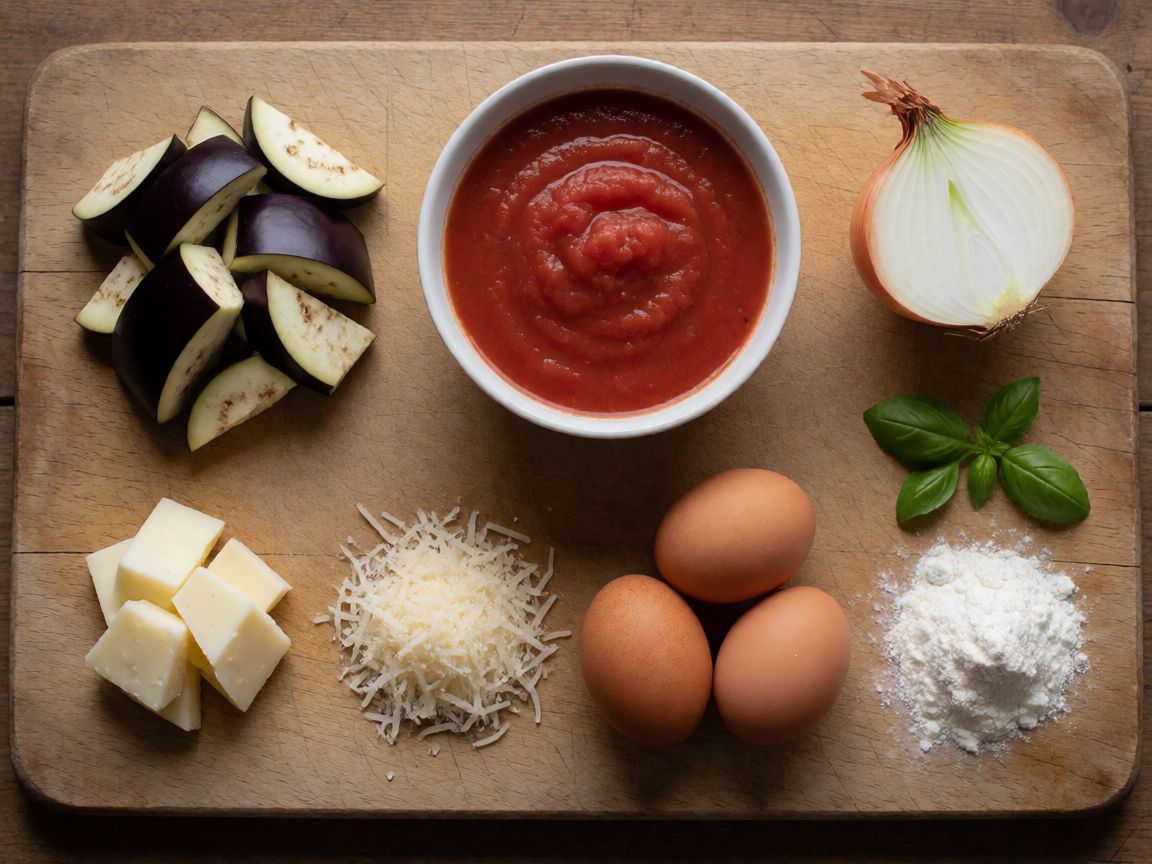
- 1 kg Aubergine
- 500 ml Tomato passata
- 0.5 pcs Onion
- 500 g Smoked provolone
- 100 g Parmesan
- 3 pcs Eggs
- Plain flour for dusting
- 1 bunch Basil a few leaves
- Olive oil for frying
- Salt to taste








Steps
Wash the aubergines, trim the ends and dry with a clean towel. Peel them and slice lengthways into 4–5 mm thick slices.
Sprinkle the aubergine slices with salt and leave them to drain, or soak in salted water for 10 minutes.
10 minFinely chop half the onion and fry in a few spoonfuls of olive oil until golden.
Add the tomato passata, season with a pinch of salt and basil, dilute with a little water and simmer into a sauce.
Rinse the aubergine slices and dry them. Dust first in flour, then dip in eggs beaten with parmesan.
Heat olive oil and fry the aubergine slices in small batches until golden, then transfer to paper towels to drain.
Cut the smoked provolone into cubes. Layer the parmigiana in a baking dish: sauce, aubergine, provolone, sauce, parmesan, repeat.
Bake the parmigiana in an oven preheated to 200°C for at least 20 minutes.
20 minServe hot straight from the oven, or let it cool slightly before serving.
This is not the parmigiana you get told it is — the one with Parmesan cheese layered through it like lasagne. It's named for a style of layering, "alla parmigiana," which some food historians trace to the Sicilian word "parmiciana," the overlapping wooden slats of a shutter. Look at the aubergine slices fanned and overlapped in the dish and you'll see why that makes more sense than the cheese story. Parmesan is in there, yes, but it's seasoning, not the point.
What decides whether this works is moisture, three times over. Aubergine is mostly water held in a sponge of flesh, and every stage of the recipe exists to get rid of some of it before it can ruin the next stage. Salt it and you pull out the bitter juice that would otherwise fry into something acrid. Dry it before dredging or the flour turns to paste instead of a crust. Fry it hot enough and the surface seals before the inside turns to mush, so what goes into the dish is tender but still has shape, not a grey slump.
The second moisture problem is the sauce. "Simmer into a sauce" means exactly that — you're not heating tomato, you're driving water off it until it clings to a spoon instead of running off. Thin sauce between layers means a watery bake, and watery bake means the whole thing slides apart when you cut it instead of holding a clean edge.
Start with the aubergine itself. You want one dense enough to hold a slice shape under its own weight — in a UK shop, pick a glossy, firm aubergine that feels heavy for its size; a soft or wrinkled skin means it's already lost moisture and will fry unevenly, going leathery in patches. There's no real substitute here — courgette or marrow will do a parmigiana-shaped thing but won't have the aubergine's particular bitterness-to-sweetness swing when salted and fried, which is half the flavour of the dish.
The salting step is not tradition for tradition's sake — it's chemistry you can watch happen. Salt draws water out by osmosis, and with it goes some of the compounds that read as bitter. Ten minutes of standing, or a quick soak in salted water, is enough; longer doesn't hurt, but don't skip it and expect the frying stage to fix things, because oil can't un-bitter anything, it can only hide it under crunch.
The passata and onion sauce is the plainest thing in the dish and that's deliberate — it's a backdrop, not a main event, so it needs no garlic-heavy complexity, just sweetness built from a properly softened onion. Fry the onion until it's gone from raw white-gold to a deeper, almost ginger colour — that colour change, not a clock, tells you the sharp onion taste has cooked out into sweetness. Any plain cooking onion works; there's no reason to hunt down anything fancier.
Smoked provolone is doing a job that mozzarella usually does in other versions, but with the added trick of smoke flavour threading through the melt — some say any mild melting cheese will do just as well, but a plain unsmoked one leaves the dish tasting flatter, missing that background savoury note that cuts through the sweetness of the tomato. If you can't find smoked provolone, a mix of mozzarella with a little smoked cheddar gets you closer than mozzarella alone, though it's not quite the same animal.
Parmesan here works twice: beaten into the egg, it seasons the coating that goes onto the frying aubergine, and layered dry, it adds a sharp, salty top note the mild provolone doesn't have. Buy a block and grate it yourself if you can — the ready-grated bags dry out and lose the sharpness that's the whole point of including it. A hard, well-aged British cheese like a strong mature cheddar isn't a true substitute in flavour, but if Parmesan's genuinely not to hand, it'll still give you salt and melt where Parmesan gives salt and bite.
On frying: do it in small batches and don't crowd the pan, because every slice you add drops the oil temperature, and a pan that's cooled below frying heat gives you aubergine that absorbs oil instead of sealing against it — that's the real cause of a greasy, heavy parmigiana, not the amount of oil you started with. Use an oil with no flavour of its own strong enough to fight the tomato and smoke — a light olive oil, or a plain vegetable oil if that's what's in the cupboard; save anything peppery and extra virgin for drizzling at the table, not for frying in.
One more honest note for a domestic kitchen: a UK oven and a UK pan are not a trattoria's deep fryer and wood oven, and that's fine — this dish was built on a home hob logic anyway, batch-frying being exactly what you do when you haven't got a vat of oil going. Give yourself the full prep time quoted, don't rush the draining or the frying, and treat the hour-plus as the price of the dish, not an inconvenience — patience is what turns wet slices and thin sauce into something that holds its layers when you cut it.