
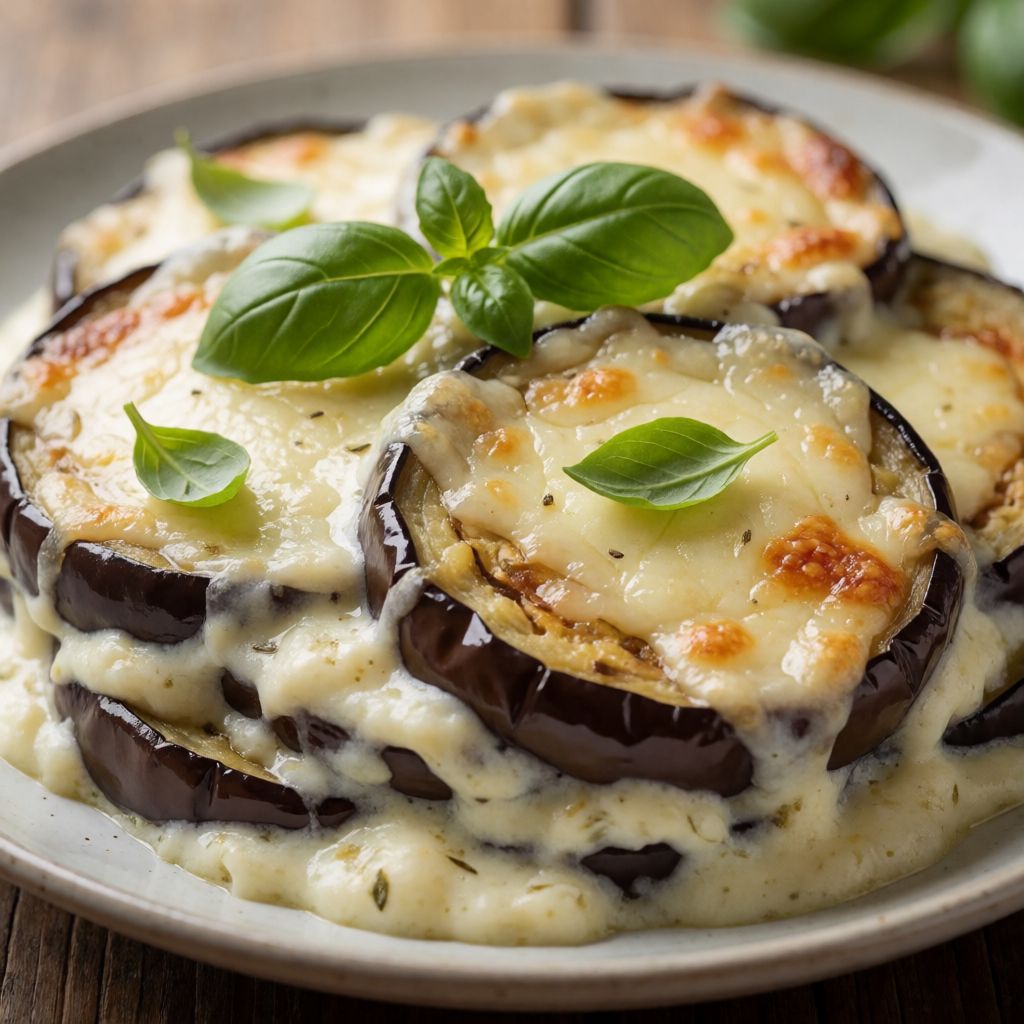
 AI photo
Aubergine Parmigiana in White Sauce
A creamy baked aubergine parmigiana layered with egg, cheese and basil instead of the usual tomato sauce.
Labels are worked out automatically from the ingredients and can be wrong. Check the packaging if it matters to you.
Ingredients
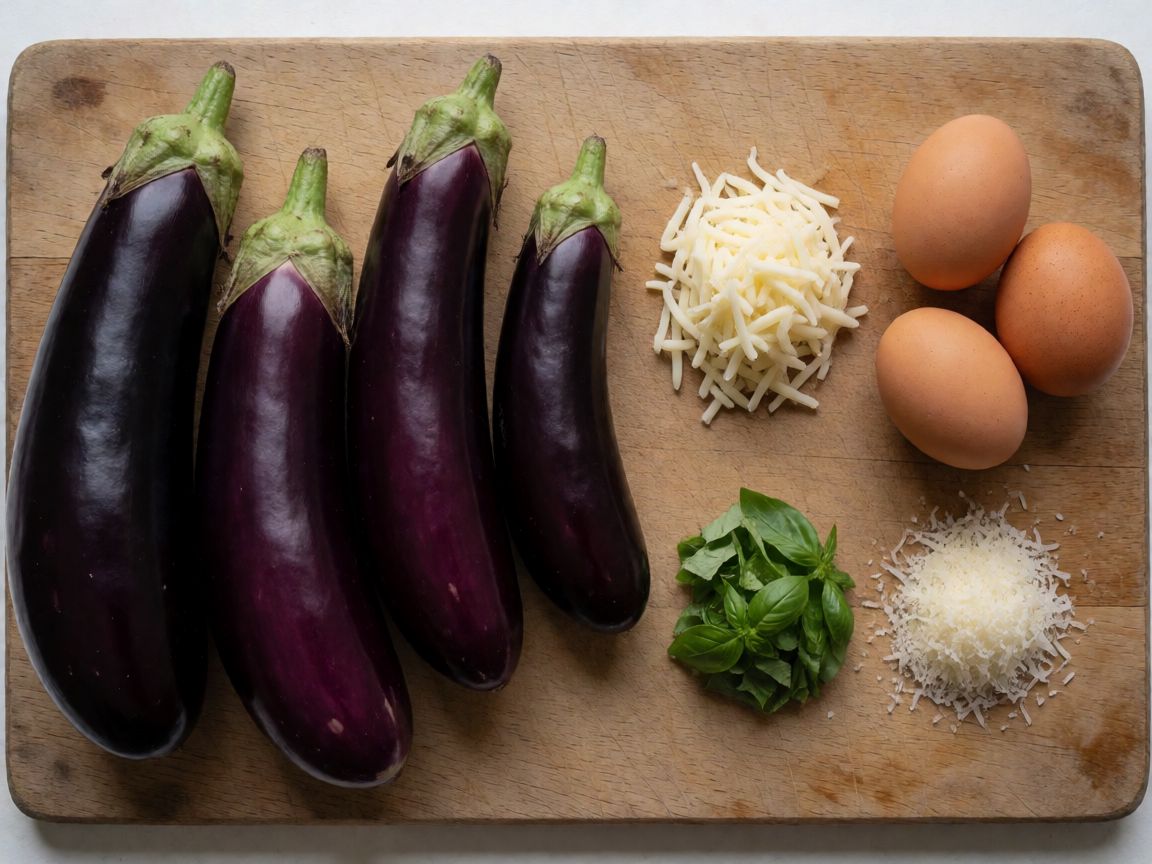
- 4-5 pcs Aubergine
- 300 g Provolone
- 3 pcs Eggs
- Basil to taste
- Salt to taste
- Black pepper to taste
- Parmesan to taste
- Vegetable oil for frying, to taste






Steps
Cut the aubergines into slices that are not too thick and fry them in a little oil.
Place a layer of aubergines in a non-stick baking dish, and sprinkle with basil, provolone and a handful of parmesan.
Beat the eggs with salt and black pepper.
Spread the egg mixture over the aubergines.
Add another layer of aubergines and repeat until all the ingredients are used up.
Pour the remaining egg mixture over the top.
Bake in a preheated oven at 200°C for about 20-25 minutes.
23 min
This isn't the aubergine parmigiana most people picture — no tomato, no red sauce running between the layers. Here egg does the job tomato usually does: it holds the layers together and keeps the whole thing from falling apart when you cut it. Think of it less as a baked tomato dish and more as a savoury custard with aubergine and cheese suspended in it, closer in spirit to a crustless quiche than to the Sicilian original.
What decides whether this works is almost entirely in the frying, before the oven ever gets involved. Aubergine flesh is mostly air pockets held together by very little — if the oil isn't hot enough when the slice goes in, it doesn't fry, it drinks. You end up with something greasy and collapsed instead of browned and firm. The fix isn't a long soak in salt beforehand, it's heat: the oil should be hot enough that a slice sizzles the second it touches it, not creeps slowly to a simmer around the edges.
Some say you have to salt and weep the aubergines for an hour before you so much as think about a pan. No — that habit comes from the old, seedy, genuinely bitter varieties your grandmother's generation had to deal with. What you buy now is bred to be milder. Salting still helps draw water out so the flesh fries instead of absorbs, but you get most of that benefit just by slicing thin, frying hot and fast, and draining properly on paper afterwards.
Aubergine: buy them firm, heavy for their size, with skin that doesn't give when you press it — a soft aubergine has already started breaking down inside and will turn to mush faster than you want. Slice them roughly the thickness of a pound coin to a finger's width. Thinner and they vanish into the oil and absorb too much of it; thicker and the centre stays raw after frying while the outside is already past browning. Fry in batches — crowd the pan and the oil temperature drops, the slices steam each other instead of frying, and you're back to the soggy result the heat was meant to prevent. A wide pan, not a deep one, and a plate lined with paper towels to drain each batch onto — that's your defence against an oily final dish, since there's no kazan or rack doing that work for you here.
Provolone is doing a specific job: it's semi-hard and doesn't weep much liquid as it melts. That matters because the egg is already adding moisture — if you used a wet, fresh mozzarella on top of that, you'd get a pool at the bottom of the dish instead of a set custard. If you can't get provolone, look for the same thing under another name: a semi-hard, low-moisture melting cheese — scamorza, a mild cheddar even, something that pulls into strings rather than oozing water. Parmesan goes on dry and sparing, more for the salt and the crust it forms on top than for bulk; it doesn't add liquid the way a soft cheese would, which is exactly why it's safe near the top layer.
Eggs here aren't seasoning, they're structure — three eggs, beaten with salt and pepper, are what turns a stack of fried vegetable slices and cheese into something you can cut into wedges rather than scoop with a spoon. Basil goes in for smell more than taste at this quantity; it's the one ingredient here that isn't doing mechanical work, so use it generously or skip it without the dish suffering structurally.
Oil for frying: anything with no flavour of its own and a smoke point high enough to hold a proper sizzle — sunflower, a light vegetable oil, or ordinary (not extra virgin) olive oil. Extra virgin will scorch and turn bitter at frying heat; save it for drizzling, if you drizzle at all.
Four or five aubergines and three eggs for two people sounds generous, and it is — this is built as a rich starter, dense with cheese and egg, not a light vegetable side. A dish roughly the size of a hardback book, non-stick, is the right scale for that quantity; too wide and your layers thin out, too narrow and the egg can't reach every corner.
The patience this dish actually asks for is in the frying stage, not the baking. Rushing the aubergines — overcrowding the pan to save time, or pulling them out half-browned because the oven's waiting — is the single most common way this goes wrong. The oven stage is short and mostly passive; the pan stage is where the dish is actually made.