
 AI photo
Aubergine Timbale with Sedanini
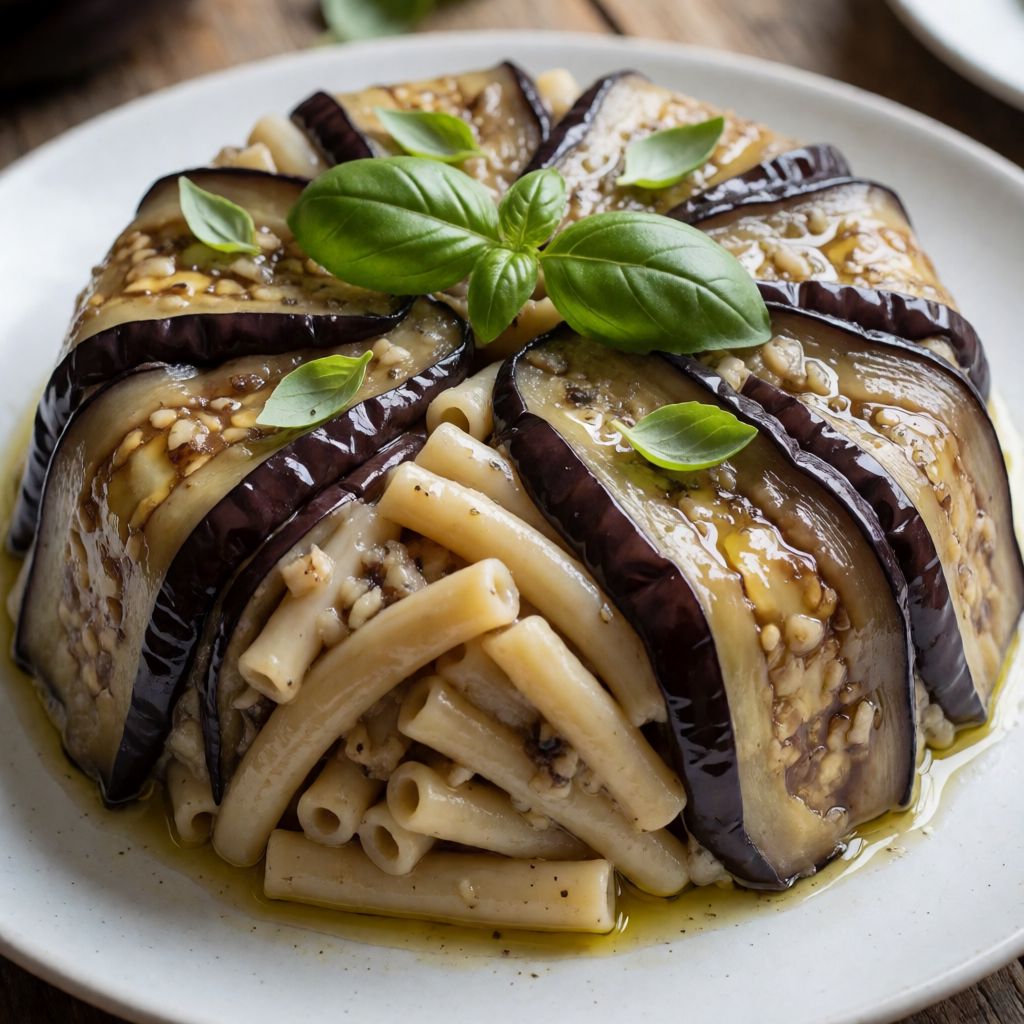
A baked pasta timbale lined with fried aubergine slices, filled with short pasta in tomato sauce and cheese.
Labels are worked out automatically from the ingredients and can be wrong. Check the packaging if it matters to you.
Ingredients
- 2 pcs Aubergine
- 500 g Sedanini short pasta
- Olive oil
- 1 clove Garlic
- 3 pcs Basil leaves
- Salt to taste
- Black pepper to taste
- Groundnut oil to taste
- 750 ml Tomato passata
- 50 g Parmesan
- 150 g Caciocavallo











Steps
Fry the garlic in olive oil, add the tomato passata and cook for about 15 minutes. Add salt to taste, stir in the basil and remove from the heat.
15 minSlice the aubergines into rounds 2-3mm thick, fry in small batches in hot groundnut oil and drain on a paper towel.
Line the base and sides of a 28cm springform ring tin with the aubergine slices, letting the edges hang over the rim of the tin.
Cook the sedanini until al dente, drain and transfer to a large bowl, tossing with the tomato sauce.
Add the Parmesan and caciocavallo, mix well and add a few basil leaves.
Transfer the dressed pasta into the lined tin, spread evenly and fold the aubergine edges over the top.
Bake the timbale at 200°C for about 30 minutes. Remove from the oven, let cool slightly and serve.
30 min
This is not really a pasta dish, it is a pasta building. Sedanini and tomato and cheese make the inside, but the structure, the thing that lets you turn it out onto a plate and have it stand there like a cake, is the aubergine. Cooked right, the aubergine stops behaving like a vegetable and starts behaving like leather — flexible, slightly oily, strong enough to wrap round a filling and hold it when the tin comes off.
What decides whether it works is almost entirely the aubergine slice. Fried properly, the air pockets inside the flesh collapse and the slice goes soft and pliable, the way a sheet of pastry goes soft when it's rolled thin enough. Fried too briefly, or cut too thick, it stays stiff and cracks the moment you try to fold it over the top — and a cracked lid means the sauce weeps out while it bakes, and your timbale becomes a tray of pasta with some burnt vegetable on it. Cut too thin, and it tears before it even gets to the tin. 2–3mm is not a fussy detail, it is the whole hinge the dish turns on.
A word on where this comes from, because it explains the whole shape of the thing. Timballi like this one are a Sicilian habit from kitchens that had to look rich without necessarily being rich — you take pasta, which is cheap, wrap it in something that makes a dramatic reveal when unmoulded, and suddenly a plain weekday ingredient looks like an occasion. The theatre is the point. Nobody built these for Tuesday lunch out of nutritional need; they built them because a round, glossy, sliceable thing coming out of a tin impresses a table in a way a bowl of pasta never will. You're not doing anything wrong by treating this as a bit of a performance dish — that's what it was built to be.
Aubergine: buy them firm, with tight, glossy skin and no give when you press a thumb into them — a soft, spongy aubergine has already started drying out from the inside and will fry greasy instead of silky. You don't need to salt and weep them first for bitterness; that myth comes from older, seedier varieties that really were bitter. The ones on a British supermarket shelf today are bred mild, and salting them now mostly just draws out water you'll need to fry back in anyway. What you do need is enough oil, hot enough that a slice sizzles the second it touches the pan — that heat is what collapses the flesh into pliable sheets rather than leaving it stiff and raw-centred. Groundnut oil earns its place here for one reason: it has no smell of its own and takes the heat without smoking, so the aubergine's own flavour comes through instead of fighting with the oil's. Any neutral oil with a high smoke point does the same job — sunflower, a light rapeseed.
Sedanini are just small curved tubes; you want something with a hollow or a ridge to grab sauce and cheese, so rigatoni, penne, or any short tubular pasta will stand in without changing the dish's logic.
Tomato passata is tomatoes already strained of skin and seed, which is why fifteen minutes is enough — you're not reducing out a litre of water, you're just letting the raw edge off and letting the garlic's oil mingle in. Fry the garlic gently first; burnt garlic turns bitter and there's no rescuing a sauce once that happens, so pull it from the heat the moment it smells sweet and golden, not brown. Basil goes in at the very end, off the heat — its aroma lives in oils that cook off fast, so five minutes in a simmering sauce and you'd have thrown away the reason you bought it fresh in the first place.
The two cheeses aren't interchangeable with each other, they're doing different jobs. Parmesan is dry and salty and sharp — it seasons the filling and helps it hold together as it cools. Caciocavallo is a semi-hard, stretchy cheese that melts long and pulls — it's what gives you that cheese-pull when you cut in, rather than just a wet, cheesy sauce. If you can't find caciocavallo, look for the same criterion: a semi-hard cows'-milk cheese that stretches when melted and isn't too wet — a mature provolone or even a firm mozzarella will do the stretching job, backed up by any hard grating cheese — a mature cheddar instead of Parmesan will season it, just with a sharper, less nutty note.
On equipment: you won't have the copper or earthenware mould a Sicilian kitchen might reach for, and you don't need one. A 28cm springform tin — the one sitting in most UK kitchens for cheesecake — does exactly the same job: it clamps the pasta into shape while it bakes and then lets you walk the ring away without dragging the sides of your timbale with it. The oven number here you can trust outright — 200°C is a fixed point your dial actually means, unlike a hob's 'medium heat,' which varies pan to pan and burner to burner. Thirty minutes is the lower bound, not a deadline: you're looking for the top to firm up and the edges to go properly golden where the aubengine has crisped slightly at the rim. Once that's happened, pull it, let it sit, then unclip the ring — that's the moment the whole performance either pays off or doesn't.