
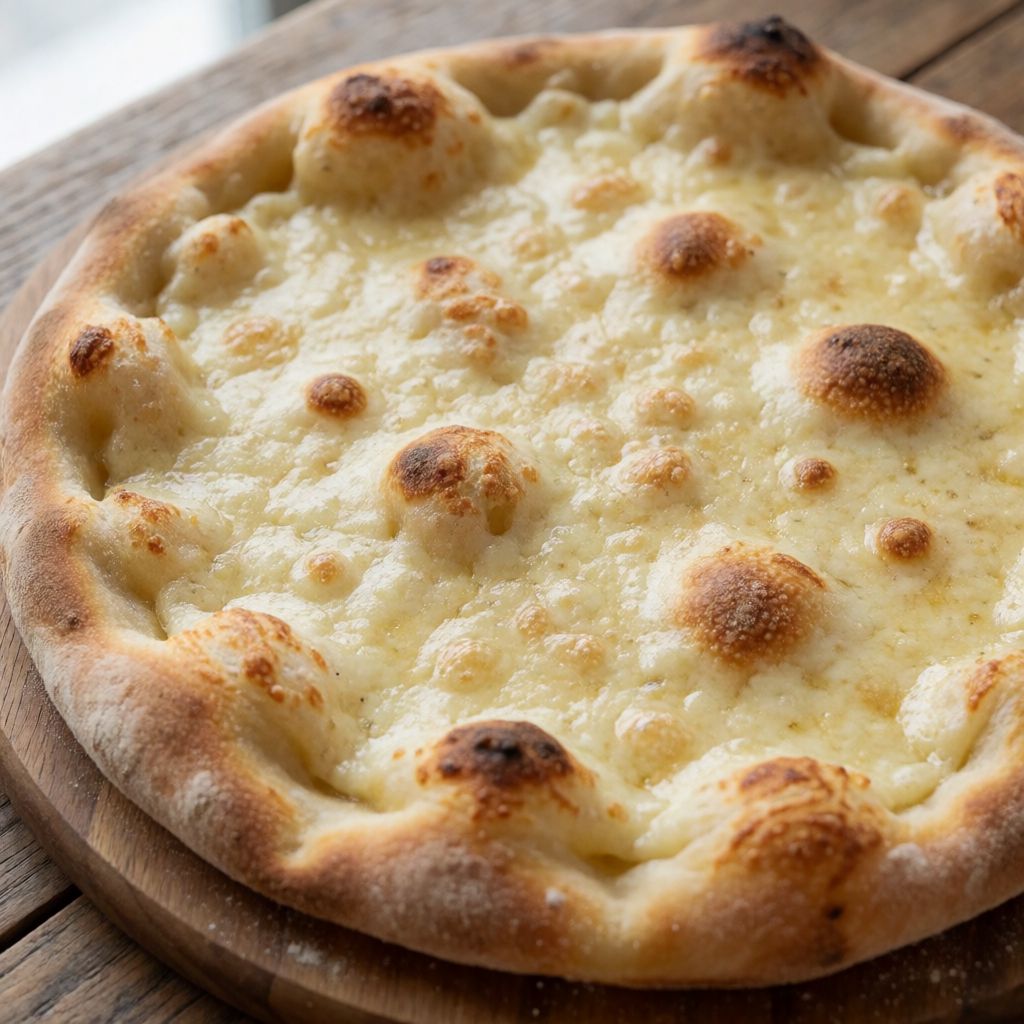
 AI photo
English Breakfast Pizza
A pizza inspired by a full English breakfast, topped with fresh mozzarella, tomatoes, crispy bacon and eggs.
Labels are worked out automatically from the ingredients and can be wrong. Check the packaging if it matters to you.
Ingredients
- 25 g Yeast
- 250 ml Water lukewarm
- 3 tbsp Olive oil
- 1 tsp Salt
- 500 g Plain flour plus a little extra for rolling out
- 1 tbsp Olive oil for greasing the bowl
- 250 g Mozzarella sliced
- 6 pcs Tomato halved
- 10 pcs Bacon fried until crisp
- 6 pcs Eggs
- 2 bunch Parsley









For the sauce
- 200 g Canned chopped tomatoes
- 2 tbsp Olive oil
- 1 bunch Basil fresh
- 1 tsp Dried thyme
- 1 pinch Salt freshly ground
- 1 tbsp Tomato paste concentrated


Steps
Pizza dough: dissolve the yeast in a bowl with lukewarm water. Use 5g of yeast for a cold rise in the fridge overnight, or 25g of yeast if the dough only needs to rise for 1 hour.
60 minAdd half the flour, the olive oil and salt, and mix well until smooth. Gradually add the remaining flour, stirring constantly. Dust the worktop with flour and knead the dough by hand until smooth and elastic.
Wash the bowl and grease it with olive oil, return the dough to the bowl and turn it so it's coated with oil on all sides. The oil makes the dough easier to work with and gives the crust extra crispness when baked.
Let the dough rise for 45-60 minutes, or leave it for a cold rise in the fridge overnight.
50 minPizza sauce: mix all the ingredients together until smooth. Use about 1-2 tbsp of sauce per pizza (the sauce can be frozen in portions).
Topping and baking: dust the worktop with flour. Divide the dough in half and shape two round pizzas by hand directly on the worktop, then spread them with tomato sauce. Distribute the fresh mozzarella, tomatoes and crack the eggs onto the pizzas.
Sprinkle with the fried bacon and place the pizza on the grill for about 7-10 minutes, or bake in the oven for 12-15 minutes at 250°C.
12 minCheck that the base is crisp, then sprinkle with parsley, freshly ground pepper and a little coarse salt.
This is a pizza wearing a cooked breakfast as a costume: bacon, egg, tomato, basil, all pinned down on dough instead of scattered across a plate. The idea isn't clever fusion for its own sake — it's that a fry-up and a pizza solve the same problem the same way, with fat, salt and a hot surface, so putting them together is less a mash-up than a merger of two things that were always compatible.
What decides whether it works is the egg. Everything else on this pizza can sit there patiently while the base crisps up, but the egg is on its own clock — crack it on too early and by the time the crust is done the yolk is a grey pebble; crack it on too late and the white never sets. So the egg is really the last ingredient to go down, timed to the oven, not to the topping.
The crust is the other half of the argument. A home oven doesn't breathe fire the way a pizza oven does, so you're not actually trying to get leopard-spotting and a thirty-second bake — you're trying to get a base that's cooked through and crisp on the bottom without the top turning into a swamp from the tomato halves and canned sauce. That's a balance of how wet the toppings are against how hot and how long the base gets, and it's checked by lifting the edge and looking, not by a buzzer.
Start with the yeast and water. Yeast wants lukewarm, not hot — above about 40°C you start killing it rather than waking it up, and then the dough never rises, it just sits there looking offended. The amount of yeast is really a trade against time: 25g gets you a usable dough in about an hour because there's more yeast working at once, 5g gets you a slower, cold rise overnight in the fridge, where the dough develops more flavour simply because it has longer to ferment and the gluten has longer to relax. Neither is more "correct" — one suits a Sunday morning when you want pizza by lunch, the other suits planning the night before.
The olive oil in the dough and the oil you grease the bowl with are doing different jobs. In the dough, it's there for tenderness and a slightly crisper crust once baked — oil interrupts gluten strands a little, so the crumb isn't as tough. Greasing the bowl stops a skin forming on the surface of the dough as it rises, which is the usual reason a home-proved dough ends up with a dry, leathery patch that won't stretch properly later. Any oil with no smell of its own will do this job; you don't need your good extra virgin for a greasing job the dough never tastes.
Flour: plain flour here, not strong bread flour, and that's fine for a home pizza you're going to eat within the day — you're not after the big open crumb of a long-fermented artisan loaf, you're after a base that holds toppings and goes crisp. If you've only got strong flour in the cupboard, use it; the dough will just be a touch more elastic to knead.
The sauce is uncooked — canned tomatoes, oil, basil, thyme, tomato paste, salt, stirred together, not simmered. That's not laziness, it's because the sauce is going into a very hot oven anyway and will cook on the pizza; simmering it first would just be cooking it twice. The tomato paste is there to concentrate flavour and thicken the sauce slightly so it doesn't run; fresh tomato halves on top add juiciness rather than sauce-body, which is why you want both the canned base and the fresh halves rather than one standing in for the other.
Mozzarella sliced, not grated, matters a little here because sliced mozzarella melts into pools rather than an even blanket — that leaves gaps where the egg and bacon show through properly rather than disappearing under cheese. Bacon goes on already fried crisp, because raw bacon in a 12-15 minute bake at 250°C won't render its fat properly or crisp up — it'll just go flabby and pale, sitting in its own grease on top of your pizza. Frying it first is what prevents that.
Parsley and the pepper and coarse salt go on at the very end, off the heat, because their whole value is freshness and texture — cook them and you just get wilted green and dissolved crunch, which defeats the point of adding them last in the first place.